Best Noise-Canceling Headphones for Running of 2026

Noise cancellation sounds like the wrong feature for running until you've spent a winter on a gym treadmill. What I want is the clatter of the weight room and the whine of the belt gone, while a car coming up behind me on the sidewalk still gets through. The pairs that pull that off — cancellation you can dial down, plus a transparency mode that sounds like the real world and not a tinny recording — are the ones I reach for without thinking.

Everything else about running audio is a compromise. A bud has to survive sweat, hills, and a ponytail whipping at it, stay put through a head shake, and sound good enough that you're not messing with the EQ at mile two. We ran in 12 pairs over six months — ear-hook designs, wing-tip sport buds, and standard stick earbuds — and the winners were the ones I forgot I was wearing. Looking decent in a shop window didn't hurt either.

One thing worth knowing: the huge playtime figure on the box is the case plus the buds, and noise cancellation eats into it further. Plan on charging more often than the packaging suggests.

The Best Noise-Canceling Headphones for Running

1

WHYKJTEK BX30 Best Overall
88 /100
TKZ Score Excellent

Key details

Fit
Flexible ear hooks
Battery Life
90 hours with case
Water Resistance
IPX7
Weight
3 oz
View on Amazon

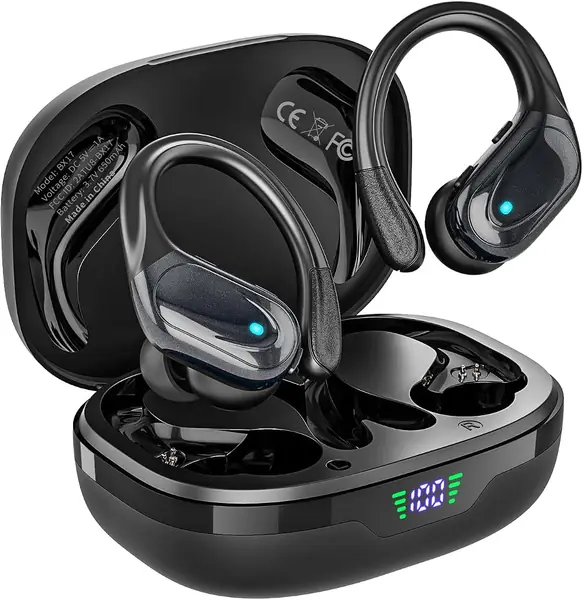
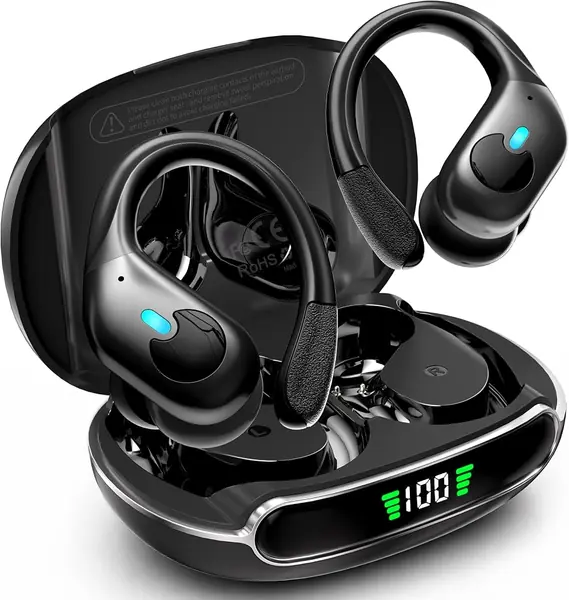
Ear hooks do the unglamorous work on a run: they hold the bud against the back of your ear so you are not pushing it back in at every curb. That is the design the BX30 is built around, and it is the main reason these became the pair we reach for most often.

What earns them the top spot is how little they ask of you. The IPX7 shell makes sweat and rain a non-issue, and the case stretches playtime to a claimed 90 hours, so a week of runs does not trigger a charging reminder; a single charge is rated at eight hours, more than any one run needs. Active noise cancellation is on board too, with a transparency mode for the walk home through traffic.

Fit is where a hook design lives or dies, and this one held. We were not fiddling with them mid-run, and the hook spreads pressure behind the ear instead of pressing into the canal, which is exactly where cheap earbuds announce themselves at mile two.

The wrinkle is Bluetooth. The connection holds most of the time, but dropouts happen, and there is no multipoint pairing to hop between a watch and a phone. At this price, an occasional re-pair is a fair trade for everything else these get right.

Pros

  • Ear hooks stay put on fast runs
  • IPX7 protection handles sweat and rain
  • 90 hours total with the charging case
  • Costs less than most picks here

Cons

  • Bluetooth drops out occasionally
Our verdict

Our default for most runners: the hooks hold, IPX7 shrugs off sweat, and the case runs for a week. Few pairs here ask so little of you.
Check Latest Price
2

Beats Powerbeats Pro 2 Best for Heart-Rate Tracking

87 /100
TKZ Score Excellent

Key details

Fit
Secure-fit earhooks
Battery Life
45 hours with case
Water Resistance
IPX4
Heart Rate
Built-in sensors
View on Amazon

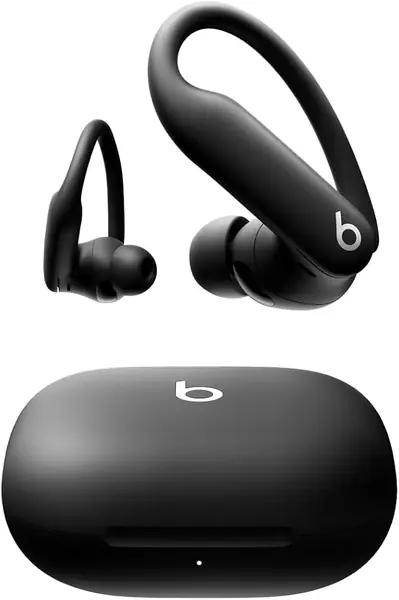
Heart rate from your ears is the trick no other pair in this guide can do. Sensors in the Powerbeats Pro 2 pulse more than 100 times a second, which means a run without a chest strap or a watch and the same numbers waiting at the end of it. That is the feature that justifies the price of admission, and it is the reason we kept reaching for them on interval days.

The rest of the package is Apple polish applied to a gym product: the H2 chip handles one-touch pairing and automatic switching between devices, hands-free Siri works on Apple gear, and Android gets full feature access too. Forty-five hours total with a Qi wireless charging case means the case can sit on the same pad as your phone overnight.

Fit is the part to test. The earhook anchors the bud better than a tip alone, but the hook can rub behind the ear on a long effort, and once sweat breaks the seal the buds can start working loose. Buy somewhere with a return window and put in a few runs before you commit.

Pros

  • Heart-rate tracking with no chest strap
  • 45 hours with a wireless-charging case
  • Seamless pairing and switching on Apple

Cons

  • IPX4 is the least water protection here
Our verdict

The only pick here that reads your heart rate from your ears, with Apple-friendly switching to match. Try the fit before you commit.

Check Latest Price
3

JBL Endurance Race 2 Best for Sweat-Heavy Workouts

86 /100
TKZ Score Excellent

Key details

Fit
Twistlock wing enhancers
Battery Life
48 hours with case
Water Resistance
IP68
Weight
1.9 oz
View on Amazon

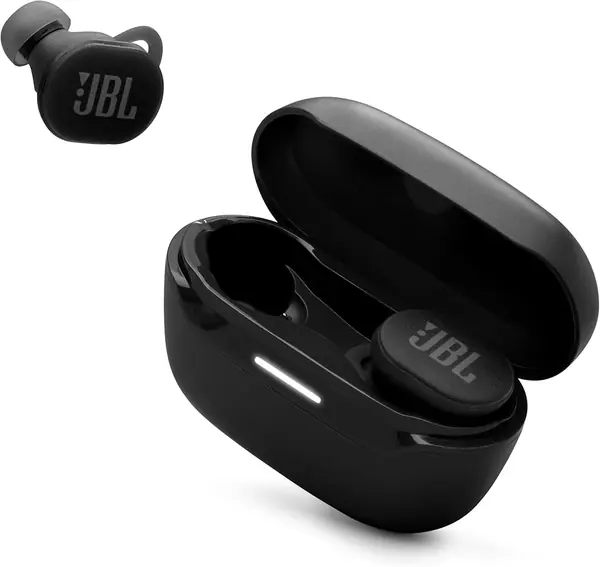
JBL's own instructions tell you to dry the buds and the case before they go back on the charger. That is the honest fine print behind an IP68 rating: the most water-resistant pair here still expects a wipe-down after a wet session.

Twistlock is the other half of the pitch. The wing enhancer settles into the bowl of your ear and the bud twists to lock, which gives you more to adjust than a plain tip and more to get wrong on the first attempt. Once it is seated the seal holds, and Smart Ambient lets you dial in how much of the world comes through when you step off a curb.

Twelve hours on a charge and 48 with the case is the kind of battery life that makes charging an afterthought, and ten minutes on USB-C buys a top-up before a run you nearly skipped. Noise cancellation is present rather than absent, which is not something every sport earbud manages.

What you trade for all that is durability. A bud that quits after a couple of months is the failure mode with these, and it is the one thing an IP68 shell cannot protect against. JBL's one-year warranty is the backstop, so register the pair the day they arrive.

Pros

  • IP68 is the toughest water and dust rating here
  • Twistlock wings hold a seal through hard efforts
  • 12 hours per charge, 48 with the case

Cons

  • Bluetooth can drop mid-workout
Our verdict

For workouts that leave a puddle on the floor, the IP68 rating is unmatched in this set — just dry the buds before they go back in the case.

Check Latest Price
4

HAOYUYAN BX17 ANC Pro Best Battery Life

85 /100
TKZ Score Excellent

Key details

Fit
Flexible ear hooks
Battery Life
80 hours with case
Water Resistance
IPX7
Playtime Per Charge
15 hours
View on Amazon

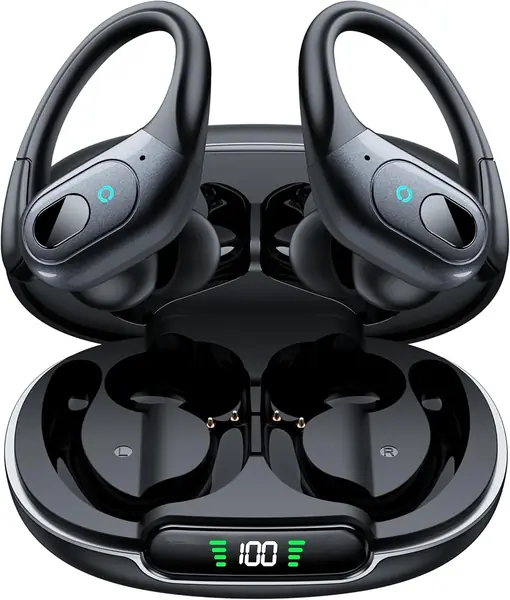
Fifteen hours on a single charge is the biggest per-charge number in this guide, and it changes how you use a pair of running earbuds. Charge on Sunday and the case can stay in a drawer until the following weekend.

That is why the BX17 earns a place: not because it does anything exotic, but because the basics are covered. IPX7 handles sweat, the 14.3mm drivers are the largest in this set, and the flexible hooks keep the fit steady. Eighty hours total with the case is the sort of figure you stop thinking about entirely.

The caveat is longevity. A bud that stops taking a charge is the failure to watch for, and the 90-day warranty is the shortest of any pick here, so buy from a seller with an easy return path and keep the packaging for the first month.

Pros

  • 15 hours of playtime per charge
  • IPX7 shell for sweat and rain
  • 80 hours total with the case

Cons

  • 90-day warranty is the shortest here
Our verdict

Fifteen hours on a single charge is the longest here — if you would rather charge weekly than nightly, this is the pair.

Check Latest Price
5

JBL Live Beam 3 Best Charging Case

84 /100
TKZ Score Excellent

Key details

Battery Life
48 hours with case
Water Resistance
IP55
Weight
2.89 oz
Charging Case
1.45-inch touchscreen
View on Amazon

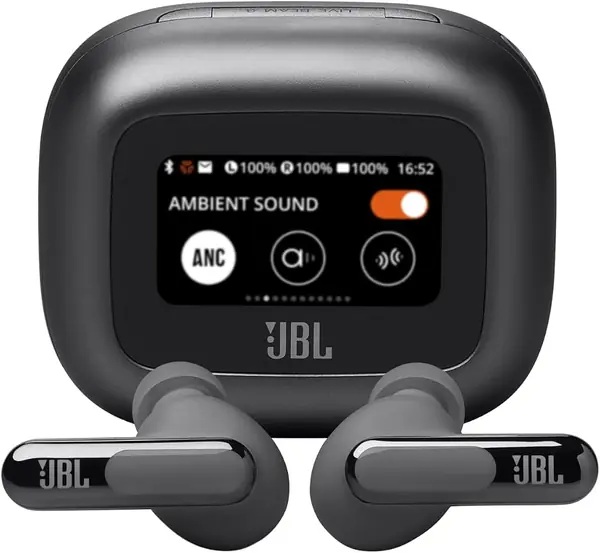
A touchscreen on the charging case sounds like a gimmick until your hands are wet and your phone is buried in a pocket. The 1.45-inch display on the Live Beam 3 handles volume, noise-cancellation modes, and EQ without digging anything out, and that is the feature that puts it on this list.

The rest is a well-rounded commuting kit: IP55 protection, 48 hours total, adaptive noise cancellation, multipoint pairing, wireless charging, and six microphones for calls. For running, the stick-style body relies on tips rather than hooks, so the fit is only as good as the seal you can find — get that right and they stay in.

The question mark is the case, the most complicated piece of hardware here. A screen that stops responding takes the controls with it, and it is the failure to watch for. JBL's one-year warranty is the answer if it happens, so keep the receipt somewhere findable.

Pros

  • Touchscreen case controls sound without your phone
  • 48 hours total with multipoint pairing
  • IP55 plus wireless charging

Cons

  • Case screen adds a failure point
Our verdict

The touchscreen case removes the phone from the equation, which commuters will love. Just know the case is the complicated part.

Check Latest Price
6

occiam T19 Best for Smaller Ears

83 /100
TKZ Score Excellent

Key details

Fit
Flexible ear hooks
Water Resistance
IPX7
Warranty
2 years
Noise Reduction
Up to 45 dB
View on Amazon

A two-year warranty is unusual in this category. Most of these picks carry one year at best, and one carries 90 days, so the occiam T19 makes a claim about its own longevity before you even open the box.

The design will look familiar: flexible ear hooks, IPX7 protection, a case with a battery display, and active noise cancellation rated to knock down up to 45 dB. What we appreciate most is the physical button control. There is no touch panel to misread when your fingers are wet or gloved, and that alone fixes the most irritating thing about running earbuds in cold weather.

These are the pair we point to when someone wants the hook design with a bit more polish than the budget options. They cost more than our top pick for much the same shape, and that is the honest case against them — but the buttons and the two-year warranty make the premium easier to justify.

Pros

  • Two-year warranty, the longest in this guide
  • Physical buttons work with wet, gloved hands
  • IPX7 waterproof shell with ear hooks

Cons

  • Costs more than our top pick for a similar shape
Our verdict

Physical buttons and a two-year warranty are the reasons to pay more — a hook-style earbud that is simply easy to live with.

Check Latest Price
7

xinwld Air7 Pro Best for Treadmill and Gym

82 /100
TKZ Score Excellent

Key details

Fit
In-ear tips
Battery Life
40 hours with case
Controls
Touch and app
Microphones
6
View on Amazon

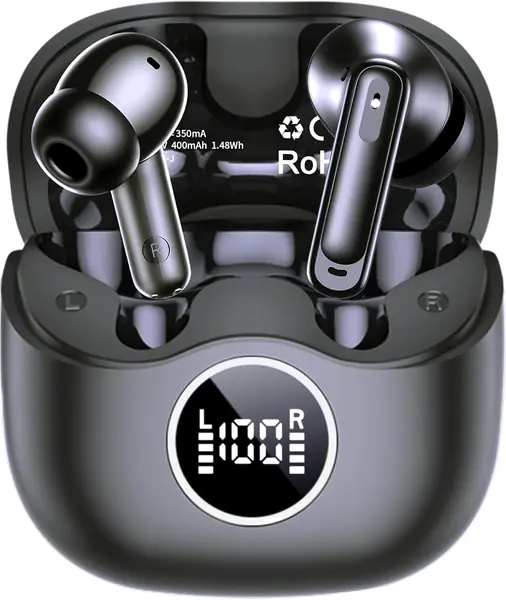
There are no ear hooks on the Air7 Pro, which for a running earbud is either a dealbreaker or exactly the point. This is a plain in-ear design, and it sits low enough in the ear to disappear under a cap or a helmet in a way hook-style buds never quite manage.

What you get for very little money: adaptive noise cancellation with a transparency mode, three microphones in each bud for calls, 11mm drivers, and 40 hours with the case. Fast charging is quoted at two hours of playback from a ten-minute top-up, which is the sort of thing that saves you on the way out the door.

The catch is that everything rides on the seal. With no hook or wing, the tips are the only thing holding them in, so fit comes down to finding the right size and accepting that a hard trail run will test it. If you have a hat, a helmet, or glasses in the way, going hook-free is worth that trade in security.

Pros

  • Lowest-priced ANC pair in this guide
  • Adaptive ANC with a transparency mode
  • Six microphones for clearer calls

Cons

  • Waterproofing is claimed without an IP rating
Our verdict

The least expensive way into active noise cancellation here, and the one to pick if hooks bother you under a hat.

Check Latest Price

How We Tested Running Earbuds With Noise Cancellation

The shortlist started with the specs that actually decide whether a pair survives a run: fit style (ear hooks, wing tips, plain stick buds), water and dust rating, whether the noise cancellation can be switched off or dialed back, and battery life listed for the buds alone rather than the case. I filtered out anything with a case too bulky for a shorts pocket and kept a deliberate spread of prices, curious whether the cheap pairs could hold their own. That left 12 pairs, worn over six months.

Every pair went through the same miles: treadmill intervals at the gym, 5Ks on pavement, long weekend efforts on park paths, one drizzly morning, and a stretching session that had me upside down half the time. I did a 10-second head shake at the start of each run and wrote down whether a bud needed pushing back in, and how often.

To judge the noise cancellation, I stood beside a running treadmill and had a colleague speak at normal volume from a few paces behind, then repeated it outdoors with traffic passing. A good pair muffles the gym and still lets the car through, and the transparency modes got the same test.

Battery life was timed rather than trusted — I ran each pair down with cancellation on and recorded the real number, then dropped the case in a pocket to see if it bounced. Comfort got judged over a three-hour stretch, and I checked appearance in a hallway mirror to see whether a pair reads as gym gear or looks normal enough for the office. Last, I re-paired each set a dozen times and dropped the cases on purpose, since sweat and flaky connections are what kill running earbuds first.

How to Choose Noise-Canceling Headphones for Running

Start With How It Stays In

Three designs do the holding. Ear hooks wrap over the back of the ear and give the most retention, which is why they suit trails, speed work, and anyone whose ears reject silicone. Wing enhancers sit in the bowl of the ear and keep a lower profile, so they sit better under a hat. Tips alone are the least secure and perfectly fine on a treadmill.

Be honest about accessories. Glasses and helmet straps fight hooks; if you ride or wear a cap most days, a low-profile wing or plain in-ear bud is the easier companion.

Read the IP Rating Before Anything Else

IPX4 handles splashes and sweat; IPX7 survives a brief dunk, which is what lets you rinse salty buds under a tap; IP68 adds dust sealing on top. Sweat kills more running earbuds than rain ever will, because it dries into the charging contacts.

That last part is the trap. An IP68 pair still needs drying before it goes back in the case — JBL prints exactly that instruction for the Endurance Race 2 — so build a quick wipe into your post-run routine. If a listing claims waterproofing without quoting an IP number, treat it as splash resistance.

Decide How Much Noise You Want Blocked

Active noise cancellation is excellent at steady sound: treadmill motors, gym ventilation, the drone of a road. It is much weaker against a dropped dumbbell or a gust of wind across the microphones, and no pair here will hand you silence.

On roads and shared paths, run in transparency mode or with one bud out. Save the cancellation for the gym and the indoor track, where a car is not part of the equation.

Weigh Playtime Per Charge, Not Just the Total

Two numbers matter. Playtime per charge decides whether a single long run is covered, and anything around eight hours clears a marathon. Total playtime with the case decides how often you hunt for a cable.

The bigger battery usually lives in a bigger case, so if the earbuds will ride in a shorts pocket, look at the case dimensions before you fall for a headline number.

Buttons, Touch, and a Steady Connection

Wet fingers and touch panels do not get along, and neither do gloves and capacitive taps. Physical buttons are the safer bet for cold-weather running, even though they feel dated on paper.

Bluetooth is the quiet compromise across this category. Dropouts happen, so buy a pair with a return window, and choose multipoint pairing if you switch between a watch and a phone during the week.

Frequently Asked Questions

Final Verdict

The WHYKJTEK BX30 is the pair we point most runners to. The hooks hold without fuss, IPX7 makes sweat a non-issue, and 90 hours with the case means charging is a weekend chore rather than a nightly one — that combination is why it tops a list where it is also one of the least expensive picks.

Pay more only for a specific need. The Beats Powerbeats Pro 2 is the upgrade if you want heart rate read from your ears and live in Apple's ecosystem, and the JBL Endurance Race 2 is the one to take if your workouts leave a puddle on the floor.