Best Lightweight Headphones of 2026

Lightweight headphones are supposed to disappear on your head, and the good ones really do. The catch is that shaving off ounces is easy — doing it without gutting the hinge that folds, the pad that cushions, or the battery that gets you through a workday is the hard part. I've had featherweight pairs that clamped my temples after 40 minutes and heavier ones I forgot about by lunch, which tells you the number on the spec sheet is only half the story. What a good lightweight pair actually buys you is stamina: you keep them on all afternoon instead of taking them off to give your ears a break.

We spent eight months wearing 12 pairs — wired and wireless, budget through premium — through commutes, full workdays, and long walks. Two things we learned along the way: multipoint pairing matters more than an extra 20 hours of claimed battery life, and on a lightweight pair, passive isolation does most of the work, since real noise cancellation tends to add weight and clamping force. The picks below are the ones that earned a permanent spot in a bag.

The Best Lightweight Headphones

1

JVC HA-S160 Flats Best Overall
93 /100
TKZ Score Outstanding

Key details

Connection
Wired 3.5 mm
Listed Weight
2.33 oz
Frequency Range
12-24,000 Hz
Earpiece Shape
Flat on-ear
View on Amazon

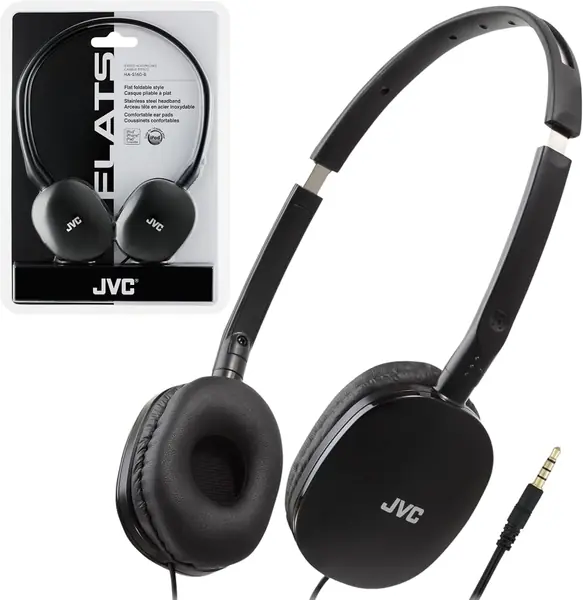
Sixty-six grams is the kind of specification that means nothing until the headphones are actually on your head. The JVC Flats rest on your ears rather than around them, and an afternoon of desk work went by without the hot band across the crown or the ache behind the jaw that heavier on-ears leave behind. That is the whole case for a pair this light: you stop noticing it, which is exactly what you want from something that lives on a laptop lid or in a bag.

The sound is the bigger surprise. A 30 mm driver in a plastic frame has no business being this clean, but the Flats keep vocals forward and the treble off the edge of shrill, and the 12 Hz to 24,000 Hz range handles everything from a podcast to a piano trio without strain. They will not give you the low-end punch of a bass-forward pair, and we never expected them to. What we noticed instead is that we stopped reaching for the EQ, which is more than we can say for most headphones at this price.

The shape is the thing to check before you order. Flat pads sitting on the ear are what buys the low weight, so if you want cups that swallow the whole ear, this is the wrong design. What you get in exchange is a pair that asks nothing of you: no charging, no app, no pairing, no firmware. Plug it into a laptop or an old phone and it simply works.

Pros

  • Very light at 66 grams on the head
  • Clear, balanced sound for the money
  • Costs less than most of the picks here

Cons

  • No mic and no wireless option
  • Headband joint is the weak point
Our verdict

Buy the JVC Flats if you want a genuinely light on-ear that sounds clear on a laptop or an older phone, for less than most of the picks here.
Check Latest Price
2

Sony WH-CH520 Best Wireless

92 /100
TKZ Score Outstanding

Key details

Connection
Bluetooth 5 with multipoint
Battery Life
Up to 50 hours
Charging
USB-C
Earcups
Swivel design
View on Amazon

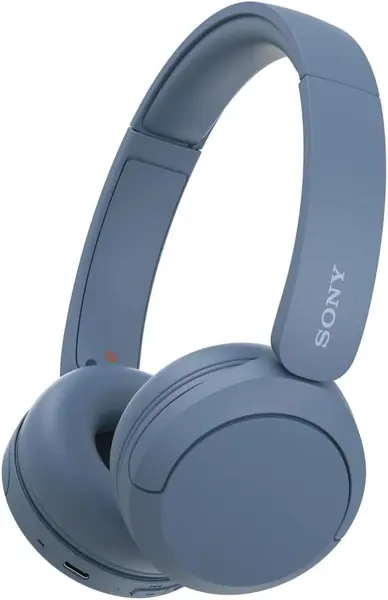
Fifty hours is not a number you have to squint at. It is the reason the WH-CH520 is the wireless pair we recommend to most people: we charged them once, used them through a week of calls and commutes, and the battery readout had barely moved. Add USB-C charging, multipoint so a laptop and a phone can both stay connected, and a mic that makes you sound like a person on a call, and you have the least fussy wireless headphone here.

Comfort is the part to think through. The swivel earcups and adjustable headband make them easy to put on and easy to rest around your neck, but the pads press on the ear, and after a couple of hours we were lifting one side off for a minute. That is normal for an on-ear at this weight. If you already know that pressure bothers you, the lighter JLab or a pair of over-ear cups is the better bet.

Sound is clean and a touch mid-forward, which flatters podcasts and vocals more than bass-heavy playlists; open the Sony app once and try the Bass preset before you decide they are too polite. The mic is good enough for meetings and fine for a call in a quiet room. The thing we kept wishing for is a case. The box holds the headphones and a short charging cable, and nothing to carry them in.

Pros

  • Up to 50 hours per charge over USB-C
  • Multipoint keeps two devices connected
  • Built-in mic handles calls

Cons

  • No carry case in the box
  • Bluetooth dropouts in crowded places
Our verdict

Buy the WH-CH520 if you want one wireless pair for calls and commutes and would rather charge it every couple of weeks than every night.

Check Latest Price
3

Koss Porta Pro Best for Travel

91 /100
TKZ Score Outstanding

Key details

Connection
Wired 3.5 mm
Listed Weight
2.79 oz
Frequency Range
15 Hz-25 kHz
Storage
Collapsible with pouch
View on Amazon

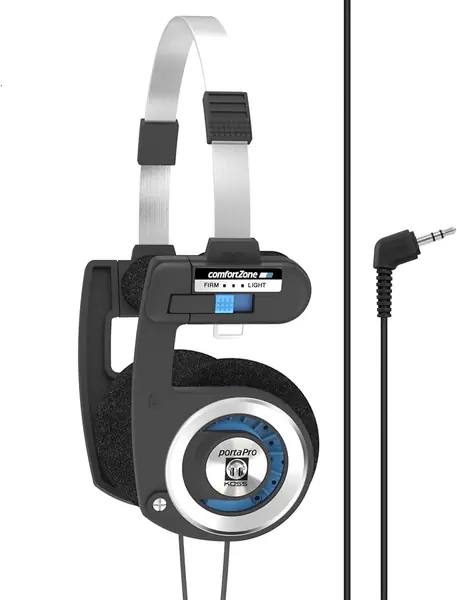
Folded down, the Porta Pro is roughly the size of a deck of cards, and it drops into the small drawstring pouch that comes in the box. A full-size headband that collapses into a flat bundle is the trick that has kept this design in production since the 1980s, and it is why this is the one pair here we would carry in a jacket pocket all day and forget about until we needed it.

The 60-ohm drivers are the other half of the argument. The spec sheet says 15 Hz to 25,000 Hz; what you hear is a warm, punchy tuning that makes a phone at half volume sound better than it has any right to. Comfort is decent rather than plush. The adjustable headband does not clamp hard, which most people will like, but the light grip means they slide a little when you look down.

What actually tips this one for travel is the warranty. Koss covers the Porta Pro for life, and a folding wired pair that lives at the bottom of a bag is exactly the kind of headphone that will eventually need it. That is the difference between this and the cheaper wired picks here: not that it is tougher, since the plastic frame and thin cable are ordinary, but that a failure becomes an errand instead of a replacement.

Pros

  • Collapses into a pouch for a jacket pocket
  • Warm, punchy sound from a phone jack
  • Covered by a lifetime warranty

Cons

  • Wired only, with no Bluetooth
  • Hair catches in the headband
Our verdict

Buy the Porta Pro if you want a wired pair that disappears into a jacket pocket and still sounds like a real headphone.

Check Latest Price
4

JLab Rewind 2 Best Budget Wireless

90 /100
TKZ Score Outstanding

Key details

Connection
Bluetooth with multipoint
Listed Weight
4.16 oz
Battery Life
20+ hours
Charging
USB-C
View on Amazon

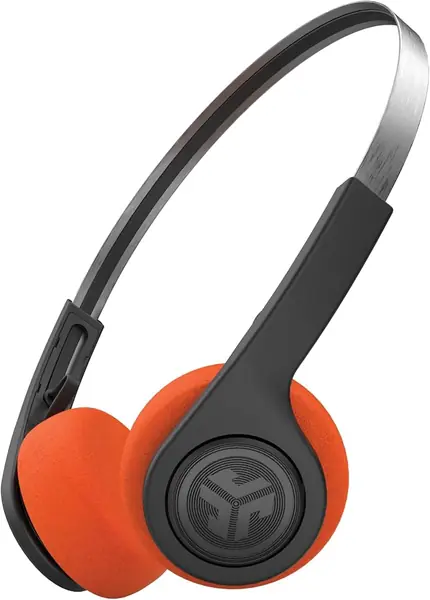
The Rewind 2 looks like something you would have bought with a cassette player: thin band, foam pads, and a second set of orange pads in the box so you can change the mood. The styling is not the point, though. The point is a 36 mm driver in a 4.16-ounce frame, an adjustable headband, and pads that sit on the ear without pinching, which makes this the lightest wireless pair here, and it feels that way.

For the money, this is the wireless pair we point people to when they are not sure what they want. Twenty-plus hours of playback and USB-C cover a week of commuting, multipoint keeps a laptop and a phone connected, the app gives you three EQ modes without guesswork, and the two-year warranty is longer than most at this price. What you give up is stability: the Bluetooth link occasionally drops and re-pairs on its own, and the volume ceiling is low enough that a loud train will win.

Pros

  • Lightest wireless pair here at 4.16 ounces
  • 20+ hours with USB-C and multipoint
  • Two-year warranty and swappable pads

Cons

  • Bluetooth drops and re-pairs on its own
  • Volume tops out in loud places
Our verdict

Buy the Rewind 2 if you want a light wireless pair for podcasts and walks and do not want to spend Sony money to get one.

Check Latest Price
5

Sony MDR-ZX110 Best Value Wired

89 /100
TKZ Score Excellent

Key details

Connection
Wired 3.5 mm
Listed Weight
4.2 oz
Frequency Range
12 Hz-22 kHz
Earcups
Swiveling
View on Amazon

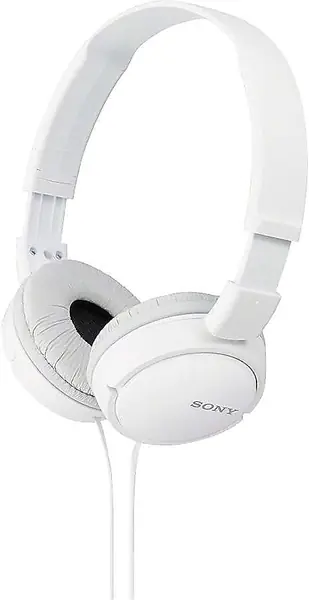
The feature we ended up using most is the swivel. Both cups rotate flat, which makes the ZX110 easy to lay in a bag and easy to pivot off one ear when someone starts talking. For a desk pair that matters more than anything on a spec sheet. At 4.2 ounces with a 3.5 mm L-shaped plug and a cord that resists tangling, this is the pair we leave plugged into a laptop.

Sound is why you pick this over a no-name pair. The 35 mm drivers cover 12 Hz to 22 kHz with clear mids and enough bass to make a laptop listenable, and the closed cups keep a little of your music out of the room. The pads are thin, so plan on an hour or two at a time; this is not the pair for a six-hour flight. Nothing about it is fancy, and at this price nothing needs to be.

Pros

  • Swiveling cups lie flat for storage
  • Clear sound with real bass for a laptop
  • Very low price for an everyday wired pair

Cons

  • No mic or inline controls
  • Cord is the first thing to fail
Our verdict

Buy the ZX110 if you want a cheap wired pair for a desk, a dorm, or a kid's tablet, and you care more about sound than features.

Check Latest Price
6

Beats Solo 4 Best Premium

88 /100
TKZ Score Excellent

Key details

Battery Life
Up to 50 hours
Charging
USB-C Fast Fuel
Audio
Personalized Spatial Audio
Cushions
UltraPlush ear cushions
View on Amazon

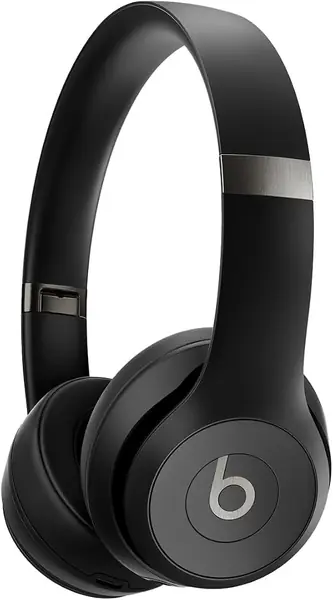
Bass-forward is the whole point, and the Solo 4 does it without turning the mids to mud. The custom drivers give kick drums real weight while vocals stay legible, and personalized Spatial Audio with head tracking genuinely changes a movie on a plane: turn your head and the soundstage stays put. It is a strange trick the first time and a convincing one after that.

The fit is what to think about before you order. A flex-grip headband and angled ear cups give a stable hold that does not slide when you lean forward, and the UltraPlush cushions are genuinely soft. Whether that hold reads as secure or snug depends on the size of your head, and it is the one thing about this headphone we tell people to try on before committing.

Battery is rated at up to 50 hours over USB-C, and a full charge takes a little over two hours, so a ten-minute top-up covers a commute. Pairing is the other thing Beats gets right: the Solo 4 behaves the same way on an iPhone and on an Android phone, which is not true of every premium headphone.

This is the pair for the person who wants the best sound here and will use the features. It is also the only one in this group with head-tracked spatial audio, which is worth real money if you watch movies on a laptop. Pay for it if those things matter to you. If they do not, the JVC does the basics for a fraction of the money.

Pros

  • Bass-forward sound that keeps vocals clear
  • Head-tracked spatial audio, unique in this set
  • Up to 50 hours with USB-C Fast Fuel

Cons

  • Highest price in this group by a wide margin
  • An earcup can quit over time
Our verdict

Buy the Solo 4 if you want the most bass-forward, feature-heavy pair here and you are willing to pay for it.

Check Latest Price
7

JBL Tune 530BT Best for Long Trips Between Charges

87 /100
TKZ Score Excellent

Key details

Connection
Bluetooth 6.0 with multipoint
Listed Weight
5.44 oz
Battery Life
Up to 76 hours
Mics
Two beamforming per earcup
View on Amazon

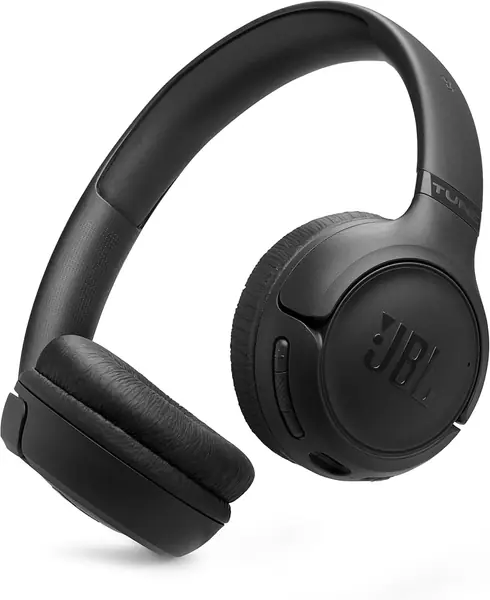
The Tune 530BT costs roughly half what the Sony WH-CH520 does and claims half again the battery: up to 76 hours against 50. That is the pitch, and it is a good one. JBL's 33 mm drivers, Bluetooth 6.0 with multipoint, two beamforming mics in each cup, and an app with EQ presets, all in a 5.44-ounce on-ear.

The catch is the track record. This is a 2026 model, so how it holds up over a couple of years is genuinely unwritten, and one practical detail shows up immediately: there is no charger in the box, just the headphones, so you need a USB-C brick you already own. The sound is JBL house tuning, bass-forward without getting sloppy, and loud enough for a noisy kitchen.

Where it fits is the long-haul listener. Seventy-six hours means charging monthly rather than weekly, and multipoint on Bluetooth 6.0 handles a laptop and a phone without fuss. If you want the safest wireless pick, the Sony has the longer record behind it. If you want the longest leash for the least money, this is the one.

Pros

  • Up to 76 hours between charges
  • Bluetooth 6.0 multipoint and two mics per cup
  • Costs about half what the Sony does

Cons

  • No charger in the box
  • Durability record is unwritten
Our verdict

Buy the Tune 530BT if battery life is the thing you care about most and you are comfortable being an early owner.

Check Latest Price
8

Moondrop Old Fashioned Best for Quiet Rooms and Repairs

86 /100
TKZ Score Excellent

Key details

Connection
Wired 3.5 mm
Cable
0.78 mm 2-pin detachable
Design
Open-back on-ear
Driver
40 mm dynamic
View on Amazon

A 0.78 mm two-pin connector on an on-ear headphone is unusual, and it is the reason to care about this one. The cable detaches at the cup, so the failure that kills most cheap wired headphones, a short at the plug or a broken wire at the driver, becomes a swap instead of a funeral. The cups and the headband come apart as well, on a telescopic band with multi-axis swivel hinges, so the parts that wear are the parts you can replace.

It also sits light on the head. The foam pads are soft, the band does not press, and the cups stay put when you look down, a combination that is harder to find at this weight than it should be. Nothing about the build feels disposable, which is the other half of the surprise.

The sound is open in both senses. A 40 mm driver gives a wide stage, clean mids, and bass that is punchy and tight without ever becoming the point, and the result is music that sounds like it is happening in the room rather than inside your skull. That openness is also the boundary: this is a headphone for a desk, a quiet apartment, or a late-night listening session rather than a bus.

What we keep coming back to is that Moondrop built this for people who keep things. A replaceable cable, swappable parts, and a standard 3.5 mm plug mean nothing here is designed to be thrown away when one piece fails. For anyone who has watched a good pair of headphones die over a frayed wire, that is worth more than another line on a spec sheet.

Pros

  • Detachable 0.78 mm cable you can replace
  • Light and stable on the head
  • Wide, open sound for the money

Cons

  • Bass-light for hip-hop and EDM
  • Open back leaks sound both ways
Our verdict

Buy the Old Fashioned if you listen at a desk, want an open, detailed sound, and like the idea of a headphone you can fix.

Check Latest Price

How We Tested the Best Lightweight Headphones

We built the shortlist by collecting published weights and specs for every on-ear and around-ear model billed as lightweight, then reading owner reviews for the complaints that repeat — cracked hinges, flattened pads, Bluetooth dropouts. We filtered by price so the group covered budget through premium, kept both wired and wireless options in, and cut anything we couldn't source. Twelve pairs went into testing.

From there, the pairs lived on our heads. Each got a full workday at a desk, at least a week of commutes, daily walks, and a couple of flights. We weighed every one on a kitchen scale before wearing it — the advertised number and the real one didn't always match. Three testers with different head sizes wore each pair for three-hour stretches and noted where pressure built first: temples, the crown of the head, or the cartilage of the ear. Two of us wear glasses, which is its own fit test.

Battery life we measured instead of trusting, playing at a fixed volume until each pair shut itself off, then timing a ten-minute quick charge. We made calls from a busy street and asked whoever answered to rate how we sounded, and we paired each Bluetooth model to a phone and a laptop at once, walking room to room and outdoors to find where the signal broke and whether it reconnected on its own after a few days idle.

Durability got the least glamorous treatment: we folded and unfolded every hinge daily, carried pairs loose in bags next to keys, dropped them from desk height, and tugged where the cable meets the plug. We also noted how far we had to push the volume on a crowded bus, since most lightweight pairs lean on passive isolation rather than noise cancellation. Then we opened the box and looked at what shipped with it before deciding whether it earned its price.

How to Choose Lightweight Headphones

Weight Is Not the Same as Comfort

Grams tell you what a pair does to your neck and your bag; they say nothing about what it does to your ears. A 66-gram on-ear can ache after two hours if the band clamps, while a heavier pair with deep pads can disappear for a whole flight. The two things that predict comfort are clamping force and pad depth, and neither one gets printed anywhere.

Our rule: if you already know pressure bothers you, favor cups that surround the ear, and treat any on-ear as a two-hour headphone until you have worn it longer than that. Weight is the tiebreaker, not the decision.

Wired or Wireless Comes Down to Your Phone

Most phones sold now have no headphone jack, which quietly turns a cheap wired pair into a dongle purchase. Wired still wins on cost, weight, and never needing a charge. Wireless wins on calls, multipoint, and not being tethered to a laptop across the room.

None of the pairs here cancel noise, so do not buy one expecting a quiet cabin. If calls matter, look for a mic and multipoint; if you mostly listen at a desk with a laptop that still has a jack, a wired pair is the simpler and lighter answer.

What Battery Life Actually Buys You

Twenty hours covers a week of commuting. Fifty is enough that you stop thinking about the charger. Seventy-six is enough that you will lose the cable before you drain the cell. The more useful number is charging: USB-C on everything with a battery here, and quick top-ups on the Sony and the JBL, which matter more than a headline figure you never reach.

One caution on any rating: hours are measured at moderate volume, and a small battery in a light frame loses capacity as it ages.

How It Packs, and What Breaks First

A collapsible headband and a pouch beat cups that merely swivel flat, and both beat a pair that only lies still in a drawer. Packing matters because of what happens after: the headband joints, the cable at the plug, and the foam pads are the three parts that fail, and a pair that rides loose in a bag meets all three faster.

There are two ways to buy around that. Choose a detachable cable you can replace, as on the Moondrop, or choose a frame covered by a lifetime warranty, as on the Porta Pro.

Frequently Asked Questions

Final Verdict

For most people the JVC HA-S160 Flats are the answer. At 66 grams they are the lightest pair we recommend, they sound clear on a laptop or an older phone, and they ask nothing of you: no charging, no app, no pairing.

If you need wireless, the Sony WH-CH520 is the pick, with 50 hours, multipoint, and a mic at a mid-range price. And if the pair has to fold into a jacket pocket, the Koss Porta Pro travels better than anything else here and comes with a lifetime warranty.