Best Green Screens for Streaming and Video of 2026

A green screen is supposed to make you disappear cleanly. What usually happens the first time you hang one is less magical: fold lines from the shipping box, a stand that leans, and fabric thin enough that the window behind it turns your whole background into a green glow. A dull, weighty cloth keys far more easily than a thin shiny one.

My team and I spent six months with 14 green screens, hanging them for weekday video calls, weekend streaming sessions, and a few real photo shoots in a garage. Assembly mattered almost as much as fabric: clamps, rod pockets, and folding stands each solve a different room, and some kits that looked great on paper took one person twenty minutes to get upright.

Sizes here run from a five-foot panel that sits on a desk to a 20-foot curtain that covers a whole wall, so measure the shot you need rather than the room. The price spread is narrow; the quality spread is not. The picks below sort out which is which.

The Best Green Screens for Streaming and Video

1

RAUBAY Collapsible Green Screen Best Overall
94 /100
TKZ Score Outstanding

Key details

Weight
22.1 lb
Setup
Retracts into hard case
Fabric
Wrinkle-resistant composite polyester
Screen Size
78.7 x 82.7 in
View on Amazon

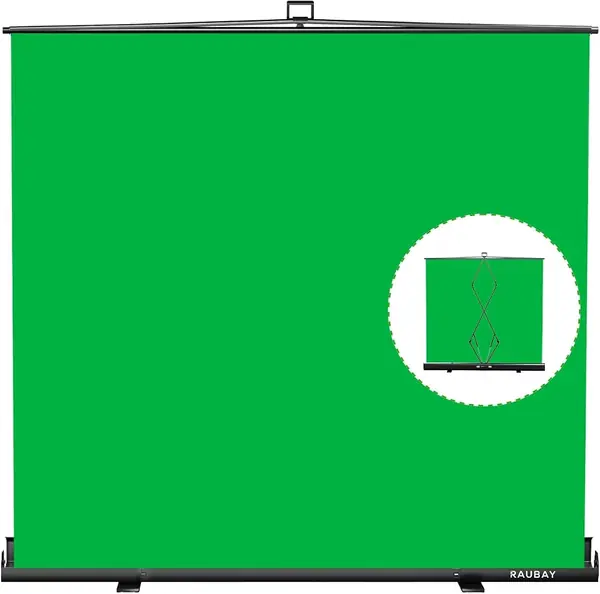
The pitch here is a flat green surface in seconds, and the design delivers it: fold the legs out, lift the panel to the height you want, and you have a 78.7- by 82.7-inch screen standing on its own legs, with no clamps to chase and no cloth sagging between poles. It is the only retractable panel we recommend in this group, and the difference shows up in the key, because a taut surface gives the software an even field to read.

That convenience is what earns it the top spot. Nothing needs steaming before a call, since the fabric is stretched on a frame rather than folded into a bag, and there is room in the frame for two people sitting side by side. The composite polyester is wrinkle resistant rather than wrinkle proof, but in a room where the screen stays set up, it stays presentable without any maintenance from you.

Storage is the other half of the argument. Push the panel back down and it disappears into a hard case that stands in a closet or behind a door, so a living room goes back to being a living room between shoots. That is the reason to choose this over any of the fabric picks if the screen is going to come out several times a week.

Pros

  • Flat, wrinkle-free surface needs no steaming
  • Up in seconds and stores in its own case
  • Wide enough for two people side by side

Cons

  • Legs can slide back on hard floors
  • Heavy at just over 10 kg
Our verdict

For a permanent home setup this is the screen we point people to: it goes up in seconds, stays wrinkle-free, and covers two people, and that convenience is what the premium buys.
Check Latest Price
2

EMART Backdrop Kit Best Complete Kit

93 /100
TKZ Score Outstanding

Key details

Includes
2 clamps and carry bag
Stand
8.5 x 10 ft tripod
Height
Adjusts from 3 ft
Backdrop
10 x 12 ft
View on Amazon

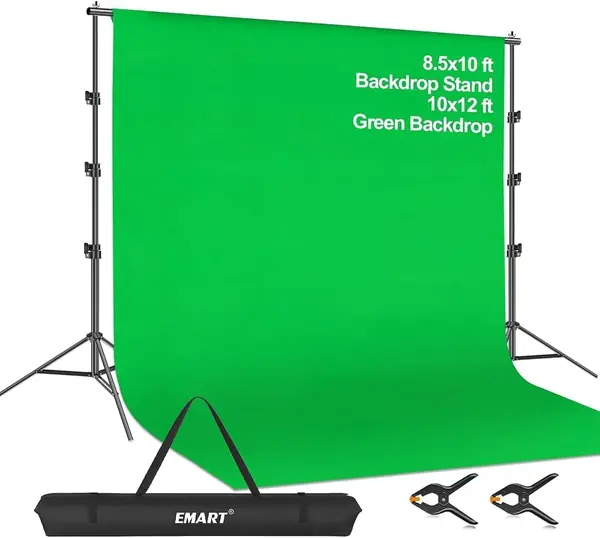
If you own nothing yet, no stand, no clamps, no cloth, this is the box to start with. EMART packs an 8.5- by 10-foot tripod stand, a 10- by 12-foot green backdrop, two clamps, and a carry bag, and one person can have the whole thing standing inside a few minutes.

What we noticed first is how much cloth you get for the frame. Ten by twelve feet drapes past the stand on both sides and above a standing subject's head, so you get background out past the shoulders without tucking and pinning, and the double rod crossbar holds the fabric flatter than a single pole. The stand also drops to about 3 feet for seated work.

For the money this is the most complete package here: one box, one person, a few minutes, and a backdrop large enough for two. The tripod feet are the weak point, since on a hard floor they skate when someone brushes the frame, so weight them down before a session and keep the rig out of the walking path.

Pros

  • Stand, backdrop, clamps, and bag in one box
  • 10-by-12 cloth covers a standing subject
  • One person can assemble it in minutes

Cons

  • Wide stand footprint needs a dedicated corner
Our verdict

Buy this if you are starting from nothing: stand, backdrop, clamps, and bag arrive in one box, and the cloth is big enough for a standing subject and a second person.

Check Latest Price
3

JINSUI 10 x 10 ft Backdrop Best Budget Backdrop

92 /100
TKZ Score Outstanding

Key details

Weight
2.6 lb
Size
10 x 10 ft
Care
Machine washable
Mounting
Rod pocket on top edge
View on Amazon

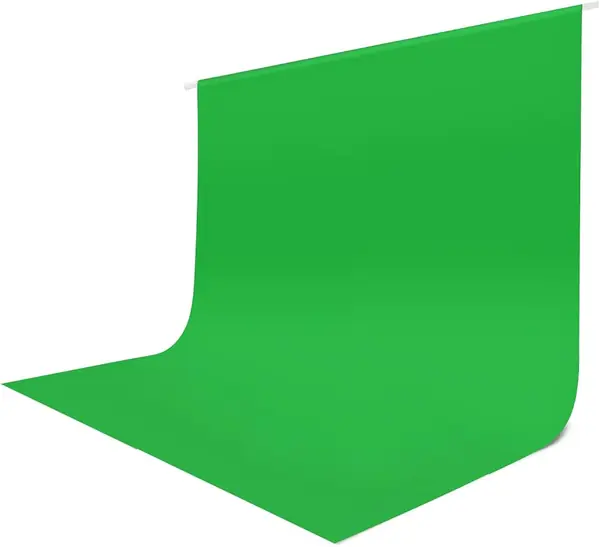
Anyone who already owns a stand should start here. The JINSUI is a 10- by 10-foot sheet of high-density polyester that weighs 2.6 pounds, hangs from a rod pocket sewn along the top edge, and works from either side, which gives it the best coverage-for-cost balance we found among the fabric-only options in this group.

The density is what makes it useful: light behind the cloth does not wash the green out, and the non-reflective face does not throw a hotspot back at the lens. All four edges are turned and stitched so it does not fray when you drag it over a frame, and it can go in the washing machine between shoots.

It also packs down to almost nothing, which makes it the fabric to take to a rented hall or a friend's garage. Ten feet square covers a standing subject with room to move, and two people if they sit close together, so it keeps working as the setups get bigger.

Pros

  • Opaque high-density polyester blocks backlighting
  • 2.6 pounds folds small for travel
  • Machine washable with finished edges

Cons

  • Deep fold creases need steaming out
Our verdict

Anyone who already owns a stand should start here: ten feet square of opaque, matte fabric with the best coverage-for-cost balance among the fabric-only options.

Check Latest Price
4

LCUIRC 10 x 20 ft Backdrop Best for Group Shots

91 /100
TKZ Score Outstanding

Key details

Weight
4.96 lb
Size
10 x 20 ft
Includes
4 spring clamps
Rod Pockets
Two, on both edges
View on Amazon

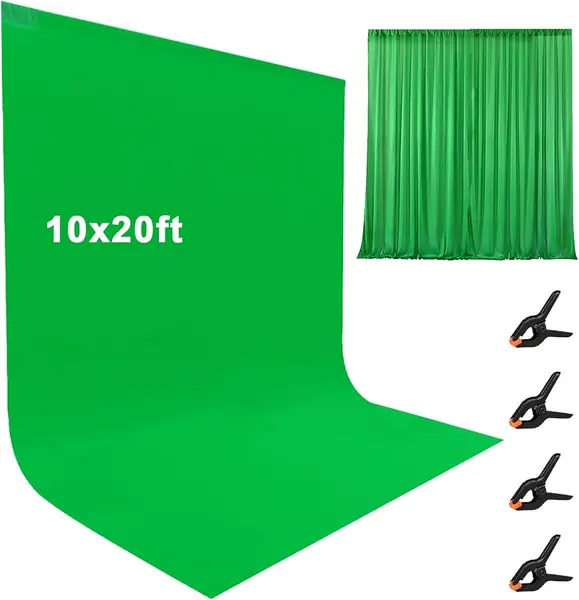
Twenty feet of width changes what you can shoot. Hung along its long edge, the LCUIRC puts a full standing figure in frame with margin on both sides, or three people at once, and that is coverage no five- or seven-foot panel can give you however you angle it.

We rate it the best of the big fabrics here. The polyester is thick enough to stay opaque under a bright key, the plain weave keeps the color even from edge to edge, and the four spring clamps in the box make the difference between a backdrop and a backdrop you can actually mount, since you can clip it to a crossbar, a shelf bracket, or a curtain track without hunting for hardware.

Two rod pockets are sewn in, one along the 10-foot edge and one along the 20-foot edge, so the same cloth hangs wide behind a group or with a longer drop behind one person. A span this size is heavy once it is up, so match it to a stand with a wide base and check the pocket against your pole diameter before you thread it.

Pros

  • 20-foot width covers groups and full-body shots
  • Thick fabric stays opaque under bright light
  • Four spring clamps included for mounting

Cons

  • Finished size can run a few inches short
  • Backdrop stand sold separately
Our verdict

Our group-shot pick: a thick, opaque 10-by-20 that ships with four clamps and keys cleanly across the full span, for anyone with a stand wide enough to hold it.

Check Latest Price
5

EMART Blue/Green Kit Best for Small Spaces

90 /100
TKZ Score Outstanding

Key details

Weight
6.61 lb
Includes
5 clamps and carry bag
Colors
Green and blue, reversible
Stand Height
4 to 6.5 ft
View on Amazon

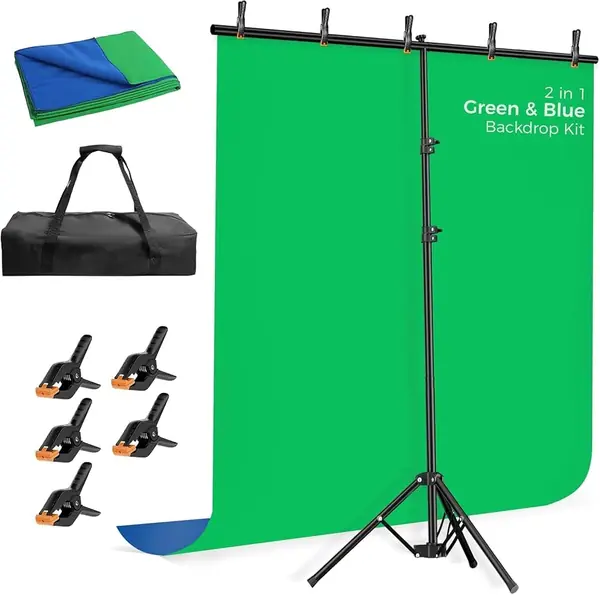
Two chroma colors in one piece of cloth is the trick here: one side is green, the other blue, so a subject who turns up in a green shirt can move in front of the blue and still get a clean edge. It is a small kit, about five feet wide, which is the point, because it fits in a bedroom corner without eating the room.

The stand is the clever half. Its tripod base folds in reverse, which splays the feet wider than a standard tripod while packing smaller, and the height runs from 4 to 6.5 feet, or about 2.7 to 5 feet with the top rod removed, low enough to sit behind a laptop. Five clamps and a carry bag come in the box, and the fabric is machine washable.

We think it is the most practical kit in this group for a desk-sized setup: two colors, one stand, and a package that folds into its own bag and lives on a closet shelf. About five feet of width leaves no margin for a standing subject, so treat it as a seated-frame tool, which is exactly what most video calls need.

Pros

  • Green and blue in one reversible cloth
  • Reverse-folding tripod packs small, stands wide
  • 5 clamps and a carry bag included

Cons

  • Creases hold and cast shadows
Our verdict

A desk-side kit we keep coming back to: reversible green and blue, a stand that folds flat, and enough coverage for one seated person on a video call.

Check Latest Price
6

Hemmotop 5 x 7 ft Backdrop Best Starter Screen

89 /100
TKZ Score Excellent

Key details

Weight
14.1 oz
Size
5 x 7 ft
Care
Machine washable
Mounting
Rod pocket on 5 ft edge
View on Amazon

The cheapest way into chroma key we found in this group. Hemmotop's 5- by 7-foot sheet weighs 14 ounces, has a rod pocket along the 5-foot edge, and hangs from a stand, a curtain rod, or two hooks on a wall, so you can try a green screen without buying a frame at the same time.

It is a light polyester cloth with a non-reflective front and a reflective back, and at this size it covers a seated frame at a desk with a little room to move. Stand up and pull the camera wide and you will see the edges, because this is a head-and-shoulders backdrop rather than a studio wall.

Leave it hanging between sessions if the room allows. The cloth is thin and the shipping folds take a steamer to settle, and a screen that stays up does not need steaming twice. For a first home setup or a podcast corner, that is the whole job done.

Pros

  • Lowest-cost way to try a green screen
  • 14 ounces and packs into a drawer
  • Rod pocket hangs from a stand or hooks

Cons

  • Can read translucent against a bright window
Our verdict

The cheapest way into chroma key we found here: a 14-ounce five-by-seven sheet that covers a seated desk frame and nothing more, which is often all a call needs.

Check Latest Price
7

CPLIRIS 10 x 20 ft Backdrop Budget Wide Coverage

88 /100
TKZ Score Excellent

Key details

Weight
4.63 lb
Size
10 x 20 ft
Care
Machine washable, steam ironable
Rod Pockets
Two, one per edge
View on Amazon

The second rod pocket is the interesting part of this one. CPLIRIS sews a pocket along the 10-foot edge and another along the 20-foot edge, so the same cloth can hang 20 feet wide behind a group or 10 feet wide with a longer drop behind one person.

The fabric itself is a thick polyester that will not let light through, and it can go in a washing machine, with the maker suggesting an iron on the back surface if creases settle in. On a span this size thickness matters, because a thin cloth telegraphs every fold straight into the key.

Hanging it is the part to plan. Twenty feet of cloth is heavy, and the pocket needs a pole that fits, since a rod that sags in the middle puts a dip in your backdrop right where the camera is looking.

Used at its full width it is a lot of opaque green for the money, and the dual pockets mean you can turn it for a narrower setup. We think it is worth it only as a second-act purchase, though: there are no clamps or stand in the box, so the saving over the LCUIRC disappears if you have to buy hardware separately.

Pros

  • Two rod pockets for wide or tall hangs
  • Thick polyester blocks light from behind
  • Machine washable and steam ironable

Cons

  • No clamps or stand included
Our verdict

A big, thick 10-by-20 for anyone who already has a stand and clamps: it costs less than our group-shot pick and covers just as much green.

Check Latest Price
8

Aiuca Chair Green Screen Best for Desk and Chair

80 /100
TKZ Score Excellent

Key details

Weight
16 oz
Size
57 in round
Mounting
Straps to a chair
Material
Cotton
View on Amazon

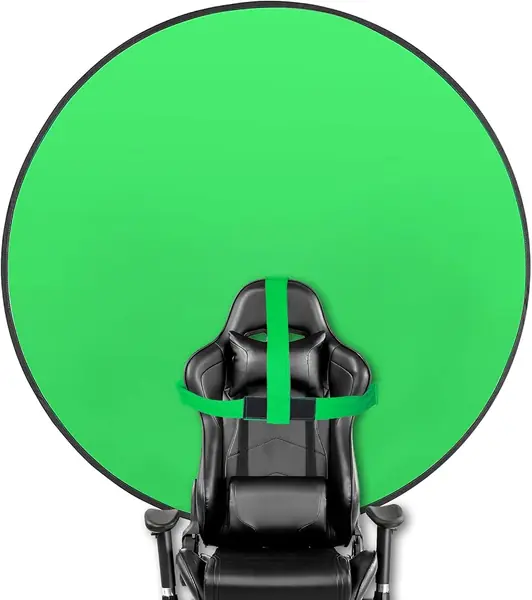
This one is for a desk, not a spare room. It is a 57-inch round of cotton that straps to the back of your chair and sits behind your head, so a video call gets a clean green field without a stand, a tripod, or a corner of the apartment given over to gear.

At 16 ounces it goes from folded to mounted in the time it takes to sit down, and it comes off just as fast when the call ends. The cotton is chosen for wrinkle resistance rather than the polyester most backdrops use, and the double-sided face means the same screen works whichever way it is turned.

Strapped to a chair back it sits close behind your head, which is what you want: the closer the screen, the less of the room the camera sees. Keep it pulled flat against the chair rather than hanging loose, and check that your chair back is solid enough to hold the strap where you want it.

For a shared apartment or a desk in the living room, this is the version we keep coming back to: nothing to trip over, nothing to move when guests arrive, and green filling the frame without a lighting rig behind you.

Pros

  • Straps to a chair, no stand needed
  • 16 ounces and folds flat for storage
  • Cotton fabric made for wrinkle resistance

Cons

  • Folding it flat takes practice
  • Covers one seated person only
Our verdict

Worth it for a dedicated desk: strap it to your chair, fold it away afterwards, and seated calls get a clean chroma field without a stand in the room.

Check Latest Price

How We Tested the Best Green Screens

We started by gathering every green screen kit we could find from the brands that dominate photo and streaming gear, then filtered the list on three questions: was the fabric material stated, did the kit include a way to hang it (stand, rod pocket, or clamps), and did it come in a size a normal room can actually fit. That left 14 units, which we tested over six months.

Each one went up in a spare bedroom, a home office, or a converted garage, and stayed there through weekday video calls, weekend streaming sessions, and one gaming desk surrounded by LED strips. We assembled every kit solo and timed it, nudged each stand to see how far it moved, and ran a lamp directly behind the fabric to check whether any light pushed through.

To judge wrinkles, we unfolded each backdrop, hung it, and counted the fold lines still visible after a day, then tried steaming and ironing to see what it actually took to get a smooth surface. We recorded a short clip against every screen with a key light aimed at the cloth to watch for green spill on hair and shoulders, and for the reversible backdrops we keyed both sides against the same light. Each one was folded and repacked three times over the test period to see whether creases came back and whether seams, grommets, and clamps held.

The screens that keyed cleanest shared a dull finish and enough weight to hang straight on their own; the thinnest ones needed the most ironing and still glowed when a lamp got close. Durability sorted the group further, since a few stands had loosened at the joints by month four.

How to Choose a Green Screen

Match the Screen to the Shot

Work backward from the widest frame you plan to shoot. A seated webcam shot is covered by a 5-by-7 backdrop, a standing subject wants roughly 8 to 10 feet of width so the edges stay out of frame, and two or three people need a 10-by-20 or a panel rated for that width. Then add a foot of margin per side, because a hemmed and pocketed backdrop finishes smaller than its listed cut size.

If you shoot both seated and standing, buy for standing and frame tighter when you sit. A screen that is too small cannot be fixed with software, while a screen that is too big just needs the camera pulled in.

Choose a Format: Fabric, Panel, or Kit

Fabric is the cheapest way in, folds smallest, and is the most flexible about how you hang it, but it needs a stand, clamps, and a steamer, and it drapes rather than stands. A retractable panel goes up in seconds, stays flat, and stores in its own case, which is why it costs the most. A kit lands in the middle: stand, cloth, and clamps in one box, with tripods that are usually the weakest part.

Our rule is to buy the format that matches how often you set it up. Weekly use justifies a panel; a few shoots a year makes a fabric backdrop or a kit the better spend.

Plan for the Creases

Almost every fabric backdrop ships folded, and fold lines read as bands of shadow in a key. Steam the cloth and hang it overnight before the first shoot rather than five minutes before, and use a garment steamer in preference to an iron, since polyester can mark or melt under direct heat.

Once a screen is up, leave it up if the room allows, because re-folding puts the creases back. A framed panel sidesteps the problem entirely, which is part of what the extra money buys.

Light It Evenly and Keep It Opaque

Chroma key software needs a flat, even field of color. Light the screen separately from your subject where you can, keep the light off the fabric itself to avoid hotspots, and check that nothing bright behind the cloth is bleeding through as a pale patch, which is where keys fail.

Record ten seconds and look at the edges of hair, glasses, and hands before you trust the setup. If those edges shimmer, the problem is almost always uneven light on the screen rather than the screen itself.

Stands, Floors, and Storage

Tripod stands splay wider than the cloth suggests, and a 10-foot crossbar needs a room where nobody walks behind it. On hard floors the feet slide, so weight them with sandbags or anything heavy and stable. Check ceiling height before committing to a 20-foot drop.

Measure the closet where the kit will live, too. A retractable panel packs into a long case that wants floor space, while a fabric backdrop folds down to the size of a shoebox.

Frequently Asked Questions

Final Verdict

The RAUBAY is the screen we point most people to: the things that ruin a shoot, namely creases, clamps, and cloth sagging between poles, are designed out of it, and it holds two people side by side.

If a permanent setup is not in the cards, the JINSUI gives you ten feet of opaque green for a stand you already own, and the EMART kit is the least painful way to buy everything in one box. Choose by how often you will set it up, not by how much fabric you can get for the money.