Best Fitness Watches of 2026

A fitness watch is the only thing I wear to bed, into the pool, and to a meeting without thinking twice — and the category's built-in tradeoff is that the more a watch can do, the more often it wants a charger. A bright screen and all-day heart rate tracking are great until you're three miles from home with a dead wrist. The real question is which one you'll keep wearing.

Over the past six months, my team and I wore 12 fitness watches through long runs, pool laps, weight sessions, and the nights in between. We judged accuracy of distance and heart rate, reliability of syncing, how quickly the menus made sense, comfort at 2 a.m., and how many days each one actually lasted between charges.

The spec sheet won't tell you that sleep tracking and phone notifications drain a battery faster than workouts do, so a two-week claim often means five real days. The picks below are the ones that made it through.

The Best Fitness Watches

1

Garmin Forerunner 165 Best Overall
93 /100
TKZ Score Outstanding

Key details

Display
1.2-inch AMOLED
Battery Life
Up to 11 days
Water Resistance
50 meters
Weight
1.38 oz
View on Amazon

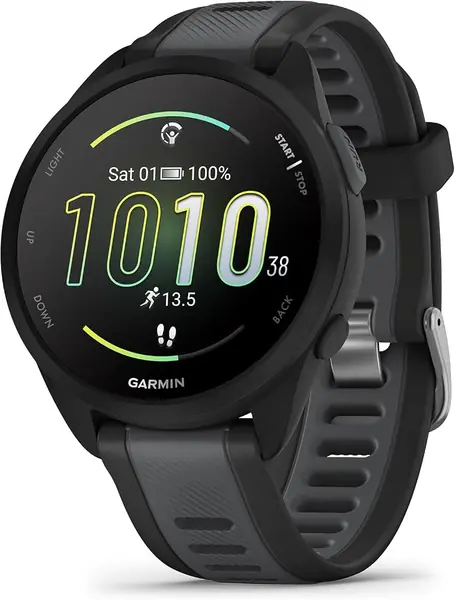
The Forerunner 265 is the more capable training watch, and most people should still buy the 165. What it keeps is everything that matters on a Tuesday morning: a GPS lock that holds, a heart-rate trace that matches the effort, and a battery that doesn't need a nightly ritual. What it gives up is race-morning theater.

We wore it for runs, gym sessions and sleep, and the data held up its end. Pace stayed steady through tree cover, and the morning report — sleep, recovery, the day's suggested workout — became the first thing we checked. The 1.2-inch AMOLED is bright enough to read at noon, and at 1.38 ounces on a 43mm case the watch disappears, including overnight, which is the only way sleep numbers mean anything.

Garmin's coaching layer is the real value. Daily suggested workouts adjust when you sleep badly, Garmin Coach plans build toward a race date, and more than 25 activity profiles cover swimming, cycling and strength without a second device. None of it requires you to interpret a spreadsheet, and the recovery guidance arrives in plain language.

Two things to know. The menus take a few days: settings sit behind long presses and button combinations that aren't obvious at first. And pairing with our phones was occasionally fussy, settling down after a restart. If you want multi-band GPS and music stored on the watch, the 265 has both; if you want the training basics done well for less money, this is the one.

Pros

  • Reliable GPS pace and heart rate
  • Up to 11 days of battery
  • Guided workouts and recovery scores built in
  • Light enough to wear overnight

Cons

  • Menu system takes a few days to learn
  • Pairing with phones can be fussy
Our verdict

We recommend the Forerunner 165 to anyone who wants trustworthy GPS and heart-rate data, a screen they can read outdoors, and more than a week of battery without paying racing-watch prices.
Check Latest Price
2

Garmin Forerunner 265 Best for Race Training

92 /100
TKZ Score Outstanding

Key details

Display
1.3-inch AMOLED
Battery Life
Up to 13 days
GPS
Multi-band
Weight
1.66 oz
View on Amazon

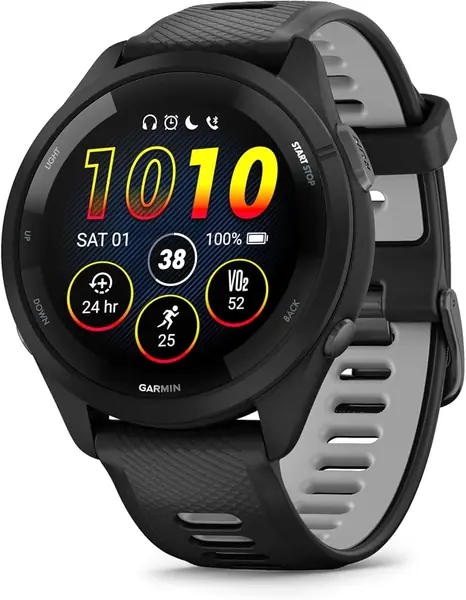
Train for a marathon and the Forerunner 265 starts earning its price. This is the watch in this group built around a race date — multi-band GPS for city streets, a training readiness score first thing in the morning, and daily suggested workouts that shift when your recovery does.

The 1.3-inch AMOLED at 416 x 416 keeps maps and pace graphs legible mid-run, which is more than a nicety when you're glancing down at speed. Battery is listed at 13 days in smartwatch mode and 20 hours in GPS mode, so a week of daily runs doesn't force a charge, and music storage means a run without your phone still has a soundtrack.

The trade-offs are size and money, and we minded the bulk more than the price. At 46mm and 47 grams it's a big watch; on a slim wrist you'll feel it against a jacket cuff and notice it under a shirt sleeve. Neither matters much if you're chasing a personal best. If you run for fitness rather than a finish line, the Forerunner 165 delivers the training basics for considerably less.

Pros

  • Multi-band GPS holds a line in cities
  • 13-day battery, 20 hours with GPS
  • Readiness scores and race-day workouts
  • Music stored on the watch

Cons

  • 46mm case is bulky on small wrists
  • Premium price
Our verdict

We point serious runners at the Forerunner 265: multi-band GPS, morning readiness scores and music on the wrist make it the training partner worth the upgrade.

Check Latest Price
3

Amazfit Bip 6 Best Budget GPS Watch

88 /100
TKZ Score Excellent

Key details

Display
1.97-inch AMOLED
Battery Life
Up to 14 days
Water Resistance
50 meters
GPS
Built-in, five satellite systems
View on Amazon

The Bip 6 is the least expensive watch here with built-in GPS, and it throws in free downloadable maps. For a first GPS watch, that combination is hard to argue with.

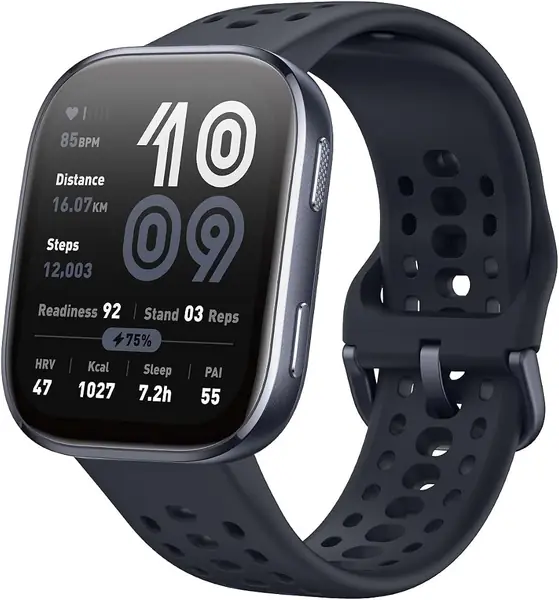
The screen is enormous for a fitness watch — 1.97 inches of AMOLED at 2,000 nits — and it makes pace, maps and message previews readable at a glance. Battery is listed at up to 14 days, water resistance at 50 meters, and the workout list runs past 140 modes, including HYROX and strength training. Position comes from five satellite systems.

What we like most is how little feels stripped out at this price: Bluetooth calls and texts come through, the aluminum case stays light at 1.44 ounces, and heart rate, sleep and blood oxygen run around the clock. The screen is the one thing to weigh against your wrist — just under two inches of glass dominates a smaller arm.

One practical catch you'll only find in the fine print: the magnetic charging base ships without a USB-C cable, so add one to the order. That aside, this is the watch we point budget shoppers to first.

Pros

  • Built-in GPS with free downloadable maps
  • Up to 14 days of battery
  • Huge, bright 1.97-inch AMOLED
  • 140+ workout modes

Cons

  • Charging base ships without a USB-C cable
  • Large screen overwhelms small wrists
Our verdict

We recommend the Bip 6 to anyone who wants built-in GPS, free maps and a two-week battery without spending like a dedicated runner.

Check Latest Price
4

Samsung Galaxy Fit 3 Best for Android Phones

87 /100
TKZ Score Excellent

Key details

Display
1.6-inch AMOLED
Battery Life
13 days
Water Resistance
5ATM & IP68
Phone Support
Android only
View on Amazon

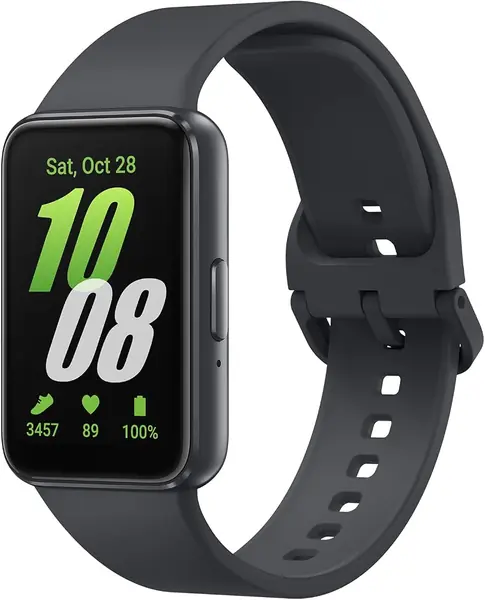
The Galaxy Fit 3 is Android-only, and that single line decides the purchase. Pair it with a Samsung phone and it's the best value band in this group; pair it with an iPhone and it does nothing at all.

The 1.6-inch AMOLED is the reason to choose it over a smaller band: bright, sharp, and easy to read with a hand weight in the other one. The aluminum case keeps it light at 50 grams, and 5ATM plus IP68 means pool laps and showers are fine.

We found the everyday loop is where it wins. Steps, sleep, heart rate and more than 100 workout modes with auto detection land in Samsung Health without fuss, and the listed 13-day battery turns charging into a background chore. The band is soft enough to wear overnight, which is what makes the sleep coaching worth looking at.

Two trade-offs. There's no built-in GPS, so outdoor distance comes from your phone in a pocket. And this is an international model sold without a U.S. warranty, which is the catch behind the low price.

Pros

  • Bright 1.6-inch AMOLED
  • 13-day battery life
  • Tight Samsung Health integration
  • 5ATM and IP68 water resistance

Cons

  • Android phones only
  • No built-in GPS
Our verdict

We recommend the Galaxy Fit 3 to Samsung phone owners who want a big, bright screen and nearly two weeks of tracking for very little money.

Check Latest Price
5

Bestinn H32 Pro Everyday Health Basics

86 /100
TKZ Score Excellent

Key details

Display
1.58 inches
Battery Life
Up to 7 days
Water Resistance
IP68
Sport Modes
120+
View on Amazon

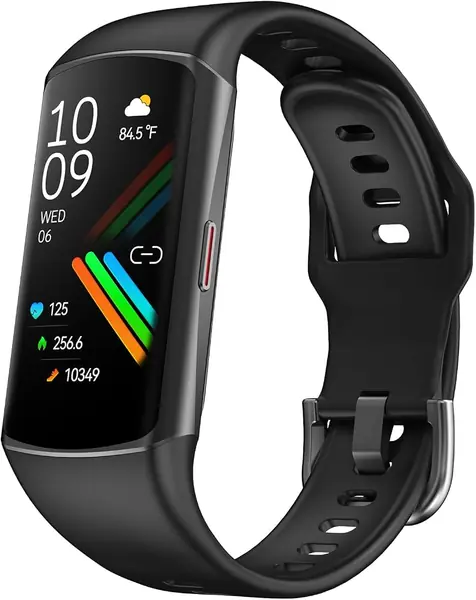
A 1.58-inch display is the headline, and it's the right one: notifications, workout stats and watch faces are all legible at a glance, which is the first thing a cheap smartwatch usually gets wrong.

The rest of the spec sheet runs long for the money. There are more than 120 workout modes, IP68 sealing, a listed seven days per charge, and heart-rate and SpO2 sensors. The warranty is three years, which is longer than any other watch on this page.

Customization is a bigger deal than it sounds: swap the band and the watch face and it reads as a different watch on a different wrist. Notifications and history live in the app, which synced without drama on both an Android phone and an iPhone, and the layout stays readable in sunlight.

One thing we treat carefully is the blood-pressure readout. Wrist sensors give you a trend, not a number you can take to a doctor, so watch the direction over weeks rather than any single reading. Beyond that, this is a budget smartwatch rather than a training instrument — if pace, routes and recovery scores are what you want, one of the GPS watches here is the better buy.

Pros

  • Large 1.58-inch display
  • Three-year manufacturer warranty
  • 120+ workout modes

Cons

  • Blood-pressure readout is trend-level only
Our verdict

We recommend the H32 Pro as a first smartwatch or a gift: a large screen, all-day health stats and a three-year warranty for very little money.

Check Latest Price
6

Polar Vantage M3 Best for Multisport and Navigation

84 /100
TKZ Score Excellent

Key details

Display
1.28-inch AMOLED
GPS
Dual-frequency
Weight
1.87 oz
Sport Profiles
150+
View on Amazon

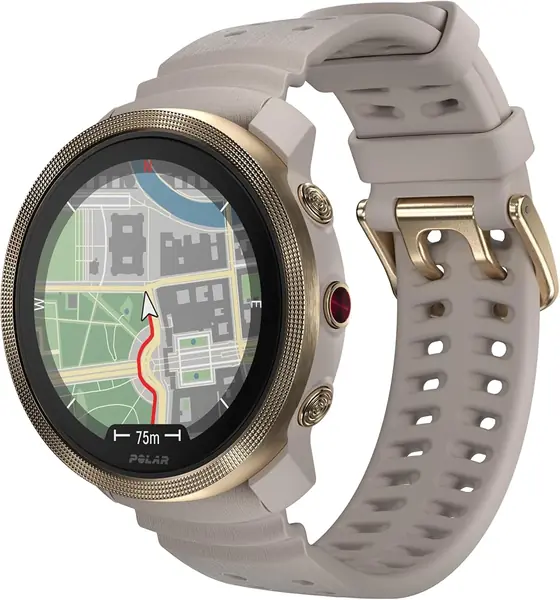
The Vantage M3 is the navigation watch here: dual-frequency GPS, offline topographic maps, and turn-by-turn guidance on a 1.28-inch AMOLED screen protected by Gorilla Glass 3.

It's built for people who race. Running power, training load, recovery status, Nightly Recharge and SleepWise all feed off the same data, more than 150 sport profiles cover everything from triathlon to track, and Polar includes both S and L bands in the box — a small thing that saves a return.

What you're paying for is depth, and it's worth it only if you'll use it. Battery is listed at up to seven days in smartwatch mode or roughly 30 hours while training, strong numbers for a watch with mapping. At 53 grams it's the heaviest watch in this group, and we felt it on long days.

It's also the most expensive watch here by a wide margin. The features that justify that — offline maps, dual-frequency positioning, serious training analysis — pay off on unfamiliar trails and race courses. For everyday fitness, the Forerunner 165 is the more sensible spend.

Pros

  • Dual-frequency GPS with offline topo maps
  • 150+ sport profiles and running power
  • Gorilla Glass 3 and 50m water resistance

Cons

  • Heaviest watch in this set at 53 g
  • Highest price here
Our verdict

We recommend the Vantage M3 to runners and triathletes who navigate: dual-frequency GPS, offline maps and deep training analysis in one package.

Check Latest Price
7

Bakoor Fitness Tracker Best for Simple Step Counting

81 /100
TKZ Score Excellent

Key details

Display
1.10 inches
Water Resistance
IP68
Sport Modes
25
Warranty
None
View on Amazon

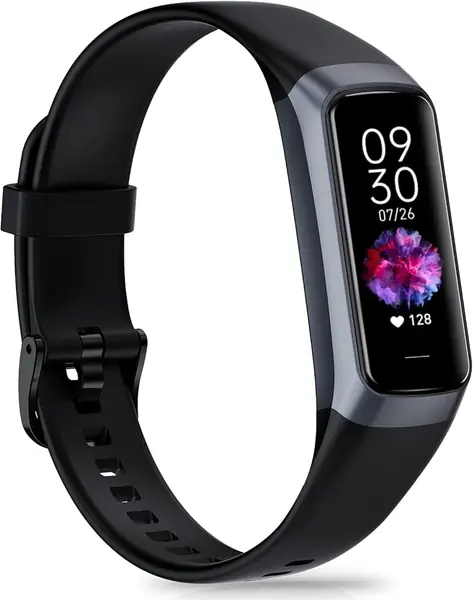
If you want steps, sleep and a heart rate on your wrist and nothing else, the Bakoor tracker covers exactly that for the least money here.

The 1.1-inch AMOLED is the smallest screen in this group but a sharp one, and the silicone band is soft enough that we forgot we were wearing it overnight — the whole point of a sleep tracker. Setup takes a couple of minutes in the companion app, and 25 sport modes cover walking, running and gym sessions, with IP68 sealing for sweat and showers.

Sleep is broken into light, deep and awake time, and the app keeps a history you can scroll back through to spot a pattern. The screen is easy to check at night without hunting for a button, and the whole thing charges from a cable rather than a dock, which makes it simple to top up from a laptop.

We came away thinking of it as a starter tracker rather than a training tool. For a first fitness tracker, a spare for travel, or a gift for someone who wants one daily number, it's the simplest thing here to live with: no menus to learn, nothing to configure, and a band you forget you're wearing.

Pros

  • Light and comfortable overnight
  • 25 sport modes in a small band
  • IP68 water resistance

Cons

  • No manufacturer warranty
  • Step and distance counts can drift
Our verdict

We recommend the Bakoor as a first fitness tracker or a spare: light, readable, waterproof and the least expensive way to wear your daily numbers.

Check Latest Price

How We Chose and Tested the Fitness Watches

We started by gathering every fitness watch we could find that pairs built-in GPS with open workout tracking, then narrowed to 12 covering the spread of what people actually buy: slim band-style trackers up through full multisport watches with large color screens. Four of us wore them for six months, rotating wrists and routines — one marathon trainee, two casual runners, and one person who mostly lifts and walks.

On a measured high school track we ran 400-meter repeats and compared each watch's distance to the real thing, then took the same group onto a tree-covered greenway to see whether the route held its shape once the sky disappeared. In the pool we counted laps against the watch's count. We checked heart rate against a chest strap during hard intervals and again on easy days, and compared overnight readings to a written log of when we actually fell asleep and woke up.

Every morning we recorded battery percentage in a shared spreadsheet so we could say how many days a watch really gave us with sleep tracking and notifications switched on. We handed each one to someone who had never worn it and asked them to start a run without instructions, which revealed more about the menus than any spec list. Appearance came down to wearing each watch with a button-down and with a t-shirt, noting how it sat under a cuff and how much it looked like jewelry versus gear. Anything that lost a GPS signal, dropped a sync, or died mid-run was flagged and watched for a repeat.

How to Choose a Fitness Watch

Decide Whether You Need Built-In GPS

Built-in GPS is the biggest fork in this category. A watch with its own receiver records route, pace and distance with no phone involved, which is what makes a run or a hike feel unburdened. A band that borrows your phone's GPS, like the Galaxy Fit 3, is smaller and cheaper and fine for neighborhood walks, but pace gets patchy in cities and the phone has to come along in a pocket or armband.

If your workouts are gym classes and evening walks, skip the receiver and save the money. If you run or hike outdoors, pay for it — the Amazfit Bip 6 is the least expensive way to get there in this group.

Read Battery Claims as Two Numbers

A battery figure is really two figures: days in watch mode and hours while recording GPS. A watch listed at 13 or 14 days may manage around 20 hours of continuous tracking, and an always-on display cuts both numbers further. Think about your longest session and your charging habits together rather than trusting the bigger number on the box.

If you wear the watch overnight for sleep data, you need a model that doesn't demand a nightly slot on the charger. Anything in the week-plus range here turns charging into a weekend errand instead of a ritual.

Match the Watch to Your Phone

Compatibility is where good hardware goes to waste. The Galaxy Fit 3 is Android-only and doesn't support Samsung Pay, and some listings are international models sold without a U.S. warranty. Confirm two things before you buy: that the watch supports your phone's operating system version, and that the companion app is one you'll actually open to read the data you paid for.

Syncing is the weak spot across this category. When a connection stalls, restart the watch and the phone before you start reinstalling anything.

Weigh Size, Weight and Water Resistance

A 46mm case at 47 grams is a different object from a 42mm band that disappears on the wrist. Since sleep data is half the reason to own one of these, comfort matters as much as the sensor list — a stiff band and a heavy case are why trackers end up in a drawer instead of on an arm overnight.

Read the water rating the same way. 5ATM and IP68 handle pool laps and showers, but these are swim watches, not dive computers, and pressing buttons underwater is how seals fail.

Frequently Asked Questions

Final Verdict

We recommend the Garmin Forerunner 165 as the best fitness watch for most people: GPS and heart-rate data we trust, a 1.2-inch AMOLED screen that reads in sunlight, and 11 days between charges at a mid-range price. It covers running, swimming, gym work and sleep without asking you to learn a training platform first.

Two requirements change the answer. Training for a race moves you to the Forerunner 265, where multi-band GPS and morning readiness scores justify the upgrade. On a tight budget, the Amazfit Bip 6 delivers GPS, free maps and a two-week battery for far less; Samsung phone owners who don't need GPS should start with the Galaxy Fit 3.