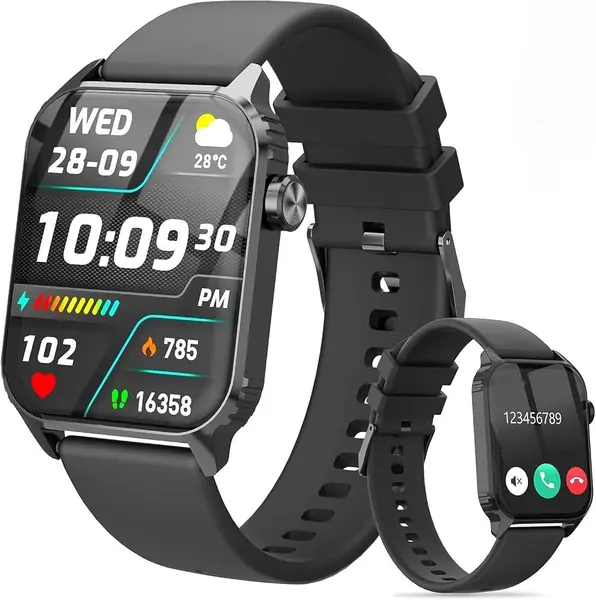
Best Android Fitness Watches of 2026

Most fitness watches force a trade-off: a bright, feature-packed screen or a battery that lasts the week. On Android it stings a little more, since your phone already counts steps and maps runs, so the watch has to earn the space on your wrist. A good one fixes friction — it pairs once and stays paired, gives you a sleep score you believe, and still looks decent under a shirt cuff.

We've spent six months wearing 14 Android-compatible watches on runs, through gym sessions, overnight for sleep tracking, and through full workdays. The ones we kept reaching for were rarely the ones with the longest feature list.

The number nobody advertises is how long a watch takes to do the thing you bought it for. A menu of 100-plus sport modes is dead weight if starting a run takes four taps on a sweaty screen. The picks below got out of the way — each one is here because of what it's genuinely good at.

The Best Android Fitness Watches

1

Garmin vívoactive 5 Best Overall
91 /100
TKZ Score Outstanding

Key details

Display
1.2 in AMOLED
Battery
Up to 11 days
GPS
Built-in
Weight
1.3 oz
View on Amazon

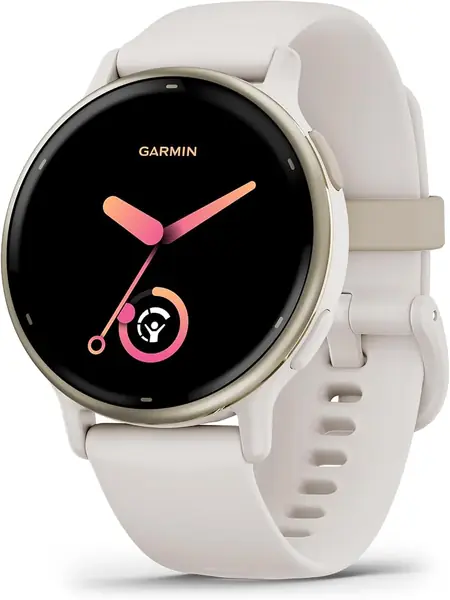
The vívoactive 5 is the only watch here that knows where you went without borrowing your phone. That sounds like a technicality until the first morning you leave the phone at home: the budget picks fall back on arm motion to guess the distance, while this one logs the route and the pace on its own. At 1.3 ounces with a 1.2-inch AMOLED, it's also the lightest-feeling serious watch in the group — small enough to sleep in and sharp enough to read at a glance.

What you're paying for is interpretation. Body Battery, sleep coaching, HRV status and recovery time all feed one another, so the watch tells you when to back off instead of just handing over numbers. During a stretch when we were sleeping badly and training through it anyway, that was the one screen we actually checked before deciding how hard to go. The cheap watches count steps and heart rate; this one has an opinion about them, and the opinion is why we keep reaching for it ahead of the others in the drawer.

Battery is up to 11 days in smartwatch mode, five with the display always on, and GPS sessions take a bite out of both — plan on charging weekly and topping up after long runs. The 50-meter rating covers pool laps. We also appreciate the mix of buttons and touchscreen, which means you can start a run in the rain without fighting a wet screen.

Pros

  • Built-in GPS records runs without your phone
  • Recovery and sleep coaching you can act on
  • Up to 11 days between charges

Cons

  • Premium price next to the budget picks
  • Sleep scores are best read as trends
Our verdict

Buy it if you'll use the training data: built-in GPS, recovery coaching that reshapes your week, and a battery that lasts long enough to sleep in.
Check Latest Price
2

Samsung Galaxy Watch 8 Best Full Smartwatch

90 /100
TKZ Score Outstanding

Key details

Display
1.3 in AMOLED
Battery
325 mAh
GPS
Built-in
Case Size
40 mm
View on Amazon

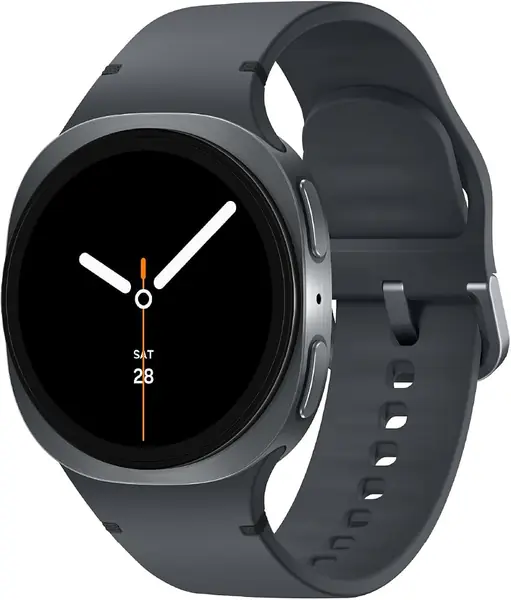
Battery life is the first question about the Galaxy Watch 8, and the honest answer is that you'll charge it every couple of days, more if you run with GPS and leave the always-on display on. Everything else is the most complete package on this list: a 40 mm case at 30 grams, a 1.3-inch AMOLED, 32 GB of storage for apps, and Wear OS with Samsung's health stack layered on top.

The coaching is what separates it from the budget watches. Running Coach analyzes your form and feeds back pace guidance while you're moving, Energy Score reads how recovered you are before you start, and the morning sleep report is detailed enough to change when you go to bed. We wore it overnight and through interval sessions, and it behaved like a training tool rather than a step counter with a nice screen.

Our take: if your phone is a Galaxy, this is the watch that does everything — workouts, notifications, apps, your calendar — and the battery is simply the price of that. Charge it while you shower and the routine barely registers, which is easier to live with than the number suggests.

Pros

  • Deepest sleep and running coaching here
  • Full Wear OS app support on Android
  • Light 30 g body in a 40 mm case

Cons

  • Battery needs charging every couple of days
  • 40 mm case reads large on a narrow wrist
Our verdict

The pick for Galaxy owners who want coaching, apps and sleep insight in one watch — as long as a two-day charging rhythm doesn't bother you.

Check Latest Price
3

Samsung Galaxy Fit 3 Best Battery Life

89 /100
TKZ Score Excellent

Key details

Display
1.6 in AMOLED
Battery
Up to 14 days
Water Resistance
5ATM and IP68
GPS
Phone-based only
View on Amazon

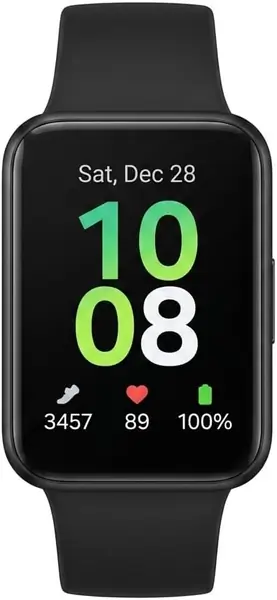
The Fit 3 is the one we hand to someone who wants tracking without another screen to manage. There's no app drawer and no second display competing for attention — just a 1.6-inch AMOLED that hits 1,000 nits, 101 workout modes that start detecting on their own, and a battery claim of 14 days that is the longest in this guide. If you've been put off fitness watches by the nightly charging ritual, start here.

Sleep is where it earns its keep. The overnight report, with sleep coaching and SpO2, has the same shape as Samsung's full watches, and that bright screen means you can read the summary before you've found your glasses. Steps and heart rate are the workhorses, presented without making you dig through menus. The 5ATM and IP68 rating means a pool swim or a shower won't end the relationship.

The compromise is outdoors. With no GPS radio of its own, the Fit 3 borrows your phone for route and distance, so a phone-free run gives you time and heart rate but no map. Gym sessions, swims and commutes don't care — and that is exactly the trade that buys two weeks between charges.

Pros

  • Up to 14 days of claimed battery life
  • Bright 1.6-inch AMOLED at 1,000 nits
  • 5ATM and IP68, so it can swim

Cons

  • Android phones only, no iPhone support
  • International model with no U.S. warranty
Our verdict

The lowest-effort way to track a week: bright, swim-ready, and charged about twice a month, on Android phones.

Check Latest Price
4

Tensky ID208Plus Best Value

88 /100
TKZ Score Excellent

Key details

Display
1.85 in LCD
Battery
Up to 12 days
Water Resistance
3ATM
Voice Assistant
Alexa built-in
View on Amazon

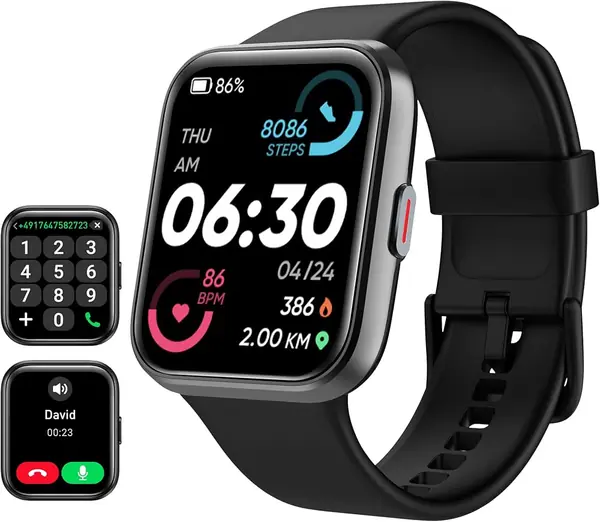
Read the Tensky's spec sheet and you'd expect to pay considerably more: a 1.85-inch screen, Alexa built in, Bluetooth calling, 120 workout modes, 3ATM water resistance and a claimed 12 days of battery. None of that is marketing math, either. This is the middle of the market done sensibly rather than a stripped-down watch with a big number on the box.

The caveat shapes everything else: it's a notifier and a counter, not a coach. Alexa answers from your wrist, calls come through clearly, notifications land, and the generous screen means you actually read them instead of squinting. What you don't get is training load, recovery guidance or a route. For a first fitness watch, a second watch for weekends, or anyone who mainly wants the smartwatch half, that trade is easy to take.

Two practical notes before you order. At 300 nits the display is the dimmest in this group: fine indoors and in shade, washed out in direct summer sun. And 1.85 inches of glass is a lot of watch on a narrow wrist — if you like a low profile, try one on before committing.

Pros

  • Big 1.85-inch screen for the money
  • Alexa built in, plus Bluetooth calling
  • Up to 12 days of claimed battery

Cons

  • No built-in GPS
  • 3ATM rated
Our verdict

A lot of smartwatch for the money — calls, Alexa and a big readable screen — as long as you don't expect GPS or coaching.

Check Latest Price
5

aeac Smart Watch AR-01 Best Display

87 /100
TKZ Score Excellent

Key details

Display
1.32 in AMOLED
Battery
Up to 10 days
Water Resistance
3ATM
Resolution
466 x 466
View on Amazon

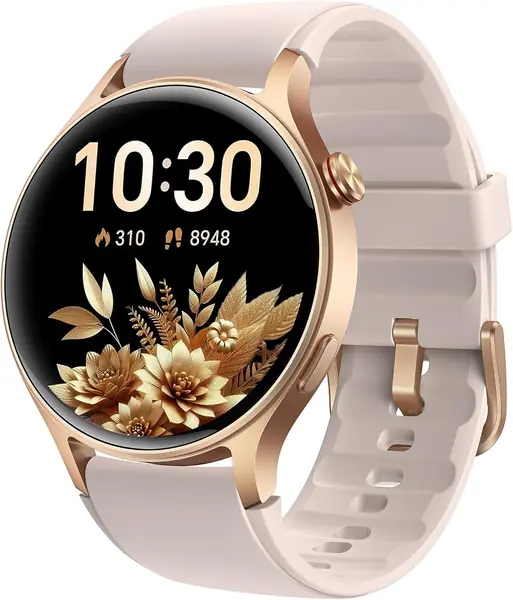
The aeac's 1.32-inch AMOLED is the best screen on a round case in this group: 466 by 466 pixels squeezed into 43 mm, sharp enough that text has edges instead of fuzz. It's the part of the watch you notice every time you lift your wrist, and it's the reason this one reads as more expensive than it is.

There's more under the glass than the display needs to carry: heart rate, SpO2, stress and sleep tracking, 110+ sport modes, 3ATM water resistance, Bluetooth calling with a voice assistant, and a claimed 10 days from a two-hour charge. The health data is all here and easy to find, which sounds like a low bar until you've used an app that buries your sleep score three taps deep.

Our advice: buy it for the screen and the battery, and expect a competent tracker underneath rather than a coach. Setup deserves a calm ten minutes at home — pair over a good Wi-Fi connection rather than in a gym parking lot — and after that it's a watch you charge on Sunday and forget about until the next Sunday.

Pros

  • Sharp 466 x 466 AMOLED on a round case
  • 10-day claim with two-hour charging
  • Heart rate, SpO2, stress and sleep on board

Cons

  • No built-in GPS
Our verdict

The one to buy for the look of a round AMOLED and a week of battery, with tracking that's solid rather than clever.

Check Latest Price
6

KEEPONFIT DR05 Best for Dressy Daily Tracking

86 /100
TKZ Score Excellent

Key details

Display
1.27 in round LCD
Water Resistance
IP68
Bands
Two included
Health Tracking
SpO2, stress, sleep
View on Amazon

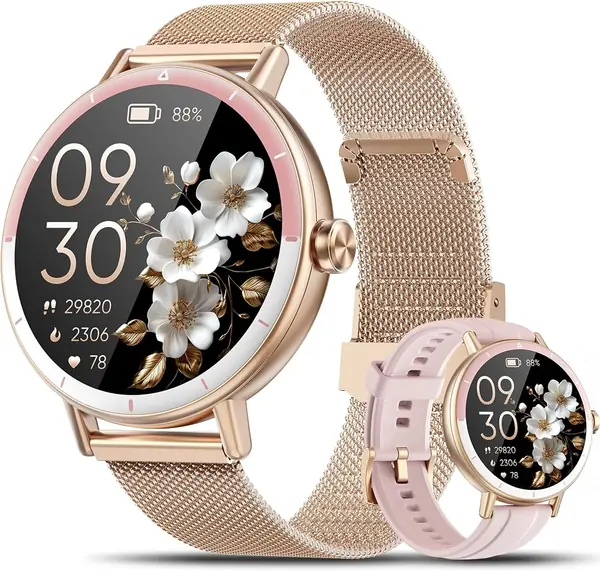
The second band in the box is why we keep pointing people to the KEEPONFIT. A metal link bracelet for the office and a silicone strap for the gym turn one watch into two looks, and at 1.27 inches on a round face it reads as jewelry first and tracker second. That matters more than it should for anyone who has ever taken a fitness watch off before dinner.

The tracking is more complete than the styling suggests: heart rate, SpO2, stress, sleep and menstrual cycle tracking, plus 100+ sport modes and IP68 sealing. Calls and notifications come through the built-in microphone, and it pairs with Android 6.0 and up — plus iPhone, if you ever move over.

What you give up is screen. At 1.27 inches the LCD shows a notification preview and a heart-rate number, and that's about it; reading a workout summary mid-run means slowing down to look. If a bright display matters more than a slim round case, the aeac or the Tensky will suit you better.

Pros

  • Second band turns a tracker into a dress watch
  • SpO2, stress and cycle tracking built in
  • Bluetooth calling and notifications on the wrist

Cons

  • Small 1.27-inch LCD screen
Our verdict

A dressy round tracker that swaps from bracelet to gym band — the pick if you want health tracking without a screen on your wrist all day.

Check Latest Price
7

HOMOGO Smart Watch Style on a Budget

85 /100
TKZ Score Excellent

Key details

Display
1.83 in LCD
Battery
300 mAh
Water Resistance
IP68
Bands
Two included
View on Amazon

Spend a lot more and you get a watch that coaches you through a marathon. Spend a fraction and you get the HOMOGO, which covers steps, sleep, heart rate and 100+ workout modes and looks better doing it than most cheap watches have any right to.

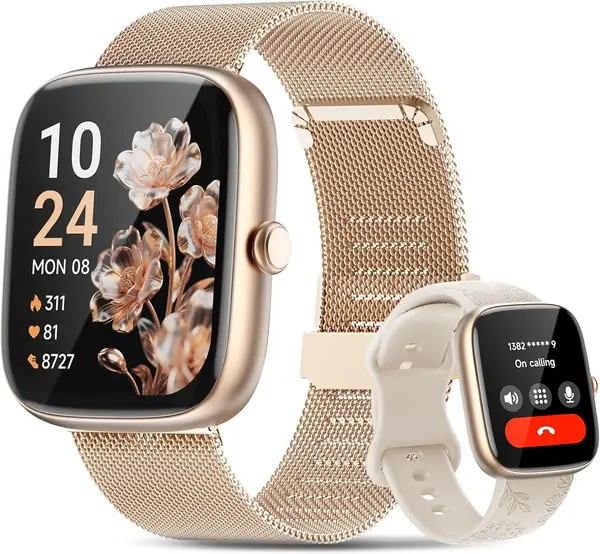
The styling is the sell. A gold case with a stainless steel band and a silicone strap in the box, plus 100+ watch faces you can swap from the VeryFit app, means it goes to a wedding and then to a workout without looking out of place at either. That flexibility is the whole reason to pick it over the plain black squares.

Underneath it's a straightforward tracker: auto-detection for walking and running, heart rate, SpO2, stress and cycle tracking, calls and notifications, and a 1.83-inch screen big enough to read a message on. Nothing here is complicated, and setup through the app took us minutes rather than an evening.

Our read: this is the watch we hand to someone who wants the look of a fitness watch more than the data underneath it. It doesn't pretend to coach you, nothing about it demands attention, and the two bands do more for daily wear than another metric would. If you need to know pace and distance, keep looking.

Pros

  • Two bands, including a stainless steel one
  • Auto-detects walking and running
  • 1.83-inch screen with 100+ watch faces

Cons

  • No built-in GPS
  • IP68 covers splashes, not laps
Our verdict

The best-looking budget pick here: two bands, a big screen and honest basics — buy it for style and steps, not for training.

Check Latest Price
8

TRAUSI TG08 First Fitness Watch

81 /100
TKZ Score Excellent

Key details

Display
1.83 in LCD
Battery
5 to 7 days
Water Resistance
IP67
Voice Assistant
Alexa built-in
View on Amazon

Calls are the surprise on the TRAUSI. A microphone and speaker let you answer from your wrist, and Alexa is built in, which the other budget picks here don't offer. At this end of the market you usually give up either the assistant or the calling, and getting both is the reason this one made the list.

The hardware is deliberately plain: a 1.83-inch screen, 120 workout modes, continuous heart rate and sleep tracking. Nothing will wow you, and nothing is fussy either — a couple of taps gets you into a walk, and the notifications arrive without drama.

Battery is the quiet win — a 350 mAh cell rated for five to seven days of normal use and up to 30 days on standby, which means you can leave the charger at home for a long weekend. It pairs with Android 5.0 and up, and with iPhone if you need it.

Our take: this is the watch to buy when the goal is a step count, a heart-rate number and the ability to see who's calling without pulling out your phone. The screen is the tell — 240 by 284 is crisp for text and soft for everything else, and that's a fair summary of the whole watch.

Pros

  • Alexa and Bluetooth calling at the lowest price
  • 1.83-inch screen with 120 workout modes
  • Five to seven days of use per charge

Cons

  • IP67 only
  • No built-in GPS
Our verdict

A genuinely cheap Android fitness watch that still answers calls and runs Alexa — ideal as a first tracker or a spare.

Check Latest Price

How We Tested Android Fitness Watches

We started with research rather than a warehouse: combing listings and customer reviews for watches sold as Android-compatible, then narrowing by screen type, sensor set, call handling, water rating, and how the companion app is actually maintained. We ended up with 14 units that spanned simple band-style trackers, square-screen calling watches, and a couple of more serious GPS models.

Every watch was paired to an Android phone on day one and left connected for the full six months. We wore them in rotation — morning runs and treadmill intervals, weight sessions, a handful of swims, overnight for sleep tracking, and at a desk where notifications arrive all day. Where a box included extra bands, we swapped them and noted how the case read with a work shirt versus gym clothes.

Battery life got checked every morning: we logged the percentage at wake-up, counted days between charges with the always-on display turned on and then off, and noted how much each watch drained overnight. Heart rate went up against a chest strap during intervals. For sleep, we compared each watch's reported bed and wake times against a notepad kept by the bed, so we knew which nights it misread.

Usability meant counting taps to start a workout and trying to read a text with wet hands. Durability meant six months of keys in the same bag pocket, showers, and two accidental drops on tile. Reliability meant re-pairing after every firmware update and writing down which ones quietly disconnected — and value meant judging all of that against whether the watch demanded a subscription to be useful.

How to Choose an Android Fitness Watch

Start With Your Phone, Then the App

Android compatibility isn't one thing. The budget watches here ask for Android 5.0 or 6.0 and up, the HOMOGO wants 8.0, and the Galaxy Fit 3 wants Android 10 on a phone with enough memory behind it. Two picks — the Fit 3 and the Galaxy Watch 8 — don't work with an iPhone at all, so check that line before you order if anyone in the house might switch.

Then look at the app, because you'll open it every morning. Garmin Connect, VeryFit and Wear OS feel nothing alike, and the depth of the charts is where the money actually goes. Pull up screenshots before you buy; a clean summary you read beats a dashboard you ignore.

Built-In GPS or Your Phone's

A GPS radio is the biggest single thing separating a training watch from a tracker. With one inside, the watch records route, pace and distance with the phone left at home — that's the Garmin and the Galaxy Watch 8 in this group. Without one, the watch borrows your phone's signal over Bluetooth, and a phone-free run falls back on arm swing to estimate distance.

Neither approach is wrong. Just be honest about whether you run with a phone strapped to your arm. If you do, a tethered watch saves money and battery; if you don't, pay for the radio.

Battery Life: Read the Claim, Then Discount It

Published figures assume smartwatch mode with the screen off. The Garmin's 11 days becomes five with the display always on, and every GPS session takes another bite; the Fit 3's 14 days is a ceiling, not a promise. Bright AMOLED panels are the other half of that trade, which is why the long-life picks tend to have smaller or dimmer screens.

Match the number to your habits rather than the spec sheet. If the charger already lives on your nightstand, the Galaxy Watch 8's shorter life costs you nothing. If the charger lives in a drawer, a week-plus is the specification that matters.

Water Ratings, Translated

The letters and numbers measure different things. IP67 and IP68 cover dust and brief immersion — sweat, rain, hand-washing, a dropped-in-the-sink moment. 3ATM is a pressure rating that handles surface swimming; 5ATM and the 50-meter watches here handle laps. None of them enjoy hot water, soap or a steam room, which is what actually kills the seals.

If swimming is part of your week, buy the 5ATM Fit 3 or a 50-meter watch. If it isn't, any watch here survives your training, and you can spend the difference on battery.

Health Metrics: Counts Versus Coaching

Every watch here measures heart rate, and most add SpO2, stress and sleep stages. The difference is what happens next. The budget picks hand you numbers and leave the interpretation to you; the Garmin and the Galaxy Watch 8 turn the same inputs into recovery guidance, sleep coaching and training load.

Wrist sensors are directional rather than clinical on all of them, so don't buy one for a diagnosis. Pay for interpretation only if you'll actually change your week because of it — otherwise a clean step count and a comfortable band are worth more.

Frequently Asked Questions

Final Verdict

The Garmin vívoactive 5 is the watch we recommend to most Android buyers: the only one here that trains as well as it tracks, with built-in GPS, recovery guidance worth acting on, and enough battery to wear overnight. If a weekly charge sounds like one routine too many, the Galaxy Fit 3 covers steps, sleep and swims for two weeks at a stretch. And if your phone is a Galaxy, the Watch 8 pays you back in coaching — just budget for the charger.