Best Earbuds for Travel of 2026

Cheap earbuds and quiet travel have always been a bad trade. The pairs priced low enough that losing one under an airplane seat won't wreck the trip tend to let the entire cabin drone straight through. That gap has narrowed in the last couple of years — you no longer have to spend like a checked bag to get off a flight without a headache.

My team and I spent the past six months wearing 14 pairs through airport terminals, middle seats, hotel-room calls, and the noisy walk from a train platform to the street. The keepers had a few things in common: noise cancellation that killed engine rumble without the pressurized, underwater feeling, a fit that survived a four-hour layover, and a charging case that still had juice when I landed.

First-time buyers tend to overrate the hour counts printed on the box. Those numbers assume low volume with noise cancellation off, and nobody flies a red-eye that way. What matters more is whether the companion app lets you tune the sound to your liking, whether transparency mode lets you catch a gate change without pulling a bud out, and whether the touch controls fire when you pull up a hood. The picks below got those boring parts right.

The Best Earbuds for Travel

1

TOZO NC9 Best Overall
91 /100
TKZ Score Outstanding

Key details

Total Playtime
60 hours with case
Bluetooth
5.3
Water Resistance
IPX8
Noise Cancellation
Hybrid ANC, up to 45dB
View on Amazon

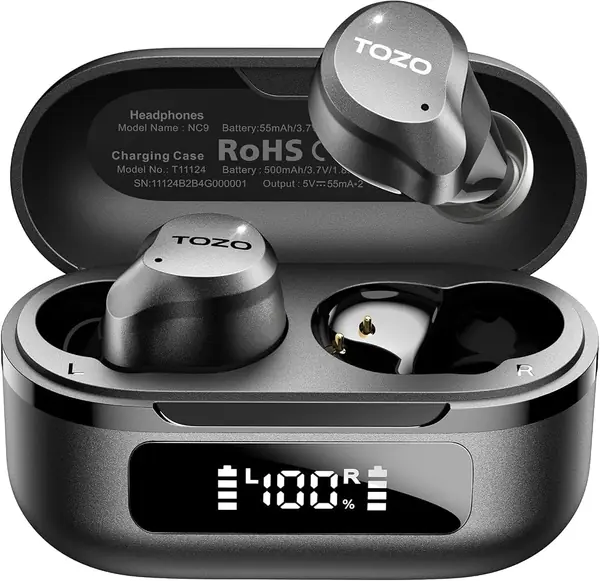
Hybrid active noise cancellation rated to a depth of 45dB is the figure that earns this pair first place, because it answers the question a flight actually asks. The buds use microphones inside and outside each shell, and the cancellation has adjustable levels instead of a single on-or-off switch, so a rattling train car and a takeoff roll don't get the same treatment. Constant low sound — engine drone, air conditioning, the hum of a station — is where this design does its best work.

Around that core, TOZO has covered the details that make a travel pair feel finished. Transparency mode lets a boarding announcement through without a bud leaving your ear, and the noise control includes wind reduction for the walk to the terminal rather than the wait inside it. The buds are rated IPX8, so rain and a knocked-over cup aren't incidents. The case reads out its charge on an LED display, which is a small thing until you've spent a trip opening an app to find out whether you have power.

One caveat belongs beside the recommendation. Fit depends on the tip: the same shells that sit comfortably for hours work loose in other ears, so spend an evening at home swapping the three sizes rather than discovering the problem at the gate. That done, the 32 EQ presets in the app are there if the stock tuning is too bass-heavy for you, and the six microphones with call noise reduction make a difference on a platform announcement.

Pros

  • Hybrid ANC rated up to 45dB
  • Transparency mode with wind-noise reduction
  • 60 hours of playtime with the case
  • IPX8-rated buds for rain and spills

Cons

  • Some units stop working within months
Our verdict

For flights, trains, and long layovers, these are the pair we hand most travelers: real hybrid ANC, a transparency mode, and 60 hours in the case.
Check Latest Price
2

Soundcore P20i Best Value

90 /100
TKZ Score Outstanding

Key details

Total Playtime
30 hours with case
Bluetooth
5.3
Playtime Per Charge
10 hours
Noise Control
Passive noise cancellation
View on Amazon

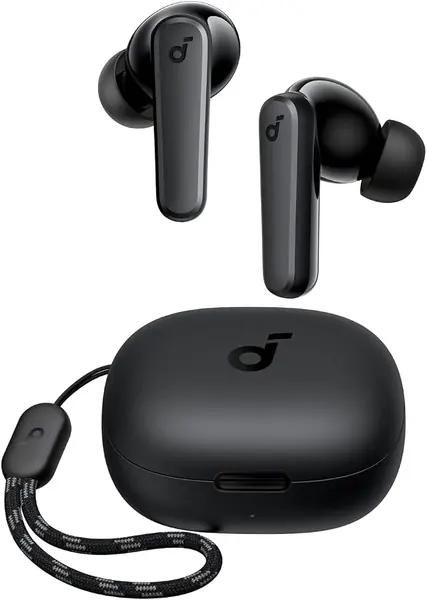
There is no active cancellation in the P20i; the seal from the ear tip does the isolating, so engine drone sits under your music instead of vanishing. On a commuter train or in a cafe that is plenty. On a red-eye it's the compromise you're accepting. What you get in exchange is ten hours of playback on a single charge — the longest per-charge figure in this group — plus 30 hours in the case, which covers a full travel day and then some.

That battery number is the one we kept coming back to. Ten hours means a long connection, a delay, and the drive at the other end without a top-up. The case has a lanyard, which sounds trivial until you clip it to a backpack strap and stop digging for it at the bottom of a bag. The app carries 22 EQ presets, a Find My Earbuds tone for a bud lost under a seat, and control remapping, and the 10mm drivers push a boosted low end that suits podcasts and pop better than acoustic material.

The bigger unknown is longevity: some pairs stop working within a couple of months, and the 18-month warranty is the answer to that. At this price it's a risk worth knowing rather than a reason to look elsewhere, and it is the trade you make for the battery and the app. If you need a cabin silenced rather than a day covered, the ANC pick above is the better spend.

Pros

  • Ten hours per charge, 30 with the case
  • Lanyard case clips to a bag strap
  • 22 EQ presets and Find My Earbuds

Cons

  • Bluetooth drops out when you move around
Our verdict

If the budget is tight and hours matter more than silence, this is the one: ten hours a charge, a case that clips on, and bass that punches past its price.

Check Latest Price
3

TOZO T10 Best for Long Trips

89 /100
TKZ Score Excellent

Key details

Total Playtime
55 hours with case
Bluetooth
5.3
Water Resistance
IPX8
Charging Case
Wireless charging
View on Amazon

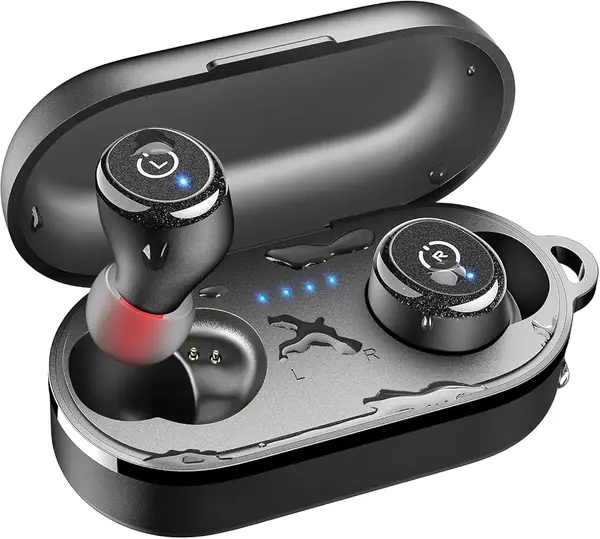
This pair and our top pick come from the same maker and answer different questions. Where the NC9 buys silence, the T10 buys time and water resistance: up to 55 hours with the case, a case that recharges on any wireless pad, and an IPX8 shell. If your trips are long and outlets are scarce — a multi-day hike, a week of hotel rooms with one free socket — that is the better trade, and it's why this one stays on the list.

Sound is where the two meet. An 8mm driver with TOZO's OrigX tuning delivers a lively, bass-forward presentation that holds up at low volume, which is what you want on a night flight, and the app adds 32 EQ modes plus a white-noise option for sleeping. Nine hours per charge is a realistic figure, the case carries the rest, and touch controls mean you aren't reaching for a phone in the dark.

Where it gives ground is in the shell: these are chunky buds, and sweat or a lot of movement works them loose, so a run to the gate is fine but a gym session may not be. Reliability over a year is uneven, with units that stop holding a charge. Neither undoes the playtime or the waterproofing if those are the reasons you're shopping.

Pros

  • 55 hours total with the case
  • Case recharges on a wireless pad
  • IPX8 waterproofing for rain and spills

Cons

  • No active noise cancellation
  • Case takes 1.5 hours to recharge
Our verdict

Buy these when charging is the thing you dread: 55 hours, a wireless case, and an IPX8 shell that shrugs off rain.

Check Latest Price
4

JLab Go Air Pop+ Best for Packing Light

88 /100
TKZ Score Excellent

Key details

Playtime Per Charge
9+ hours
Warranty
Two years
Case Size
Smaller than a credit card
Case Battery
26+ extra hours
View on Amazon

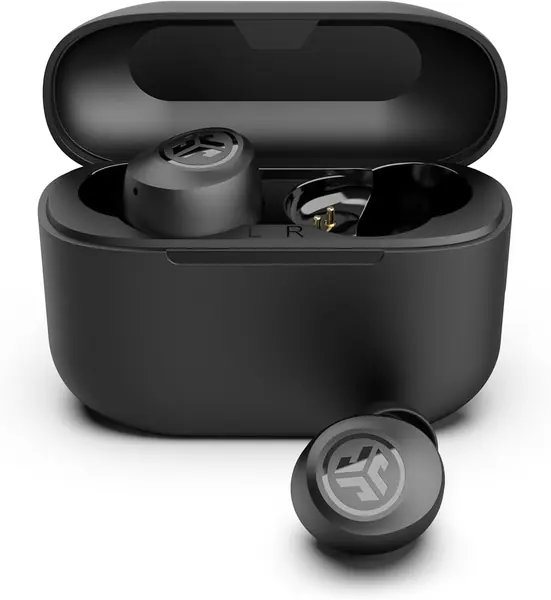
The case is the pitch: smaller than a credit card, and the smallest here by a clear margin, which is the difference between a pair that travels and a pair that lives in a drawer. It drops into a jacket pocket or the front pocket of a personal item and takes up the space of a folded receipt. If your packing style is one bag, one pair of shoes, and no decisions, this is the design that respects it.

The rest of the spec sheet is sensible rather than spectacular. Each bud runs nine or more hours, with another 26 in the case, so a long weekend fits inside one charging cycle. They power on and pair as soon as they leave the case, which sounds like marketing until you're standing in a security line with one hand free. The JLab app handles EQ and touch customization, Google Fast Pair covers Android, and Be Aware mode lets the outside in when you need to hear a gate change.

Our verdict lands on the warranty and the size together. Two years is the longest coverage on this list, and it arrives on the pair most likely to be carried everywhere, which is a sensible bet on how small electronics actually fail. These aren't the pair for a red-eye when silence is the goal; they're the pair for the trip where the bag is already full.

Pros

  • Case smaller than a credit card
  • Nine-plus hours per bud, 26 more in case
  • Two-year warranty, the longest here

Cons

  • No active noise cancellation
Our verdict

Pack these if space is the constraint: the case is smaller than a credit card, each bud runs nine hours, and the warranty is the longest here.

Check Latest Price
5

PIFFA T21 Control Without a Phone

87 /100
TKZ Score Excellent

Key details

Total Playtime
40 hours with case
Water Resistance
IPX7
Noise Cancellation
Hybrid ANC, 40dB
Case
Touchscreen controls
View on Amazon

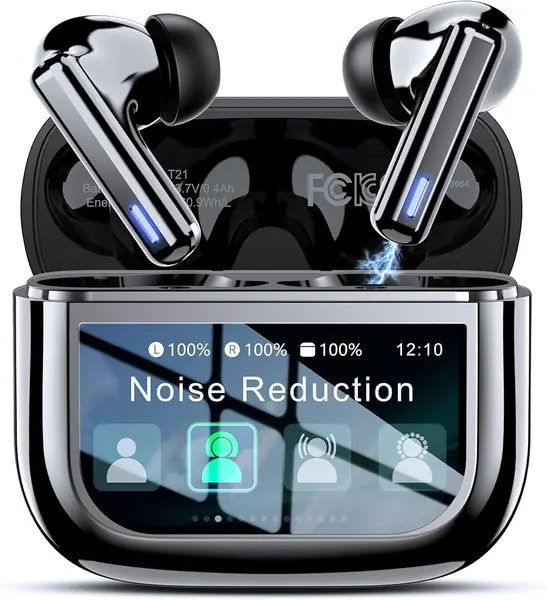
A touchscreen on the charging case sounds like a gimmick until you're three hours into a flight with your phone in the seat pocket. The T21 puts playback, volume, and call controls on the case itself, so you can pause, skip, or take a call without unbuckling anything or waking a screen. It's the most distinctive idea in this group, and it's the reason to look at this pair at all.

The supporting specs hold up their end. Hybrid ANC is rated to 40dB, there's a transparency mode for announcements, and the buds carry IPX7 with 4.2 grams on each side — light enough that a long layover doesn't turn into an earache. Forty hours total with the case, with seven to eight per charge, is respectable, though it trails the 55- and 60-hour picks here. Bluetooth 5.3 and three tip sizes round it out.

Where we hesitate: a glass-fronted case is another surface to live with in a bag full of keys, and this pair hasn't been around long enough to have the track record of the budget stalwarts on this list. Buy it because the case screen solves a problem you actually have — reaching for your phone every twenty minutes — and it earns its place. Buy it for the spec sheet alone and you're paying for a feature you'll stop noticing by the second trip.

Pros

  • Case screen controls playback and volume
  • Hybrid ANC rated to 40dB
  • IPX7 with 4.2g buds

Cons

  • 40 hours total trails the 55- and 60-hour picks
Our verdict

Worth it if you hate digging for your phone mid-album — the case screen runs playback and volume, and the 40dB ANC and IPX7 shell hold up their end.

Check Latest Price
6

JBL Vibe Beam Best for Bass-First Listeners

86 /100
TKZ Score Excellent

Key details

Total Playtime
Up to 32 hours (8h + 24h)
Bluetooth
5.2
Sound
8mm drivers, Deep Bass
Water And Dust
IP54 earbuds, IPX2 case
View on Amazon

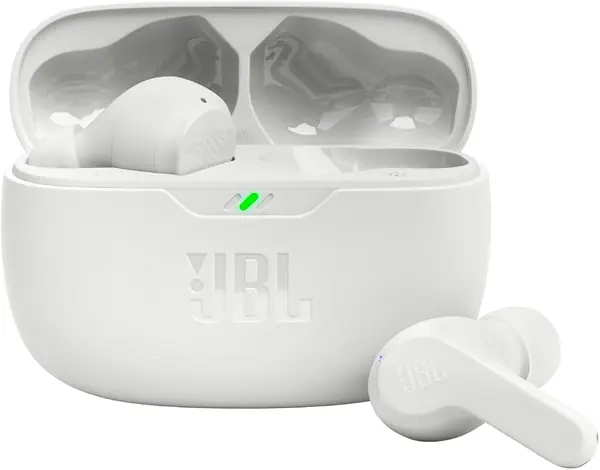
Fit is the first thing to settle with the Vibe Beam, because it's the least secure pair here. The closed stick shape does not stay put for a lot of ears; running, a fast platform change, or a sweaty afternoon will have you pushing them back in. If you already know a stem-style bud suits you, keep reading. If you've never had one stay in, start somewhere rounder.

The reason to persevere is the low end. An 8mm driver with JBL's Deep Bass tuning gives these the fullest bottom of anything on this list, and the closed design seals enough to take the edge off cabin noise without any electronics involved. The buds are rated IP54, so dust and spray are survivable, which makes them a fair beach or poolside pair.

Thirty-two hours total — eight in the buds, 24 in the case — is mid-pack here, and speed charging means a short stop gets you moving again. VoiceAware is the sleeper feature: on a call you can dial how much of your own voice comes back through the buds, which is the difference between shouting and talking normally in a noisy place. The case itself is only IPX2, so keep it out of the puddle.

Our read: this is a pair for someone who wants bass and a rugged rating and already knows a stem shape fits, not a first pair for a traveler who hasn't tested one. If the fit works, the sound is worth the trade. If it doesn't, no amount of low end makes up for a bud on the floor of a train.

Pros

  • Fullest bass of the picks here
  • IP54 buds resist dust and spray
  • VoiceAware balances your own voice on calls

Cons

  • Falls out for many ears, especially when moving
  • Reliability over the first year is uneven
Our verdict

The bass is the best in this group and IP54 makes them a beach pair, but they only make sense if stem-style buds already stay in your ears.

Check Latest Price
7

MOZOTER S8 Cheapest Spare Pair

85 /100
TKZ Score Excellent

Key details

Total Playtime
60 hours with case
Bluetooth
5.3
Playtime Per Charge
8 hours
Drivers
10mm dynamic
View on Amazon

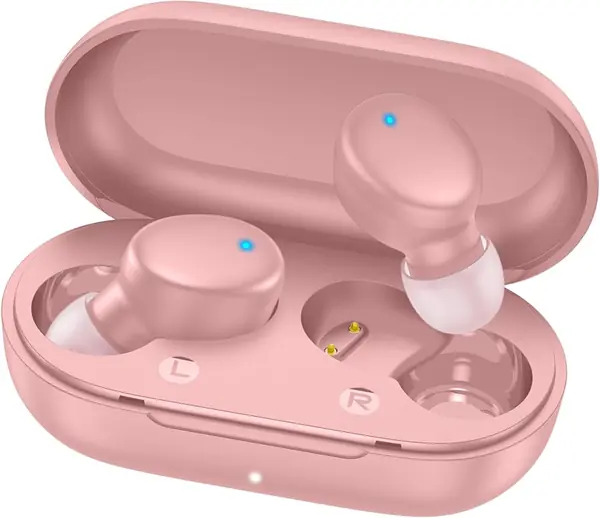
Eight hours on a single charge and 60 with the case, for the least money in this group, is the entire case for the S8. That arithmetic matters if you're buying a second pair to leave in a gym bag, a glovebox, or a desk drawer, or a first pair when the budget is genuinely tight. Nothing else here gets close on hours for the outlay.

The hardware is ordinary in a way that suits the price. Ten-millimeter drivers, Bluetooth 5.3, touch controls, three sizes of tip, and a water-resistant shell cover the basics, and the case tops up over USB-C. Don't buy these expecting noise cancellation; at this price the money went into the battery and the drivers. What comes out of them is louder and bassier than the outlay implies.

We treat this as the pair to keep in the bag you don't always carry. Losing one on a trip is annoying rather than expensive, the playtime means it's charged when you reach for it, and the sound is good enough for a hotel room and a walk to dinner. If you want one pair to do everything, spend more; if you want a spare that never asks anything of you, this is the one.

Pros

  • Eight hours per charge, 60 with case
  • Least expensive pair in this group
  • 10mm drivers and Bluetooth 5.3

Cons

  • Just one year of warranty coverage
Our verdict

As a second pair to leave in a bag, or a first pair on the tightest budget, 60 hours of playtime for the least money here is the whole argument.

Check Latest Price

How We Tested Travel Earbuds on Planes, Platforms, and Hotel Desks

We started by gathering every pair of wireless earbuds a traveler might reasonably buy at the budget and mid-range end, then crossed off anything missing a transparency mode, a companion app with adjustable EQ, or a water-resistance rating. Those three features came up again and again across the models we compared, so they became the price of entry. That left 14 pairs, which we bought at retail rather than accepting samples, so nothing arrived pre-tuned in our favor.

Every pair got at least a week of real use, and the team logged flights, commutes, and calls in a shared document. I wore one set on a long-haul red-eye and the same set on a crowded platform the next morning, listening for whether the engine rumble dropped below the cabin hiss, whether my ears felt plugged after an hour, and whether I could still hear a gate announcement with the music low. Fit got judged the hard way: four hours without reseating a bud, a flight of stairs, and a head shake.

We charged each case to full before a trip and checked the remaining percentage on landing instead of trusting the hour count on the box, and we ran an hour-long call on a single bud to see how fast it drained. Connectivity got a two-device test with a phone and a laptop, plus a walk down a hotel corridor with a wall in between. Durability meant a loose ride in a tote bag next to keys, a wipe-down after sweaty walks, and a splash at the sink.

Ease of use was the last stop: we timed pairing out of the box, counted the taps it took to reach transparency mode, and tried the touch controls through a hood and a beanie. Then we asked the only question that really settles value — whether we'd spend our own money on the pair again.

How to Choose Earbuds for Travel

Active Noise Cancellation or Just Isolation?

Active cancellation uses microphones to sample the noise around you and play an inverse signal, which is why it works best on the steady drone of an engine rather than a crying baby two rows back. Passive isolation is simply a well-sealed tip, and it costs nothing extra. A hybrid ANC pair like the TOZO NC9 earns its price on a long flight; a passive pair like the soundcore P20i is fine for a commuter line.

The trap: listings use noise cancellation loosely. If there's no ANC switch or transparency mode in the app, you're buying a seal, not electronics — and a seal is only as good as the tip you chose.

Read the Battery Numbers the Right Way

The figure that matters depends on the shape of your trip. A single long flight is a per-charge question: how many hours before a bud dies? A week away from reliable outlets is a total question, and the case is the reservoir. The JLab Go Air Pop+ puts nine-plus hours in each bud with 26 more in the case; the TOZO T10 carries 55 hours in total; the NC9 carries 60.

Watch for an advertised number that quietly counts the case. A '30-hour' pair with 5 hours per charge is a different travel partner from one that runs 10 hours on its own.

Fit Decides Whether Anything Else Matters

Ear shape, not price, determines whether a bud stays in through a nap, a meal service, and a landing. Three tip sizes is the minimum to expect, and a stem-style shell sits differently from a round one — the JBL Vibe Beam's stick shape is the least forgiving of the picks here, while the lighter, rounder shells are easier to live with for hours.

Buy where returns are simple, then wear the pair around the house for a few days before a trip rather than testing them at the gate. A loose bud at 30,000 feet is a lost bud.

Match the Case to How You Pack

The buds are the small part; the case is what takes up room. A case smaller than a credit card, like the JLab's, disappears into a jacket pocket. A lanyard lets you clip a case to a strap instead of hunting for it at the bottom of a bag. Wireless charging means one less cable to pack, and an on-case display, as on the NC9 and the PIFFA T21, saves opening an app to check power.

The trade to know: the biggest playtime numbers usually arrive in the biggest cases.

Water Ratings and Calls in a Noisy Place

IPX numbers describe water, and the first digit after the X sometimes covers dust: IPX8 survives a dunking, IPX7 handles a serious soaking, IPX5 shrugs off spray and rain, and IP54 adds dust protection for a beach bag. Match the rating to the trip rather than the marketing.

For calls, microphones and processing matter more than driver size. The NC9's six-mic array and the JBL's VoiceAware, which lets you hear your own voice, both address the real problem, which is that a cabin makes everyone shout.

Frequently Asked Questions

Final Verdict

Start with the TOZO NC9. Hybrid ANC, a transparency mode, IPX8, and 60 hours in the case cover the three things that go wrong on a trip: noise, rain, and a dead battery. It is the pair we hand to most travelers without asking follow-up questions.

From there the choice is about what you're willing to trade. On a tight budget, the soundcore P20i swaps silence for ten hours a charge; if you pack one small bag and nothing else, the JLab Go Air Pop+ case is the one that fits.