Best Apple Watches for Sleep Tracking of 2026

A sleep tracker doesn't do anything dramatic overnight. It reads your movement and heart rate while you're out, then turns the gaps between those readings into a picture of how you slept — which means the details that decide whether you'll actually keep wearing it are small ones: how the band feels against your wrist at 2 a.m., whether the screen dims instead of lighting up the ceiling, and whether the battery makes it to your alarm. Get those right and the watch earns its place on your nightstand, telling you why you're dragging on a Tuesday and nudging you toward bed a little earlier.

I've worn a watch to bed most nights for years now, so I have opinions. Over the past seven months my team and I have slept in nine different Apple Watches, from the smallest aluminum cases to the big titanium one, and the differences that mattered weren't the ones on the spec sheet. The thing nobody tells a first-time buyer: you don't charge this in the morning, you charge it while you're getting ready for bed, and the models that make that easy are the ones you'll still be wearing a month later.

Compatibility deserves one honest check before you buy — these all need an iPhone, and some sleep features only show up once the phone and watch software are both current. Past that, it comes down to case size, band, and how long you want to go between charges. The picks below cover all three.

The Best Apple Watches for Sleep Tracking

1

Apple Watch Series 12 Best Overall
95 /100
TKZ Score Outstanding

Key details

Case Size
42mm
Sleep Features
Sleep score, Vitals, readiness
Finish
Light gold aluminum
HRV Updates
Every 5 minutes
View on Amazon

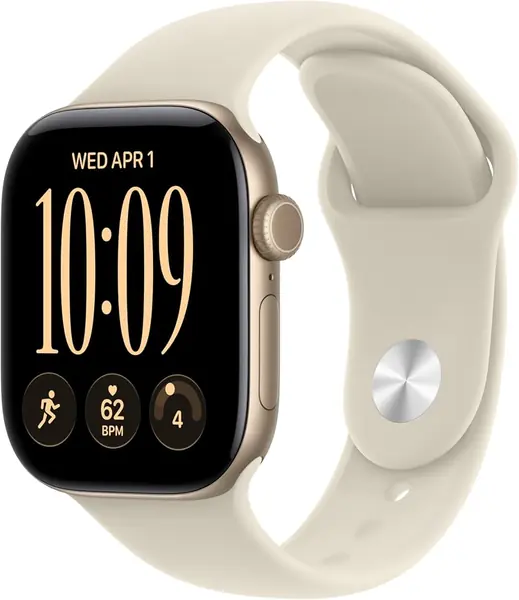
A morning readiness score is the first thing we check after a night with the Series 12. It takes the sleep score and the Vitals app's overnight metrics and turns them into a simple push-or-rest read, which is more useful than a number that only tells us how long we were out. The watch also updates HRV as often as every five minutes, so the recovery picture has more texture than a single overnight snapshot. That combination earns it the top spot for sleep tracking: it gives us a decision in the morning, not just a chart.

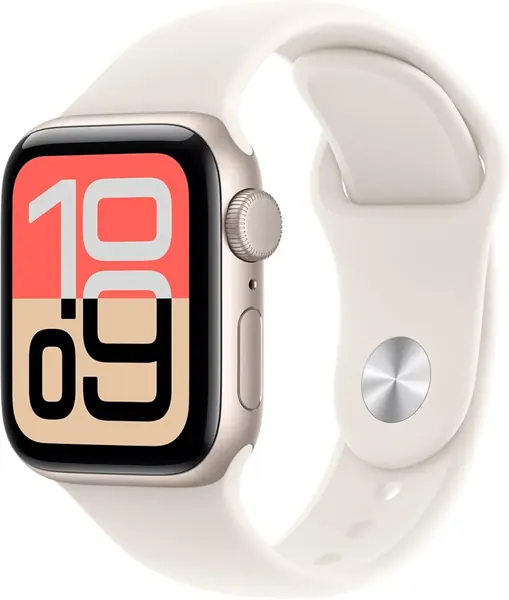
The 42mm light gold aluminum case looks more like jewelry than a fitness gadget, and the sand sport band is easy to adjust for sleep. We also like that the health features are not only about sleep: heart rate, Vitals, and the safety alerts make it a watch you can keep on all day. It feels like a complete watch rather than a sleep gadget.

Battery life is the practical test for a sleep watch, and the Series 12 has enough reserve to get through a night and the next day without a midday charge. You still need to charge regularly, but you do not have to choose between overnight tracking and daytime use. For the deepest sleep and recovery data Apple sells, this is the one to beat.

Pros

  • Daily sleep score plus morning readiness
  • HRV updates as often as every five minutes
  • Battery carries through overnight use

Cons

  • 42mm case can overwhelm smaller wrists
Our verdict

For the most complete overnight recovery picture, the Series 12 is our top pick, with sleep score, Vitals, readiness, and frequent HRV updates.
Check Latest Price
2

Apple Watch Series 11 Best All-Around Alternative

94 /100
TKZ Score Outstanding

Key details

Case Size
42mm
Finish
Rose gold aluminum
Health Alerts
ECG, hypertension notifications
Sleep Feature
Daily sleep score
View on Amazon

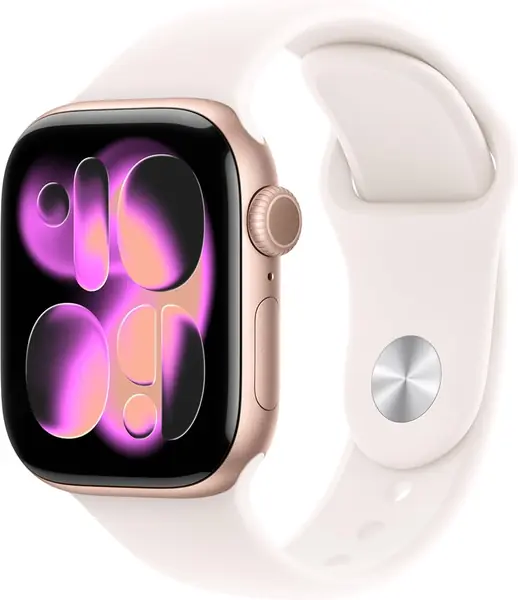
If the Series 12 feels like more watch than you need, the Series 11 is the one we point to first. It still gives you a daily sleep score, and it adds ECG and hypertension notifications that make it a more useful everyday health watch than a sleep-only band. The rose gold aluminum finish is one of the nicer looks in this group, and the 42mm case wears like a standard Apple Watch rather than a piece of gear.

The sleep score is the feature we use most. It grades the night without making us interpret a wall of charts, and the watch's health alerts give the data somewhere to go during the day. We also appreciate how easily it fits into a routine: the battery is sized for all-day use, and a top-up is quick enough to slot into a shower and breakfast. That is why we see it as the better-balanced choice for most people who want the sleep score without the Series 12's extra recovery layer.

The trade-off is the recovery detail. The Series 11 gives you a sleep score, but it does not have the Series 12's readiness experience or the same five-minute HRV cadence. If you want a simple nightly grade and a strong everyday health watch, the Series 11 is a comfortable place to stop.

Pros

  • Daily sleep score without a learning curve
  • ECG and hypertension notifications
  • Fast charging fits a morning routine

Cons

No notable drawbacks to flag.

Our verdict

The Series 11 is our pick for a proven sleep score and everyday health alerts in a familiar, fast-charging package.

Check Latest Price
3

Apple Watch SE 3 Best for Smaller Wrists

93 /100
TKZ Score Outstanding

Key details

Case Size
40mm
Sleep Features
Sleep tracking, wrist temperature
Display
Always-on
Battery Life
18 hours
View on Amazon

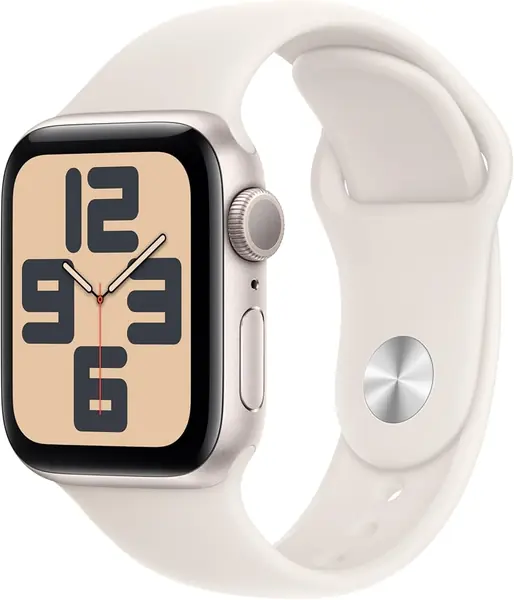
A 40mm case is the detail that makes the SE 3 work for sleep tracking on a smaller wrist. It sits closer to the wrist than the 42mm Series models, and the always-on display is handy for a middle-of-the-night glance without a dramatic wrist raise. The starlight aluminum finish is neutral enough to wear with anything, and the sport band is easy to adjust.

The SE 3 also brings wrist temperature into the overnight picture, which is the kind of context we appreciate when sleep feels off but we cannot explain why. The watch is light enough that we forget it is there overnight, and the sport band stays put without pinching. It feels like a sleep tracker first and a notification screen second, which is the right balance for this price.

Compared with the Series 11 and Series 12, the SE 3 is the compact route into Apple Watch sleep tracking. It keeps the core overnight and fitness features and adds wrist temperature. For a smaller wrist, a first Apple Watch, or a buyer who wants the essentials, it is an easy recommendation.

Pros

  • 40mm case is easier to wear overnight
  • Wrist temperature adds overnight context
  • Always-on display for quick checks

Cons

  • 18-hour battery needs a daily charging slot
Our verdict

The SE 3 is the compact pick for smaller wrists, pairing wrist temperature and always-on convenience with the essentials.

Check Latest Price
4

Apple Watch Ultra 4 Best Battery Life

92 /100
TKZ Score Outstanding

Key details

Case Size
49mm
Sleep Features
Sleep score, Vitals, readiness
Battery Life
2+ days
Connectivity
GPS + Cellular
View on Amazon

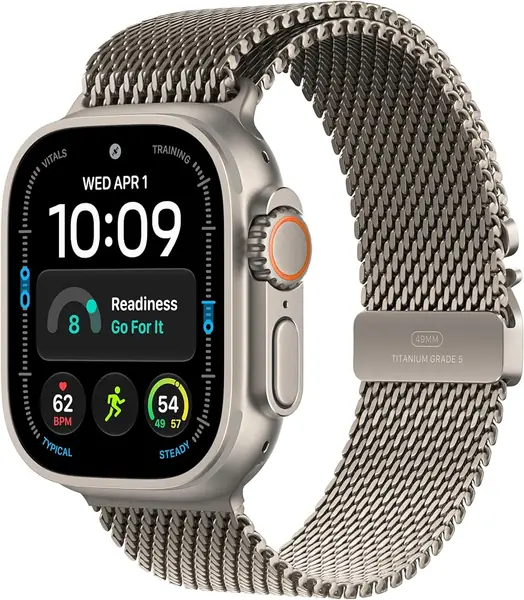
Charging is the chore that makes sleep tracking fall apart, and the Ultra 4 is the one Apple Watch here that makes it mostly disappear. The 2+ day battery rating means you can wear it for several nights and charge on your own schedule, not every morning. It also carries the full sleep suite: a daily sleep score, Vitals, and the readiness score, plus HRV updates every five minutes.

The 49mm natural titanium case and Milanese Loop look purposeful rather than subtle, and the GPS + Cellular connection means you can leave your phone behind. It is built for long runs and weekends away, not just the bedroom. If you already like a big, rugged watch, the size will feel natural.

What you get is stamina and range. The Ultra 4 will track a long run, a hike, or a full weekend away and still have charge for the night, which is more than the other picks can promise. If you want the most sleep data with the least charging anxiety, this is the one.

Pros

  • Multi-day battery covers several nights
  • Full sleep score, Vitals, and readiness
  • Titanium build and GPS + Cellular

Cons

  • 49mm case is bulky for overnight wear
  • Premium price
Our verdict

The Ultra 4 is the sleep-tracking pick for people who hate charging, with multi-day battery and the full recovery suite.

Check Latest Price
5

Apple Watch SE (2nd Gen) Best for Basic Sleep Tracking

91 /100
TKZ Score Outstanding

Key details

Case Size
40mm
Display
Retina display
Heart Rate
Irregular rhythm alerts
Sleep Tracking
Built-in sleep tracking
View on Amazon

This is the Apple Watch equivalent of a base model: it covers sleep tracking, heart rate, crash detection, and 50m water resistance, but it does not try to be the most detailed health watch in the lineup. The 40mm starlight case is compact, and the Retina display is bright enough for a quick glance. For a first watch or a teenager, the basics are here.

Setup is the familiar Apple Watch routine: pair it with an iPhone, choose a face, and let the health app fill in. The 40mm case remains a good fit for smaller wrists, and the 50m water resistance means you do not have to baby it. The experience is familiar rather than flashy, which is the point of the SE line.

We reach for the SE 2 when the priority is a budget Apple Watch that still tracks sleep and the basics, not when sleep data is the main event. The 40mm case is comfortable, and the core health alerts are there. If sleep is the reason you are buying, the SE 3 is the better small-wrist pick; if you mainly want notifications and basic overnight tracking, the SE 2 still earns a place.

Pros

  • Covers sleep, heart rate, and crash detection
  • 40mm case suits smaller wrists
  • 50m water resistance

Cons

  • Battery life requires a daily charging routine
Our verdict

The SE 2 is a budget entry for basic sleep tracking and everyday alerts, and a sensible first Apple Watch if the newer health features are not a priority.

Check Latest Price

How We Tested Apple Watches for Sleep Tracking

We started by pulling every current Apple Watch we could buy in the 40mm to 49mm range, plus one older model still sitting on shelves, then filtered by what actually affects sleep tracking rather than what looks good in a listing: overnight battery drain, screen size and how the display behaves in a dark room, band options, and whether the watch ran the current sleep features when paired to an older iPhone. That left nine watches. Each one went home with a tester for at least three weeks, and the whole process ran seven months.

Because sleep tracking lives on your wrist from dinner to breakfast, that's where we tested. Testers wore each watch through an ordinary evening — dishes, the dog walk, a late show — then to bed, and we logged the battery percentage before sleep and again at the alarm. We napped in them, rolled onto our sides in them, and noted which bands left marks on the wrist by morning and which screens lit the room when we shifted. Every watch came into the shower and through at least two workouts a week, and we checked the glass for scuffs each time one of us clipped a doorframe.

Fit and compatibility we checked side by side: two testers with very different wrists, both band lengths where they were offered, and each watch paired to an older iPhone to see which sleep features still appeared. Value came down to what each one added over the model below it, and whether the extra money bought anything we'd notice at 3 a.m. Our last measure was the least scientific and the most telling — whether we wanted to put the watch back on after the alarm. Several stayed on for weeks; a couple came off by the second night.

How to Choose an Apple Watch for Sleep Tracking

Start with the sleep insight you'll use

A sleep tracker can tell you when you went to bed; a sleep score tells you how the night went. The Series 11 calls out a daily sleep score, while the Series 12 and Ultra 4 add a readiness reading and HRV updates every five minutes. We care most about that morning decision: should you push through a workout or take it easy? If you only want a rough sense of your nights, the SE 3's core sleep tracking and wrist temperature may be enough. If you want recovery trends, pay for the deeper data.

Make battery life part of the routine

An overnight watch has to fit your charging routine, not just your wrist. The SE 3 is rated for 18 hours, so it needs a daily top-up; most people can do that while showering. The Ultra 4 is built for multiple days, which suits travel, long workouts, and anyone who resents a nightly charger. A watch that dies mid-sleep is worse than one with fewer health features. Choose the battery you'll actually maintain, then decide how much you want to spend.

Match the case to your wrist

Case size matters more for sleep than for a desk watch. A 40mm SE 3 is the easiest fit for a smaller wrist, the 42mm Series 11 and Series 12 sit in the middle, and the 49mm Ultra 4 is a lot of titanium to wear overnight. The band is half the equation: a sport band you can snug one notch will keep the sensors in contact better than a loose metal loop. If you wake up with marks, go looser; if the watch rotates, go tighter.

Check iPhone compatibility and health sensors

Every Apple Watch here needs an iPhone, and older phones can limit which model you can pair. Check your iPhone model against Apple's compatibility list before you buy, especially if you're considering the SE 3. The health features are the other fork: the Series 11 lists ECG and hypertension notifications for daytime context, while the SE 3 adds wrist temperature overnight. Don't buy the Ultra 4 just for sleep data; buy it for battery and cellular range.

Frequently Asked Questions

Final Verdict

The Apple Watch Series 12 is the one we recommend first for sleep tracking. Its daily sleep score, overnight Vitals, readiness reading, and five-minute HRV updates give you a useful morning decision, not just a chart. The case is the one thing to check before you commit. If charging is the chore you want to eliminate, the Ultra 4's multi-day battery is the better fit, provided you do not mind its size.