Best Apple Watches for Health Monitoring of 2026

Every Apple Watch reads your pulse the same way: green LEDs shine into your wrist and photodiodes measure the light that bounces back, which is why the band has to sit snug. What changes between models is everything around that sensor — screen size, case material, battery life, and which health features come with the price.

I've worn one for years, mostly to settle arguments with myself about sleep, and my team and I have now spent eight months with nine of them: the 40mm and 42mm cases, the 49mm titanium ones, and a couple of renewed units that arrive in plain packaging. The renewed watches taught us the most — condition and authenticity aren't guarantees, they're things you check.

The spec people obsess over is screen size; the one they ignore is the band. A 40mm on a strap you hate feels worse than a 49mm on one you love, and appearance is most of why the thing stays on your wrist, which is most of why the health data keeps coming in. Here are the ones that stayed on mine.

The Best Apple Watches for Health Monitoring

1

Apple Watch Series 11 Best Overall
95 /100
TKZ Score Outstanding

Key details

Case Size
42mm
Case Material
Aluminum
Health Features
ECG, hypertension notifications, sleep score
Display
Always-On display
View on Amazon

An ECG you can take from your wrist and a notification that flags signs of chronic high blood pressure are the two features that settle this one for us. The Series 11 and the Ultra 3 are the watches here that lead with that pair, and the Ultra is a great deal more watch to strap on. Around those two, the Series 11 stacks up the daily work: a sleep score every morning, overnight Vitals, high and low heart rate alerts, and fall and crash detection that can reach emergency services.

What we did not expect to care about is how little upkeep the health side needs. You put it on, you sleep in it, and the numbers are waiting. Training load and Heart Rate Zones are there when you want them and invisible when you do not, which is the difference between a watch you keep wearing and one that ends up in a drawer. The always-on display earns its place mid-workout too, since a glance tells you your zone without breaking stride.

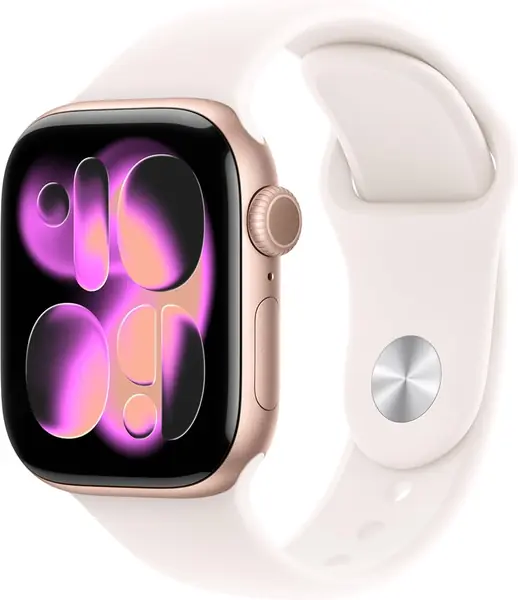
The charging rhythm is the one habit worth building. A top-up takes well under an hour, so the practical move is the puck while you shower, and a short session is enough to carry you through a night of sleep tracking. The rose gold aluminum with the light blush band reads more like jewelry than gear, which helps if you want one watch for the gym and the office, and at 42mm it slips under a cuff.

Pros

  • ECG plus hypertension alerts in one watch
  • Sleep score and overnight Vitals built in
  • 42mm case stays comfortable overnight

Cons

  • No cellular in this configuration
Our verdict

We recommend the Series 11 to anyone who wants the fullest health picture: ECG, hypertension alerts, and a sleep score in a 42mm case you can wear overnight.
Check Latest Price
2

Apple Watch Series 12 Best for Recovery Tracking

94 /100
TKZ Score Outstanding

Key details

Case Size
42mm
Case Material
Aluminum
Health Features
Vitals, sleep score, readiness
HRV Frequency
As often as every 5 minutes
View on Amazon

The Series 12 and the Series 11 are the same 42mm watch in most of the ways that matter, so the choice comes down to which kind of health data you want more of. The Series 12 leans into recovery. Apple calls it the most accurate heart rate sensing in a wearable, and it reads HRV as often as every five minutes, which is dense enough to watch stress build and ease across a day instead of catching a single morning snapshot. Paired with the readiness score, it is a watch with an opinion about whether you should push today.

For anyone training toward something, we think that cadence is the reason to choose this one over the Series 11. If you are not training, it is mostly extra numbers, and the parts you will actually use are the overnight Vitals readout and the daily sleep score, both of which are here alongside fall and crash detection. What the Series 12 sells is the loop between a hard session, a short night, and the readiness score waiting the next morning.

Battery life is the quiet advantage over the SE 3. It clears a full day with room to spare, and that is what makes wearing it overnight realistic rather than aspirational. Give it a couple of weeks of consistent wear before you judge the readiness numbers, since a baseline is the whole point of them, and the same 42mm case as the Series 11 means you already know how it will sit.

Pros

  • HRV readings as often as every five minutes
  • Readiness score turns data into a daily call
  • Gets through a day and well beyond

Cons

  • Ships with an S/M band only
Our verdict

Pick the Series 12 if recovery is your priority: five-minute HRV readings and a readiness score, in the smaller of the two cases that offer them.

Check Latest Price
3

Apple Watch SE 3 Best Budget

93 /100
TKZ Score Outstanding

Key details

Case Size
40mm
Battery Life
18 hours
Health Features
Temperature sensing, Vitals, Cycle Tracking
Charging
Up to 2x faster than SE 2
View on Amazon

Temperature sensing that feeds the Vitals app and the Cycle Tracking app, overnight metrics, workout and step tracking, and fall and crash detection that can call for help. The SE 3 covers the everyday half of health monitoring, and it does it at the lowest price in this group. For a lot of people that is the whole assignment: a watch that notices something and tells you about it.

We think this is the right first Apple Watch for most buyers, and the right one for a parent or grandparent whose real concern is fall detection rather than training load. What it does not do is the specialist end. If an ECG reading or a hypertension alert is the reason you are shopping, the Series 11 is the watch to look at, while the SE 3 makes its case on temperature, overnight vitals, and cycle tracking, and it makes that case well.

The 18-hour rating is the part to plan around. This is an all-day watch rather than an overnight one, so if the sleep score and Vitals data are what you came for, charge it over breakfast instead of overnight and you will keep the record going. Charging is up to twice as fast as on the previous SE, which makes that routine easy to hold, and the 40mm case is small enough to disappear under a sleeve at work.

Pros

  • Temperature sensing feeds Vitals and cycle tracking
  • Fall and crash detection at the lowest price here
  • Charges up to twice as fast as SE 2

Cons

  • May not pair with older iPhones
Our verdict

We think the SE 3 is the smart first health watch: temperature sensing, overnight vitals, and fall detection at the lowest price here.

Check Latest Price
4

Apple Watch Ultra 3 Best for Overnight Health Data

92 /100
TKZ Score Outstanding

Key details

Case Size
49mm
Battery Life
Up to 42 hours of normal use
Case Material
Titanium
Display
Sapphire crystal
View on Amazon

Forty-two hours of normal use per charge is the number that changes what a health watch can do. Two nights of sleep tracking before you reach for the charger turns overnight data into a continuous record rather than something you catch when it is convenient. On its own, that makes the Ultra 3 the most practical pick here for anyone who wants the sleep and Vitals picture without building a charging ritual around it.

It also covers the heart side properly: an ECG from the wrist, a check for signs of AFib, and alerts for possible hypertension. Wrapped in a titanium case with a sapphire crystal display, that is the combination we trust most for a watch that gets knocked against doorframes, pool tiles, and trail rocks. If you want the full health suite and you are hard on your gear, this is the one to buy.

The Action button is the detail that grows on you, since one press starts a workout or marks a split without looking down, which matters with full hands or gloves on. The deeper training metrics do cost an evening or two of setup before they mean anything, and that is the one place the Ultra asks more of you than a Series watch. Once they are configured, the extra data is genuinely there rather than buried.

Pros

  • Up to 42 hours of normal use
  • ECG, AFib check, and hypertension alerts
  • Titanium case with sapphire crystal

Cons

  • Bulky 49mm case is a lot on small wrists
Our verdict

We point people to the Ultra 3 when they want ECG and hypertension alerts without charging every night, since 42 hours covers two nights of sleep data.

Check Latest Price
5

Apple Watch Ultra 4 Best for Longest Workouts

90 /100
TKZ Score Outstanding

Key details

Case Size
49mm
Battery Life
Up to 45 hours of extended workout tracking
GPS
Precision dual-frequency GPS
Connectivity
GPS + Cellular
View on Amazon

If your long day is a marathon, a triathlon, or six hours on a mountain bike, the Ultra 4 is aimed squarely at you: up to 45 hours of extended workout tracking and precision dual-frequency GPS that holds a line under tree cover and between tall buildings. That is a narrower brief than the rest of this list, and it is the reason to spend the extra here rather than on a Series watch.

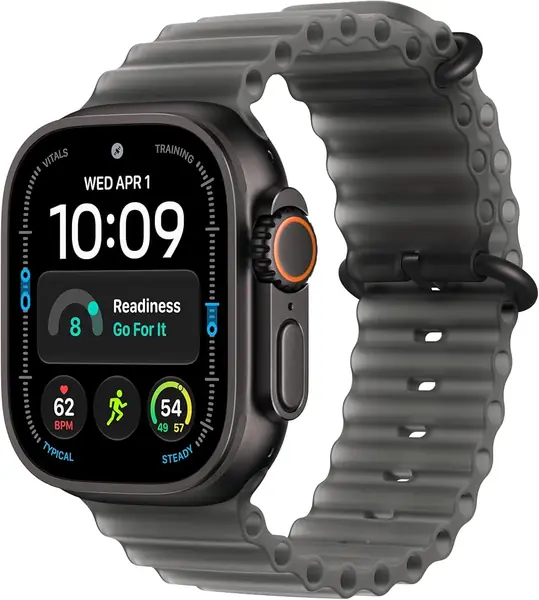
The health side is current generation too. HRV is read as often as every five minutes, the Vitals app collects overnight metrics, and the daily sleep score and readiness score turn all of it into something you can act on before breakfast. In practice the recovery picture is close to what the Series 12 gives you, in a body with the battery to keep recording through a very long event.

Where we land: this is the watch for someone whose training is the reason for the purchase, and the premium buys stamina and GPS accuracy rather than health sensors you cannot get elsewhere. If the longest thing on your calendar is a 5K and a dog walk, the Series 11 covers the daily health picture in a smaller case, and you will never miss the dual-frequency GPS.

Pros

  • Up to 45 hours of extended workout tracking
  • Precision dual-frequency GPS
  • HRV readings as often as every five minutes

Cons

  • Premium price for battery and GPS gains
Our verdict

We see the Ultra 4 as a race-day tool: 45 hours of workout tracking and dual-frequency GPS for people whose training is the reason they are buying.

Check Latest Price
6

Apple Watch Ultra 2 (Renewed) Rugged Value

85 /100
TKZ Score Excellent

Key details

Case Size
49mm
Battery Life
36 hours
Water Resistance
100 meters
Warranty
90 days limited
View on Amazon

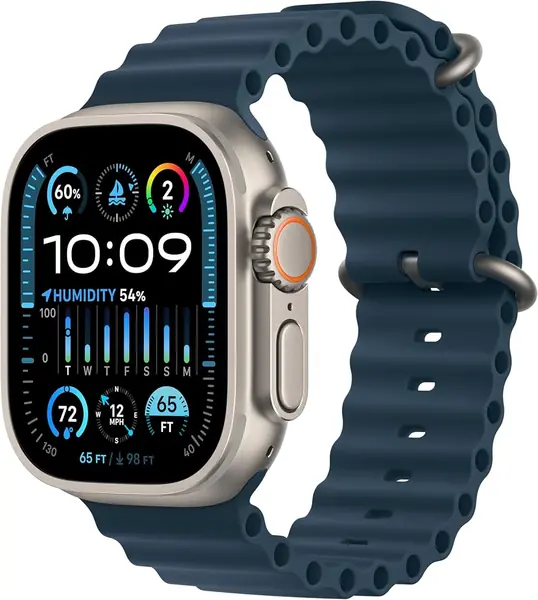
Renewed is the whole story here, and it is a good one if you accept the terms: a 49mm titanium Ultra 2 with a 100-meter water rating, a display that stays readable at 3,000 nits in direct sun, and cellular built in, for well under what a new Ultra runs. The hardware we handled does not feel like a compromise, since the case and screen are the same titanium and glass the line is known for.

Battery health is the wildcard in any renewed watch. The case and crystal tend to be the strong part of what arrives, and how much capacity is left in the cell runs from near-new to noticeably aged. Everything else about the watch, from the Action button to the cellular connection, is the same hardware you would get in a new box.

The calculation is simple: the Ultra's size, water rating, bright display, and cellular, for well under new-Ultra money, with a 90-day limited warranty instead of a year. If you are comfortable being your own quality check when the box lands, it is one of the better values on this page, and the sapphire crystal means the face you are inspecting usually has nothing to hide.

Pros

  • 100-meter water resistance in titanium
  • 3,000-nit display readable in sunlight
  • Cellular included at a renewed price

Cons

  • Bundled band and charger may be third-party
Our verdict

Our pick for anyone who wants Ultra hardware on a smaller budget and is willing to be their own quality check on day one.

Check Latest Price
7

Apple Watch Ultra (Renewed) Lowest Ultra Price

84 /100
TKZ Score Excellent

Key details

Case Size
49mm
Battery Life
36 hours
Water Resistance
100 meters
Screen Size
1.92 inches
View on Amazon

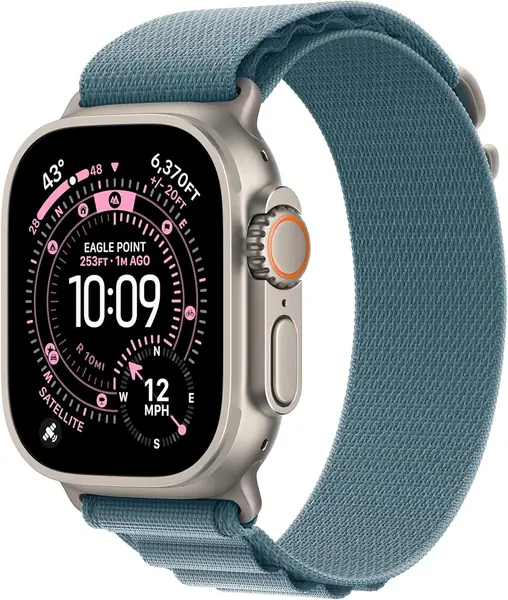
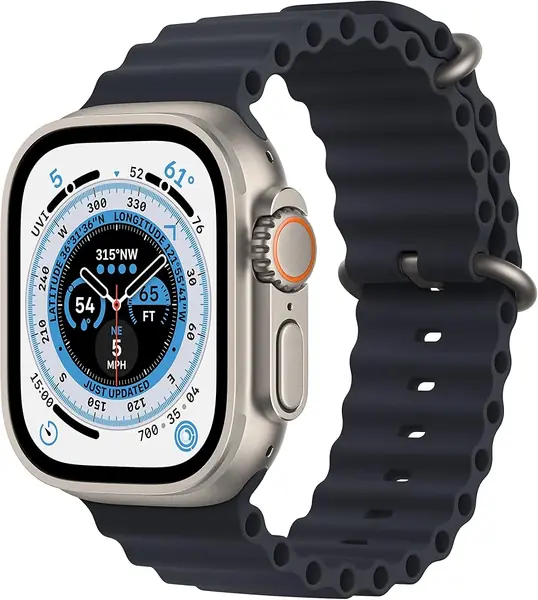
This is the oldest watch on the page, and it is still the least expensive way into an Ultra. The first-generation Ultra brought the 49mm titanium case, 100-meter water resistance, the 3,000-nit display, and cellular, and that is the hardware the rest of the line has been building on ever since.

The health case is narrower than the newer models but not thin. Heart rate monitoring, fall detection that can reach emergency services, workout metrics with Heart Rate Zones, and GPS that maps where you have been are all here. A rated 36 hours of battery is enough to sleep in it and still get through the following day, which is more than any Series watch here promises.

Where the generation shows is the software layer the rest of this list leads with. The readiness score, the five-minute HRV cadence, and the daily sleep score are what the newer watches sell, and this Ultra's documented health features stop at heart rate, fall detection, and workout tracking. For everyday monitoring that is still plenty; for training analysis it is not the watch.

For the money, this is the Ultra we point to when someone wants the case and the water rating more than the newest metrics. Run a charge cycle and one workout in the first week, and you will know exactly what you bought before the return window closes.

Pros

  • Lowest-priced route to an Ultra
  • 100-meter water resistance and titanium case
  • Cellular and a 36-hour battery rating

Cons

  • Battery capacity varies from unit to unit
  • Band can arrive broken or third-party
Our verdict

We rate this the cheapest honest way into an Ultra case, as long as a two-generation-old health suite still covers what you track.

Check Latest Price

How We Tested Nine Apple Watches for Health Tracking

We started with the current lineup and its price tiers, then added renewed units from third-party sellers because so many shoppers weigh them against new ones. That gave us nine watches across three case sizes and two case materials, all paired to the same phone so the comparisons would be like for like.

For eight months we wore them through the ordinary stuff: overnight every night for sleep and resting heart rate, morning runs, gym sessions, a pool swim, a Saturday of yard work, and a week of commuting. Mid-run we compared each watch's heart rate against a chest strap, and in the morning we asked whether the sleep score matched how the night actually went.

Battery life got logged rather than guessed — we noted the percentage left after a night of sleep tracking and after a long GPS run. Durability meant wearing them loose in a bag with keys, knocking them into doorframes, and hunting for scratches on the glass at the end of each month. For the renewed watches we ran the serial number through the manufacturer's coverage checker, paired each one to confirm it wasn't activation-locked, and read the battery health figure before trusting a single reading.

Bands came off and on repeatedly to see how each case mixed with straps someone already owns, which was the closest thing we had to a looks test — a watch is jewelry half the time. We judged value at the end by asking what the extra money actually bought: a bigger screen, a tougher case, another day of battery, or nothing we could feel.

How to Choose an Apple Watch for Health Monitoring

Match the Health Features to What You Will Actually Check

A smartwatch can monitor a great deal, but the features sort into three rough groups: heart-rhythm tools like ECG and hypertension alerts, recovery tools like dense HRV readings and a readiness score, and everyday tracking like temperature sensing, overnight vitals, and fall detection. Decide which group you will open every week before you compare anything else, because a feature you check once and forget is not a reason to spend more.

If heart alerts are the point, put the Series 11 and the Ultra 3 at the top of your list. If you are training toward something, the Series 12 and the Ultra 4 give you more to work with. If you mainly want something that notices a fall and shows you your sleep, the SE 3 covers it.

Fit Decides Whether You Will Wear It Overnight

The sleep score, the Vitals readout, and temperature data all come from hours you spend asleep, so the best health watch is the one you forget you have on. Cases here run from 40mm on the SE 3 to 42mm on the Series models to 49mm on every Ultra, and that last jump is the one that changes how a watch feels under a cuff and against a pillow.

If you have a small wrist, try a 49mm case on before you commit to an Ultra. A watch that sits proud of the arm tends to come off at night, and that quietly costs you the data you bought it for.

Battery Life Is What Makes Overnight Tracking Possible

Quoted battery figures assume ordinary use, so treat them as a ceiling. A long workout, an always-on display, and a cellular connection all eat into the number on the box. The SE 3's 18-hour rating means a deliberate charging window every day; the Series models clear a full day and often a second; the Ultra 3 is rated for up to 42 hours of normal use, which gets you two nights of sleep data per charge.

If you plan to sleep in a watch, pick one you can top up during a shower or over breakfast. An 18-hour watch is fine for that routine; it just is not a watch you can forget about for a weekend.

New, Renewed, or a Generation Behind

Buying last generation new is the safest discount: full warranty coverage and nearly all the health features. Renewed Ultras go further, trading a fresh box for titanium and a 100-meter rating at a much lower price, with a 90-day limited warranty and battery health that varies from unit to unit.

Before the return window closes, open Settings and check battery health, run one full charge cycle, and put the band on and take it off a few times. That hour of work is the difference between a bargain and a return.

Frequently Asked Questions

Final Verdict

Our recommendation is the Apple Watch Series 11. It pairs an ECG with hypertension notifications, adds a daily sleep score and overnight Vitals, and puts all of it in a 42mm case you can wear through the night without noticing it.

If recovery is the data you care about, the Series 12's five-minute HRV readings and readiness score are the more useful instrument, and that cadence is the deciding difference between the two.