Best AirPods for Running

The worst part of a bad pair of running earbuds isn't the sound — it's the mid-run rescue. You're three miles in, one bud has slipped loose, and now you're jogging one-handed while trying to wedge it back into place with a sweaty thumb. The right pair should be forgettable: it stays put through intervals, outlasts your longest run, and doesn't force you to choose between hearing your podcast and hearing the car coming up behind you.

Over the past six months I've run in 12 pairs, from open-ear hooks to sealed buds with active noise cancellation, and the gap between them comes down to fit and battery far more than anything printed on the box. Two things I'd tell a first-time buyer: transparency mode isn't a luxury if you run on roads, and the newest buds can now read your heart rate from your ear — genuinely useful, though not yet a reason to upgrade on its own.

Every pair below earned its spot on the road, and there's a fit style and a budget here for just about everyone.

The Best AirPods for Running

1

Beats Powerbeats Pro 2 Best Overall
90 /100
TKZ Score Outstanding

Key details

Fit
Ear hooks
Battery
45 hours with case
Water Resistance
IPX4
Heart Rate Sensor
Yes
View on Amazon

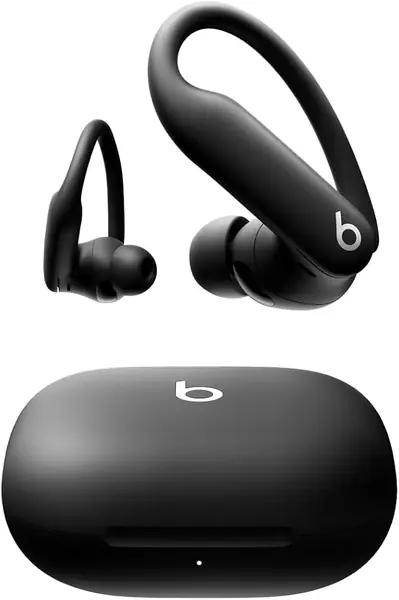
Two things decide whether a pair of earbuds survives a training block: whether they stay on your head and whether they keep working after a summer of sweat. The Powerbeats Pro 2 is the pair here built most deliberately around both. Instead of a stick hanging out of the canal, each bud hooks over the top of your ear and presses the tip inward, so the grip comes from bone rather than friction. Beats rates them IPX4 for sweat and splashes, and the hook rotates to sit at a different angle.

The hook also carries a heart-rate sensor that pulses more than 100 times a second, tracking effort and calories across 50 workout types without a chest strap or a watch. After a few runs we stopped noticing the measuring at all, which is the point. The Apple H2 chip brings one-touch pairing and hands-free Siri, and unlike most Apple-flavored gear these pair just as happily with an Android phone.

Battery is the other reason we reach for them. Beats quotes 45 hours of listening with the case, which is a week of runs and commutes for most people, and the case charges on a Qi pad so it tops up on the nightstand without hunting for a cable. It's the one place the design feels dated, since a case this size takes real room in a jacket pocket.

Comfort is where the hook can turn on you: it presses behind the ear, and on longer efforts that pressure becomes noticeable for some ear shapes. If hooks have dug in before, the JLab pair below is worth trying first. Otherwise this is the pair we hand to anyone whose main fear is a bud popping out at mile four.

Pros

  • Ear hooks hold through hard efforts
  • Stated IPX4 sweat and water resistance
  • Heart-rate sensing without a chest strap
  • 45 hours of listening with the case

Cons

  • Bulky case for a pocket or race belt
  • The most expensive pair in this group
Our verdict

Buy these if staying put matters more than anything else: the ear hook, the IPX4 rating, and the heart-rate sensor make them the most running-specific pair here.
Check Latest Price
2

Apple AirPods Pro 3 Best for iPhone Owners

89 /100
TKZ Score Excellent

Key details

Fit
Silicone ear tips
Battery
8 hours with ANC
Noise Cancelling
Yes
Heart Rate Sensor
Yes
View on Amazon

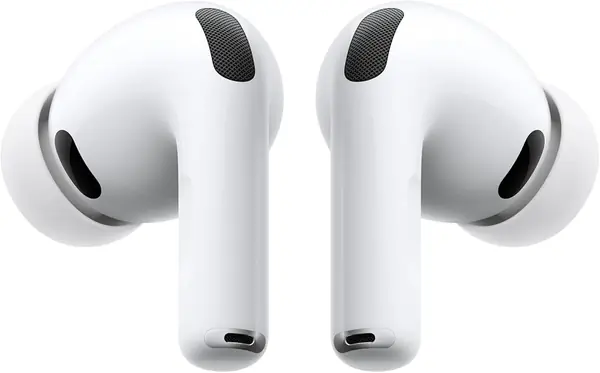
The headline for runners is the sensor. The AirPods Pro 3 read your heart rate and estimate calories across 50 workout types, so the phone stays in your pocket and the chest strap stays in a drawer. Add eight hours of listening with noise cancelling on, a USB-C case that shares a cable with your laptop, and you have a pair that covers a half marathon and the ride home.

We rate these the best all-rounders in the group and the easiest call for anyone already carrying an iPhone. The noise cancelling is the strongest we used here, which is what you want when the treadmill row is loud, and everything from pairing to the battery readout simply works. The variable is the seal. A tip that seals keeps the bass, the cancelling, and the grip; one that doesn't will drift and sound thin. Apple also lists no water-resistance rating for these, the one gap that gives us pause on rainy training.

Where they beat the Powerbeats Pro 2 is everything that isn't running: a far smaller case, Live Translation, and the hearing-aid feature. Where they lose is grip, since there's no hook holding the bud against your ear. Buy them if you want one pair for the gym, the office, and the long run, and you already know your ears take a silicone tip.

Pros

  • Heart-rate and calorie tracking built in
  • Strongest noise cancelling in this group
  • Eight hours of listening with ANC
  • Small USB-C case that travels easily

Cons

  • Grip depends entirely on the tip seal
  • No stated water-resistance rating
Our verdict

The best all-rounders here: heart-rate tracking, the strongest noise cancelling in this group, and eight hours of it, provided the tip seal suits your ears.

Check Latest Price
3

Soundcore V20i Best Open-Ear for Roads

88 /100
TKZ Score Excellent

Key details

Fit
Adjustable open-ear hooks
Battery
36 hours with case
Water Resistance
IP55
Drivers
16mm
View on Amazon

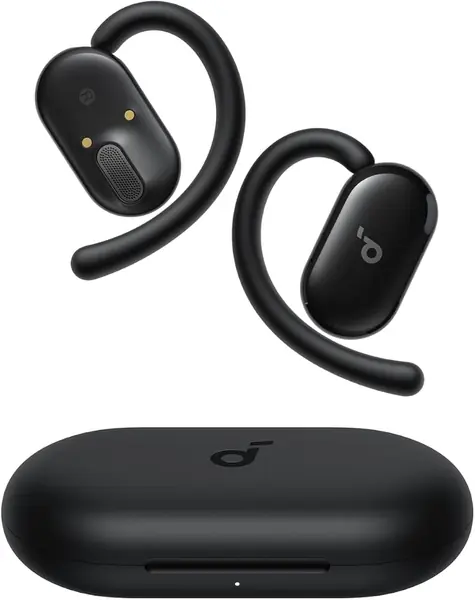
Nothing else here asks so little for so much running-specific design. The V20i hangs a 16mm driver outside your ear canal on a hook with four rotation positions, rates the whole assembly IP55 against sweat and dust, and stores 36 hours of playback in the case. In our testing the adjustment was the part that mattered: a quarter turn was the difference between a bud that bounced and one we forgot about.

Open ear is the reason to choose it and the reason to think twice. Because nothing plugs the canal, you hear cars, cyclists, and your own footfalls — exactly what you want on a road with no shoulder. The trade is bass and isolation. A busy street eats the low end, and there's no noise cancelling to switch on when you're back inside a loud gym.

We think it's the right first pair for a road runner, and it's the one we hand to people who hate the plugged-up feeling of a tip. Long-wear comfort is the caveat: the hook rests on cartilage, and after a few hours some ears start to notice it. The sound is pleasant rather than rich, which is a fair swap at this end of the range.

Pros

  • Open ear keeps traffic audible
  • IP55 sweat and dust protection
  • Four hook positions to dial in fit
  • 36 hours of playback with the case

Cons

  • No noise cancelling for indoor workouts
  • Hook pressure builds over long wears
Our verdict

The best road-running pick for the money: an open ear that keeps traffic audible, IP55 protection, and hooks you can rotate until they sit right.

Check Latest Price
4

JLab Go Sport+ Best for Small Ears

87 /100
TKZ Score Excellent

Key details

Fit
Ear hook, small-ear sizing
Battery
9+ hours per bud, 26+ in case
Water Resistance
IP55
Warranty
2 years
View on Amazon

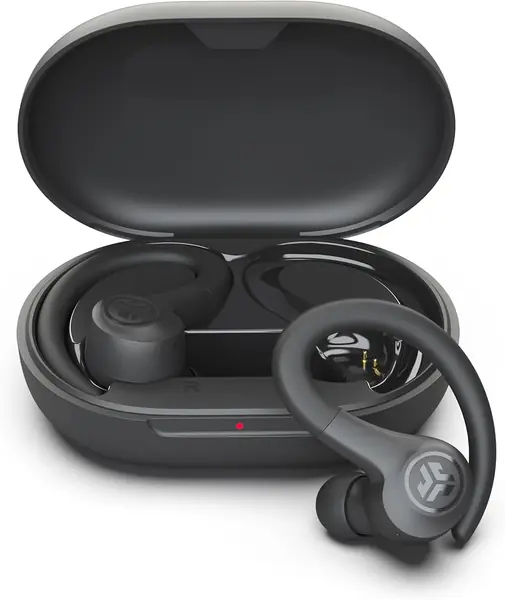
Most ear hooks assume a certain amount of ear. JLab sized this one for smaller ears and says as much on the box, which is why the Go Sport+ is the first pair we suggest to anyone whose hooks usually press or float. It's rated IP55 against sweat and dust, and the hook wraps low behind the ear instead of sitting on the cartilage above it, so the pressure goes somewhere that tolerates it.

Nine-plus hours in each bud and another 26-plus in the case is more than most people use in a week, and the case hides its own USB cable, so there's nothing to lose in a gym bag. We also appreciate the two-year warranty, which is generous next to the 90-day coverage on the cheapest pairs here and the kind of protection a sweaty set actually needs.

Where it gives ground is sound. Music is clear and a little thin next to the Apple pairs — fine for podcasts and pace work, less satisfying on a long easy run with a bass-heavy playlist. There's no noise cancelling either, and the touch controls take a few runs to learn. For the money, though, it's hard to argue with a pair that grips this well.

Pros

  • Hook sized for smaller ears
  • IP55 sweat and dust resistance
  • Nine-plus hours per bud, 26-plus in case
  • Two-year warranty

Cons

  • Thin sound next to the Apple pairs
Our verdict

The budget pair we point small-eared runners to: a hook sized for narrow ears, IP55, nine hours a bud, and a two-year warranty.

Check Latest Price
5

bmani T16 Best Battery Life

86 /100
TKZ Score Excellent

Key details

Fit
Over-ear hooks
Battery
80 hours with case
Controls
Push button
Bluetooth
5.0
View on Amazon

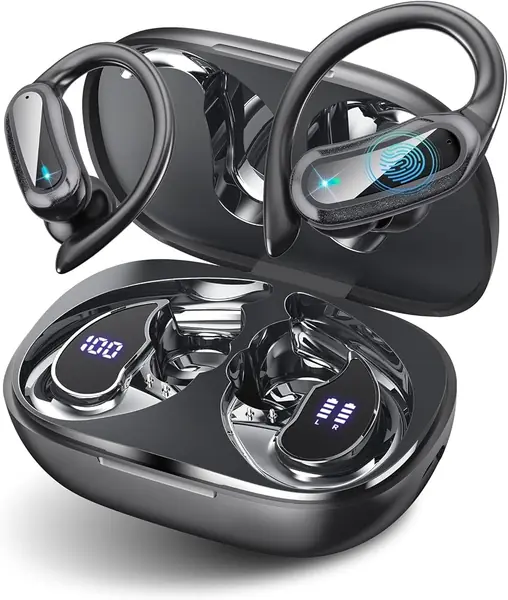
Eighty hours. That's the pitch. The T16's case holds enough charge for a month of short runs, and the LED display on the front shows the percentage left without opening anything. For a commuter, or a runner who is simply bad at charging, that number is worth more than a nicer driver.

The rest is competent budget hardware. Hooks wrap over the ear, the tips come in three sizes, and the controls are physical buttons rather than touch, which we found easier to hit with a sweaty hand or a winter glove. The hooks sit low and the tips are soft, so nothing about them calls attention to itself on an easy hour.

Sound is decent rather than special: plenty of volume, a warm low end, not much detail. The Bluetooth radio is an older generation, so range through walls is shorter than on the Apple pairs, and there's no noise cancelling at all. None of that matters much at a conversational pace.

The weak spot is longevity. An earbud that stops charging is the failure to watch for in this corner of the market, so wipe them dry before docking and keep the receipt — the five-year manufacturer warranty is the longest claim on this page and worth using. Treat them as a workhorse you'll replace in a year or two rather than a last pair, and the maths works out.

Pros

  • 80 hours of playback with the case
  • Hooks and soft tips stay comfortable
  • Physical buttons work with sweaty hands
  • Five-year manufacturer warranty

Cons

  • Charging faults are the weak spot
  • Older Bluetooth 5.0 radio
Our verdict

An unfashionable pick with an enormous battery: a cheap pair that outlasts a week of training and rarely needs a mid-run top-up.

Check Latest Price
6

Apple AirPods 5 Everyday Wear

85 /100
TKZ Score Excellent

Key details

Fit
Tip-free open design
Noise Cancelling
Yes
Chip
H2
Charging
USB-C
View on Amazon

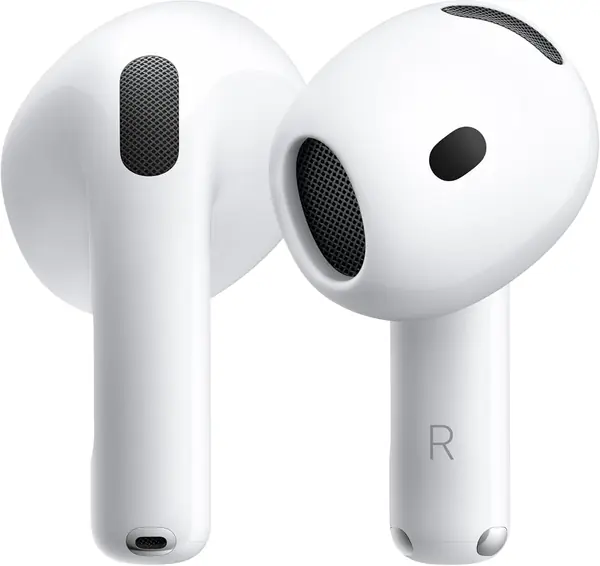
No ear tips is the whole idea. The AirPods 5 sit in the bowl of your ear like the original AirPods, which makes them the most comfortable pair here over a long day and the least locked-in once you start sweating. If your running is treadmill sessions and easy miles, that trade is a good one. If it's hill repeats in July, it isn't.

They've closed most of the old gap: active noise cancelling genuinely works without a seal, the H2 chip handles pairing and device switching, and the case charges over USB-C like everything else in your bag. Sound is clear rather than big, with the open fit giving up bass the way any tip-free design will.

Apple lists no water-resistance rating for these, which is the second reason we keep them out of the rain. Where they earn a place in this guide is as the pair you wear all day and take out for a light run — the ones you don't have to think about. For anything harder, the Powerbeats Pro 2 or the AirPods Pro 3 is the safer spend.

Pros

  • Tip-free fit is comfortable all day
  • Noise cancelling without a seal
  • USB-C case and H2 pairing

Cons

  • Loose grip once you sweat
  • No stated water-resistance rating
Our verdict

Comfortable, capable everyday earbuds we wouldn't choose for intervals: without a tip to grip, they stay in best on easy days.

Check Latest Price
7

TRAUSI i27 Spare-Pair Budget

84 /100
TKZ Score Excellent

Key details

Fit
Ear hooks
Battery
6 hours, 54 with case
Water Resistance
IPX7
Weight
7 g per bud
View on Amazon

At seven grams a bud, the i27 is the lightest thing in this guide, and the ear hooks are soft enough that the weight is the whole story: for the first hour you forget they exist. IPX7 is one of the two highest water ratings here, and the case holds 54 hours of playback on top of six in each bud.

Sound is the compromise. It's clear for podcasts and calls and fairly flat for music, with less low end than the Apple pairs, and the touch controls take practice to hit without looking. What you get in return is a hook that stays on through a workout and a bud light enough that a hat or sunglasses don't fight it.

The case for buying them is simple: they're the pair to keep in the car or the gym bag so a forgotten charge doesn't cancel a run, and losing one at this price isn't a disaster. The 90-day warranty is the shortest here, which tells you what the maker expects. If you want coverage to lean on, pay a little more for the JLab pair.

Pros

  • Seven grams per bud
  • IPX7 water resistance
  • 54 hours with the case

Cons

  • Six hours per charge, the shortest here
  • 90-day warranty
Our verdict

Seven grams a bud and an IPX7 rating for very little money: a good cheap second pair, with sound that won't wow you.

Check Latest Price
8

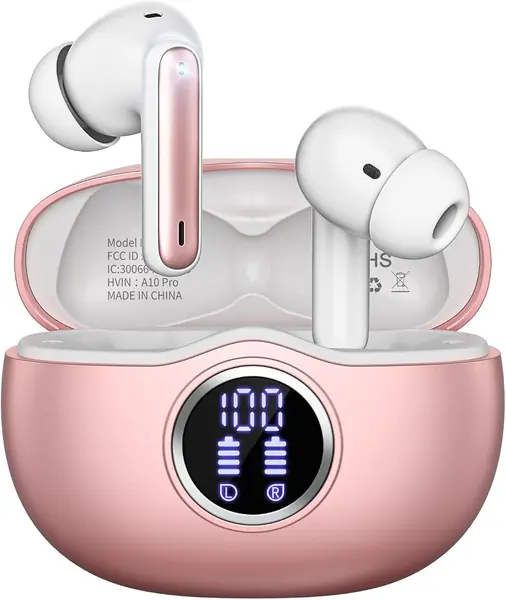
Fhumsh A10 Best for Cheap Waterproofing

83 /100
TKZ Score Excellent

Key details

Fit
Reinforced ear hooks
Battery
50 hours
Water Resistance
IPX7
Warranty
90 days
View on Amazon

Waterproofing is usually the first thing to go at the bottom of the market, so an IPX7 hook design at the very bottom of this group's price range is the reason to look twice at the A10. The reinforced hooks hold the bud against the ear, and three pairs of gel tips come in the box, which matters more than any spec when your ear canals are small.

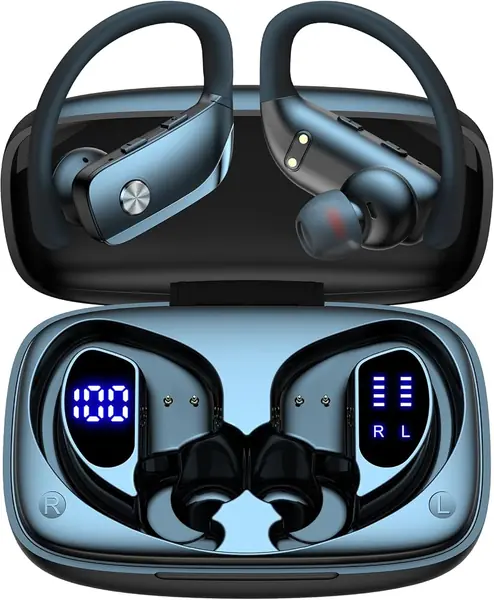
The screen on the case shows a percentage for each bud as well as for the case itself. It sounds gimmicky until you've been caught out by one dead earbud at the trailhead, and then it's the feature you check before you lock the door. Bluetooth 6.0 is the newest radio claimed here, and the maker quotes 50 hours of playback with the case.

Fit is the strong part. Hooks plus three tip sizes gave us a stable hold in testing, and the buds stay light enough to forget on a run. Sound is adequate rather than impressive — clear at moderate volume, thinner when you push it — which is the usual compromise at this end of the range.

Buy these as the pair that lives in the gym bag or the car, where a lost bud is annoying rather than expensive. The 90-day warranty is the caveat, and with waterproofing this cheap that's the trade you're making. If you want a warranty worth leaning on, the JLab pair is the better buy.

Pros

  • IPX7 at the bottom of the price range
  • Case display shows each bud's battery
  • Reinforced hooks and three tip sizes

Cons

  • 90-day warranty
Our verdict

The cheapest way to get waterproof hooks and a battery display, and a reasonable gamble for a spare pair — just know the warranty is short.

Check Latest Price

How We Chose and Tested the Best Earbuds for Running

We started by pulling together the models that come up again and again in runner forums and retail reviews, then narrowed by fit style — earhooks, open-ear hooks, and sealed in-ear — along with water-resistance ratings, claimed playtime, and price, so the final list ran from budget picks to premium ones. That left 12 pairs, which we ran in for six months across treadmill intervals, easy road loops, a handful of rain-soaked miles, and more gym-bag mornings than I'd like to admit.

Comfort and fit got the most attention, because that's what fails first. I wore each pair for a two-hour stretch on an ordinary workday to see where they started to ache, then did jumping jacks and a hard head shake to see what stayed put, noting which models needed a mid-run adjustment. Sweat and weather came next: we ran in the rain, wiped each pair down without rinsing the case, and checked for fogging, slipping, and buttons that stopped responding when wet.

For battery, we charged to full, played at a fixed volume, and timed each pair until it shut off, then timed how long the case took to top it back up. Connectivity got a real-world check — paired to a phone and a laptop at once, phone left on a counter while we walked into another room, watching for dropouts and whether re-pairing took one tap or five. Noise cancellation and transparency were judged on a busy road with traffic passing, and we listened to the same few tracks and podcasts on every pair to compare tone. Finally, we dropped each case on pavement and stuffed them loose in bags, because a pair that quits in month two isn't a bargain at any price.

How to Choose Earbuds for Running

Fit Comes Before Sound

Three designs compete for your ear: a silicone tip that plugs the canal, a hook that wraps behind the ear and presses the tip in, and an open design that hangs the driver outside the canal entirely. Hooks win on retention because they anchor to bone rather than friction, which is why the Powerbeats Pro 2 and the JLab pair are the safest choices for intervals. Tips feel lighter but rely on a seal that sweat dissolves.

The trap is judging fit standing still in your kitchen. A bud that feels locked in at rest can start creeping after twenty minutes of sweat and impact, so wear any new pair for a warm-up and ten bounds before the return window closes.

What an IP Rating Actually Tells You

The two digits after IP describe dust and water separately, and an X means the maker didn't rate that part. IPX4, the Powerbeats Pro 2's rating, covers sweat and light rain. IP55 on the Soundcore V20i and JLab Go Sport+ adds dust protection. IPX7 on the TRAUSI i27 and Fhumsh A10 means the buds can survive a brief soak. Anything at IPX5 or better is plenty for a rainy run.

What no rating covers is salt. Sweat dries into a crust on the charging pins and eats the contacts long before the drivers fail, so wipe the buds dry before they go back in the case. That single habit outlasts a higher IP number.

Open Ear or Sealed?

An open design leaves your canal clear, so traffic, cyclists, and your own footfalls come through with the music. That's a safety feature on a road with no shoulder and a nuisance on a treadmill next to a row of machines. Sealed tips with noise cancelling, like the AirPods Pro 3, do the opposite: they cut wind and gym clatter and can hide a car you needed to hear.

Match the pair to where you actually run. Road runners should keep one ear open or run in transparency mode either way; if most of your miles happen indoors, buy the isolation.

Battery Numbers, and the Case in Your Pocket

Two figures get quoted and only one matters on a given run. The per-bud number — six hours on the TRAUSI i27, eight on the Soundcore V20i — is what carries you from the door to the finish. The total-with-case number, 45 hours on the Powerbeats Pro 2 or 80 on the bmani T16, only counts if the case is with you.

If you run long, buy on the per-bud figure; if you're forgetful about charging, buy on the total. And check the case against your race belt, because a three-inch-square box is a different proposition from a pocket pebble.

Heart Rate Without a Strap

The Powerbeats Pro 2 and the AirPods Pro 3 both read heart rate from the ear, which is the cheapest way to see effort if you don't already run with a watch. It's a convenience, not a laboratory: an ear sensor gives you a useful trend across a run, and a chest strap still does more for hard intervals where you want a number you can trust second by second.

If you already train with a watch, this shouldn't decide your purchase. If you don't, it's the feature that turns a pair of earbuds into a rough training log.

Frequently Asked Questions

Final Verdict

Start with the Beats Powerbeats Pro 2 if you want the pair least likely to end a run in your hand. The hooks, the stated IPX4 rating, and the heart-rate sensor all point at the same job, and the case bulk is the only real tax you pay.

If you'd rather own one pair that handles the commute, the gym, and the long run, the AirPods Pro 3 does more per dollar as long as a silicone tip stays sealed in your ear. And if your miles happen on open roads, the Soundcore V20i's open ear is worth more than any specification in this table.