Best Waterproof Bluetooth Speakers for Boats of 2026

Every good boat day has a bad thirty seconds in it: the speaker is sitting on the cooler lid, someone reaches for a drink, and the whole thing slides across a wet deck and over the rail. What you want in that half second is for it to keep playing. Waterproof isn't one thing, either — spray coming over the bow, a dunk off the swim platform, and a two-hour float are three different tests, and plenty of speakers pass one and fail the others.

We spent six months running 14 speakers through exactly those situations, plus the unglamorous stuff like battery drain and clipping one to a grab rail, and the gaps were wider than I expected. Playtime ratings get measured at a polite volume, so a speaker advertised at 25 hours may give you 10 with the engine running and the music loud. Wattage is just as unhelpful once wind is in the mix; holding its clarity at high volume matters more than the number on the box.

Below are the ones that earned a permanent spot on the boat — whether you're mounting to a console, carrying to the sandbar, or pairing two for a wider sound.

The Best Waterproof Bluetooth Speakers for Boats

1

Soundcore Boom 2 Best Overall
95 /100
TKZ Score Outstanding

Key details

Playtime
Up to 24 hours
Water Rating
IPX7, floatable
Output
80 watts
Phone Charging
Built-in power bank
View on Amazon

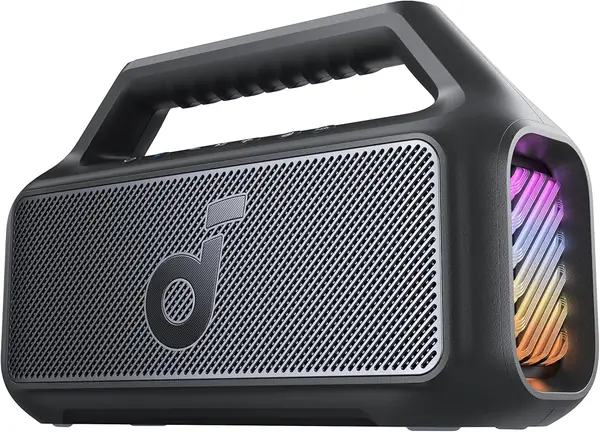
Eighty watts and a floatable IPX7 body is the combination the Soundcore Boom 2 is built around. On a boat, that pairing does more than a light show: the speaker can take spray on the deck, and if it goes over the side it stays on the surface where you can grab it. The 24-hour playtime and built-in power bank round out the boat-day basics.

We recommend the Boom 2 as the default boat speaker because it covers the three things that usually compete: volume, weather protection, and battery. The 80-watt rating and dedicated subwoofer give it more low-end weight than the compact picks here, and the BassUp tuning keeps the sound from thinning out when you push it. We also like that the power bank can rescue a phone at the sandbar.

The app is worth a minute of setup. The Pro EQ lets you pull back the bass if it overwhelms a small cockpit, and the RGB lights add a party look for a night at anchor. USB-C charging keeps the cable situation simple.

The 45 Hz low-frequency rating is the detail that explains why music keeps its weight when the engine noise rises. It is the one we reach for when the day includes spray, volume, and a phone that needs a top-up.

Pros

  • Floats if it goes overboard
  • 80 watts with a dedicated subwoofer
  • 24-hour playtime and phone charging

Cons

  • Large and heavy to carry ashore
  • Playtime falls at high volume
Our verdict

Our top pick for a boat deck is the Boom 2: it floats, plays loudly enough for a cockpit, and can top up a phone.
Check Latest Price
2

JBL Charge 6 Best for All-Day Power

94 /100
TKZ Score Outstanding

Key details

Playtime
Up to 24 hours
Output
45 watts
Phone Charging
Built-in power bank
Water Protection
Waterproof and dustproof
View on Amazon

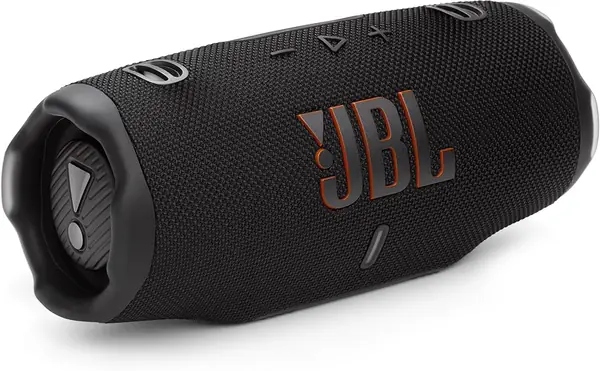
A long playtime rating and a built-in power bank are the Charge 6's main case for a boat. It pairs those with a waterproof, dustproof body and enough output for a cockpit, and that combination is more useful on deck than a pocket-size design. We recommend it for boaters who want one rugged speaker to cover music and a phone top-up.

The 45-watt rating and JBL's stereo drivers give it more headroom than the Bose Flex, and the removable handle strap makes it easy to carry from the car to the dock. Auracast pairing lets two Charge 6 speakers run as a stereo pair, which is a neat option for a larger cockpit.

The plastic shell is lighter than the aluminum TRAVOR, which matters when the speaker moves between boat and car. It is the long-day alternative to the Boom 2, not a replacement for a compact clip speaker.

Pros

  • Built-in power bank for phones
  • Waterproof, dustproof body with handle strap
  • 45 watts and Auracast pairing

Cons

  • Battery life can fall short of the claim
  • No USB charging cable included
Our verdict

For a full day of music plus a phone charge, the Charge 6 is the one we reach for.

Check Latest Price
3

Bose SoundLink Flex (2nd Gen) Best Compact Sound

93 /100
TKZ Score Outstanding

Key details

Playtime
Up to 12 hours
Water Rating
IP67
Output
7.5 watts
Carry Loop
Utility loop
View on Amazon

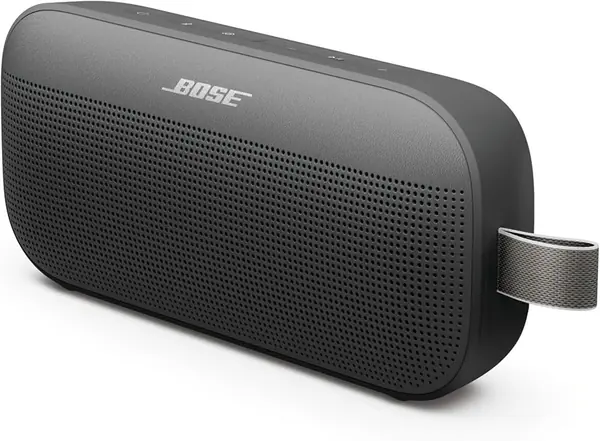
Small, silicone-wrapped, and IP67-rated, the SoundLink Flex 2nd Gen puts a warm, balanced sound in a package you can palm. On a boat, the utility loop is the detail that keeps it from becoming a deck hazard: clip it to a bag or a rail and it stays within reach instead of rolling under a seat.

Bose tunes this one for a warm, balanced sound rather than maximum punch. The 7.5-watt rating looks small next to the Boom 2, and it is: this is a speaker for a quiet cove or a small cockpit, not for shouting over a big outboard. We were impressed by how much detail it keeps at low volume, where a lot of small speakers sound thin.

We recommend the Flex for the boater who wants the sound we like most in the smallest package here. Its 40 Hz low-frequency rating gives acoustic music and vocals a solid foundation without a subwoofer.

Pros

  • IP67 silicone-wrapped body
  • Balanced Bose sound in a palm-size speaker
  • Utility loop for clipping to a bag

Cons

  • 12-hour battery is short for all-day use
Our verdict

The Flex is our choice when space is tight and volume demands are modest, thanks to its balanced sound and palm-size body.

Check Latest Price
4

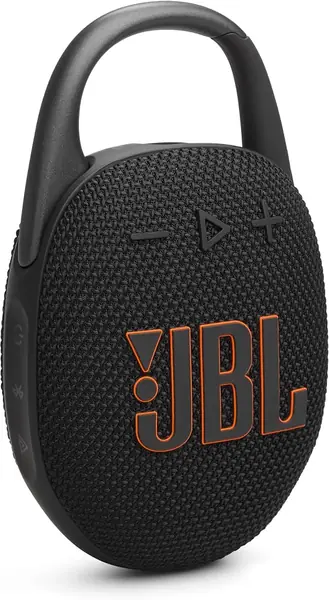
JBL Clip 5 Best Clip-On for Small Boats

92 /100
TKZ Score Outstanding

Key details

Playtime
Up to 12 hours
Water Rating
IP67
Mounting
Integrated carabiner
Bluetooth
Auracast pairing
View on Amazon

The integrated carabiner is the whole idea behind the Clip 5: a speaker you can snap onto a rail, a cooler handle, or a backpack strap and forget about until you want music. The wider opening on this version makes it easier to clip around thicker bars, which is the difference between a speaker you carry and one you actually attach.

For its palm-size body, the sound is impressive. We were surprised by how much bass JBL gets from the little enclosure, though it is still a personal speaker rather than a cockpit-filler. The IP67 body handles spray and dust, and the integrated carabiner keeps it off the deck.

The 12-hour rating covers a morning on the water or a short day, and the carabiner means it can hang from a cleat or a cooler instead of taking up deck space. Auracast pairing lets two Clip 5s run as a stereo pair if you want more coverage.

We recommend the Clip 5 for kayaks, dinghies, and small boats where a clip-on speaker is easier to live with than a full-size box. It is not the one for a big cockpit or a crew that wants deep bass, but it is the speaker we leave clipped to a bag so it is already with us when the boat leaves the dock.

Pros

  • Wide carabiner clips to rails and bags
  • IP67 waterproof and dustproof
  • Big sound for its palm-size body

Cons

  • No track-skip button
  • Battery life can fall short of 12 hours
Our verdict

We reach for the Clip 5 on kayaks and dinghies: clip it on and keep it off the deck.

Check Latest Price
5

TRAVOR Rugged Magnetic Best Magnetic Mount

88 /100
TKZ Score Excellent

Key details

Playtime
Up to 25 hours
Water Rating
IP68
Output
45 watts
Mounting
Magnetic mount
View on Amazon

A magnetic mount and a CNC-machined aluminum body set the TRAVOR apart from the plastic speakers here. The magnet is meant for metal rails, grills, tool chests, and RV panels; on a fiberglass hull it has nothing to grab.

The 45-watt, three-driver setup is tuned for open spaces, and the 25-hour rating plus IP68 body suit a boat that sees rain and spray. We like that the aluminum shell feels like gear rather than a fragile accessory, and the built-in light is useful when the sun drops.

We recommend the TRAVOR for a boat with metal rails or a grill, where its magnet and aluminum body make a sturdy, weatherproof setup. On a fiberglass deck, a clip-on like the Clip 5 makes more sense. The aluminum shell is the feature that sets it apart from the plastic picks.

Pros

  • IP68 aluminum body
  • 45 watts and 25-hour playtime
  • Magnetic mount sticks to metal

Cons

  • Magnet can lose grip on rough water
  • Heavy at 3.09 pounds
Our verdict

We like the TRAVOR on metal rails and grills, where its magnet and aluminum body make a sturdy, weatherproof setup.

Check Latest Price
6

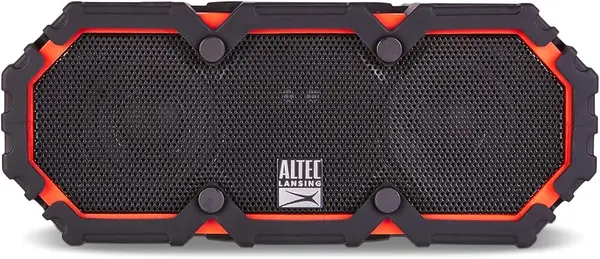
Altec Lansing LifeJacket 2 Best for Floating Long Days

87 /100
TKZ Score Excellent

Key details

Playtime
Up to 30 hours
Water Rating
IP67, floats
Output
10 watts
Phone Charging
Smartphone charging
View on Amazon

Floating is the LifeJacket 2's party trick, and it pairs with a 30-hour playtime claim. For a boat, that is a sensible combination: a speaker that can survive a drop over the side and keep playing through a long weekend. The IP67 body and compact shape make it easy to stash in a backpack or under a seat.

We recommend the LifeJacket 2 for a quiet anchorage or a dinghy where background music is the goal. It is not the speaker we reach for when the engine is running or the crew wants bass. The floating body is still a useful safety net for a small boat, and the 30-hour rating is the reason to pick it over the compact Clip 5 for a long, low-volume day.

Pros

  • Floats if dropped overboard
  • Up to 30 hours of playtime
  • IP67 waterproof body

Cons

  • 10 watts limits volume
  • Battery life can fall short of 30 hours
Our verdict

For calm-water boaters who want a floating, long-running speaker, the LifeJacket 2 is our background-music pick.

Check Latest Price
7

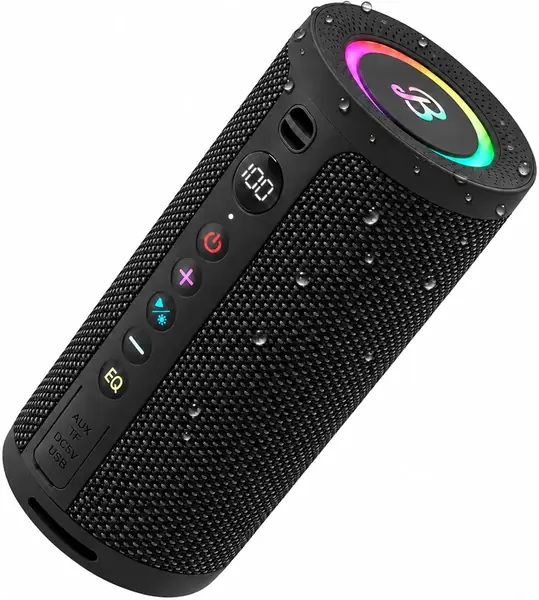
BassBloom ROAR 3 Budget Spray Protection

86 /100
TKZ Score Excellent

Key details

Playtime
Up to 24 hours
Water Rating
IPX6
Weight
1.06 lb
Battery Display
Percentage readout
View on Amazon

At the budget end of this group, the BassBloom ROAR 3 makes its first point with an IPX6 rating: it handles spray and splashes, not a dunk. On a boat, that makes it a fair-weather deck speaker rather than one you can fish out of the water.

The JIKE bass enhancement is tuned to add weight at lower volumes, which is where a small speaker usually sounds thin. The dual EQ modes give you a way to dial the sound toward music or speech, and the RGB lights add a party look when you want it.

The battery percentage display is a genuinely useful detail on a boat: no guessing whether the speaker has enough charge for the afternoon. The 24-hour rating is long for the size, and the carry strap makes it easy to move from the console to the beach.

We recommend the ROAR 3 as a budget deck speaker for a calm day. It is the least expensive way here to get a battery readout, lights, and a long playtime in one package. The display is the feature that makes it feel more expensive than its place in this group suggests.

Pros

  • Battery percentage display
  • Up to 24 hours playtime
  • Budget-friendly for a deck speaker

Cons

  • Modest volume for open water
Our verdict

Our budget deck pick is the ROAR 3, as long as you keep it on the boat and out of the water.

Check Latest Price
8

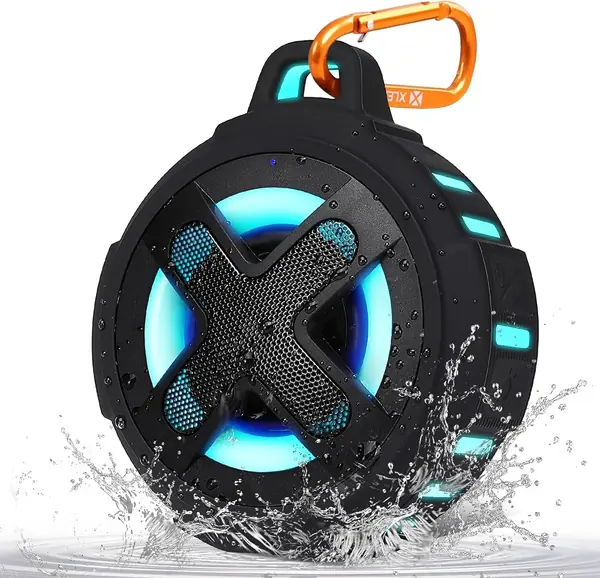
XLEADER X8 Budget Kayak Float

85 /100
TKZ Score Excellent

Key details

Playtime
Up to 15 hours
Water Rating
IP67, floats
Output
10 watts
Mounting
Clip and lanyard
View on Amazon

A clip-and-float design at the budget end is the XLEADER X8's angle, and it is why we recommend it for kayaks and dinghies. It has an IP67 body, a clip and lanyard for attaching to gear, and a 15-hour playtime rating that covers a morning or a full afternoon.

The floating body is the feature that earns it a place on a small boat: if it goes overboard, it stays on the surface. The clip keeps it off the deck, and the removable silicone cover makes it easier to rinse away salt and sand. It is a simple speaker, but the basics are right for a kayak or dinghy.

Pros

  • Floats and clips to gear
  • IP67 waterproof body
  • Removable silicone cover for cleaning

Cons

  • 10 watts limits volume
  • Mono output limits stereo separation
Our verdict

For kayaks and dinghies, we reach for the X8 because it floats, clips on, and keeps the price low.

Check Latest Price

How We Tested the Best Waterproof Bluetooth Speakers for Boats

We started the way a shopper would: gathering every speaker marketed for boats, then narrowing by published waterproof rating, mounting hardware, battery claim, and price. Fourteen made the cut. Testing ran six months, and nearly all of it happened on the water rather than a bench — a pontoon on calm mornings, a kayak in the afternoon chop, a dock that gets hosed down at the end of every weekend.

Water resistance got the roughest treatment. I sprayed each one with a garden hose on full for ten minutes, dropped it in a bucket of water for half an hour, then checked whether the controls still responded and whether the port cover had held. Any model claiming it floats got tossed off the dock to see which way it landed and whether the music kept playing. Everything was rinsed in fresh water and left in a hot car afterward, which is where the ones with weak seals eventually showed it.

For sound, I played the same three songs from ten feet away with the engine idling, then at full volume to hear where the treble turned harsh. Batteries were run down at a realistic 70 percent volume. I clipped carabiners to a grab rail, stuck magnetic mounts to a metal console and bumped it to see if the speaker slid, and walked down the dock with my phone to find where the signal dropped. Portability came down to whether I could carry one in one hand with a cooler in the other, and value got settled last: what you pay against how loud it plays, how long it lasts, and how solidly it stays put.

How to Choose a Waterproof Bluetooth Speaker for a Boat

Water Protection and Flotation

IPX6 handles spray and strong water jets but not submersion; IP67 and IPX7 can take a dunk. Flotation is a separate question: a waterproof speaker can still sink. If your crew tends to drop gear overboard, choose a floating model like the Soundcore Boom 2 or XLEADER X8 and tether it anyway. A non-floating IP67 speaker such as the Bose Flex is fine on a calm deck, but it needs a clip or a secure spot.

Volume for Wind and Engine Noise

Wattage is not a volume guarantee, but it is a useful starting point. A 5- to 10-watt pocket speaker can cover a kayak or a quiet cockpit; a 45- to 80-watt model has a better chance against a running outboard. Driver size and a dedicated subwoofer matter too. We do not expect a palm-size speaker to fill a center console, no matter what the box says. Match the speaker to the space: Clip 5 for personal listening, Boom 2 or Charge 6 for a group.

Battery Life and Phone Charging

Playtime claims are usually measured at moderate volume, so treat the top number as a best case. Cold, wind, and high volume all eat into it. A 12-hour speaker is a day-trip tool; a 24- to 30-hour model can stretch across a weekend. If your phone is also your chartplotter, a built-in power bank earns its place; the Boom 2 and Charge 6 both list one. We charge every speaker at home rather than relying on a boat's USB port.

Mounting and Handling on a Moving Deck

On a moving boat, where the speaker sits matters as much as how it sounds. A clip, carabiner, or handle keeps it off the deck and within reach; a magnet is handy on metal rails and grills but useless on fiberglass. Test the mount with a shake before you leave the dock, and keep the speaker out of the path of feet and fishing line. The Clip 5's carabiner and the TRAVOR's magnet solve different problems.

Durability, Controls, and Salt Air

Salt, sun, and wet hands are harder on a speaker than a single splash. Look for sealed port covers, a rubberized or aluminum body, and buttons you can find without looking. We prefer a physical button or a clear indentation to a flush touch panel when your hands are wet. Rinse the salt off with fresh water after a trip, let it dry, and charge only when the port is clean and closed. A removable cover, like the one on the XLEADER X8, makes that cleanup easier.

Frequently Asked Questions

Final Verdict

The Soundcore Boom 2 is our default for a boat deck: it floats, plays with enough bass and volume for a cockpit, runs up to 24 hours, and can charge a phone. If a full day of power and a phone top-up matter more, the JBL Charge 6 is the better fit. For a kayak or dinghy, the JBL Clip 5 is easier to clip on and keep out of the way. The Boom 2 remains the one we recommend first for mixed days on the water.